Should Hot-Runner Suitability Be Decided by Polymer Family Alone?
Choosing the right hot-runner system feels like a high-stakes decision. Make the wrong call based on a generic polymer name, and you risk costly material degradation, tool damage, and production delays.
No, hot-runner suitability should not be decided by the polymer family alone. A better decision comes from analyzing the specific grade's thermal stability, filler type and content, and processing viscosity. Using supplier-provided evidence for your exact material ensures a more reliable and efficient molding process.
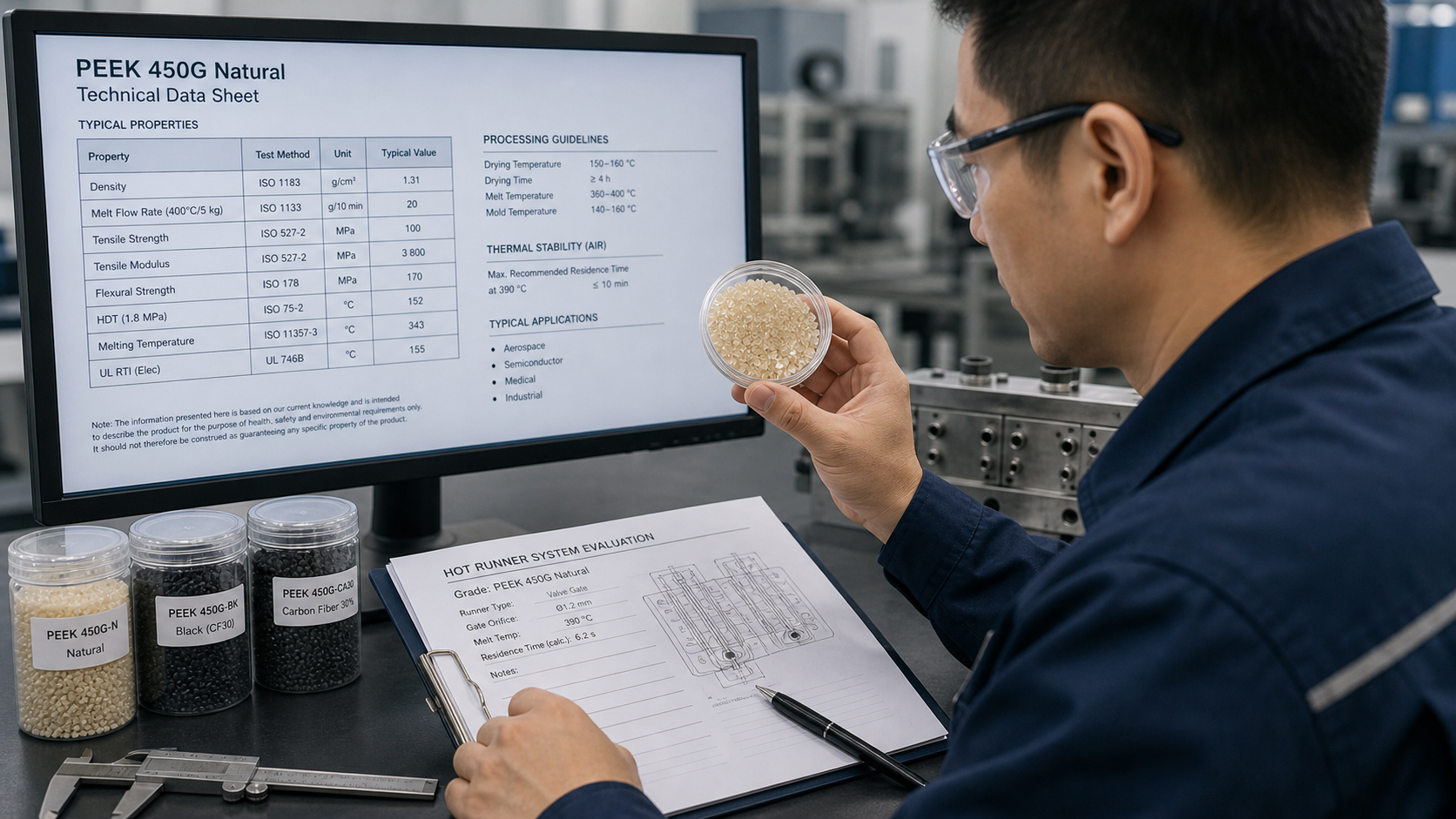
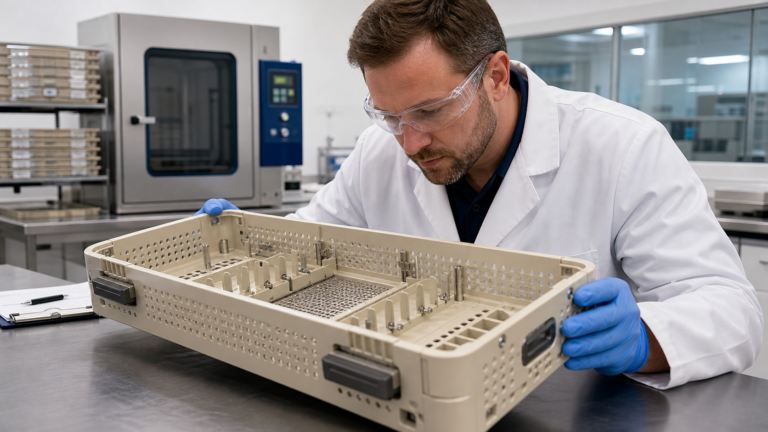
Relying on a broad label like "polycarbonate" or "PEEK" is a common but risky shortcut. The performance difference between an unfilled grade and a 30% glass-filled, flame-retardant grade of the same polymer can be huge. We've learned that a successful outcome depends on digging deeper into the material's specific behavior under real-world processing conditions. This means shifting the focus from the general polymer family to a few critical, grade-specific properties. We'll explore the four key checks we perform to make runner selection an evidence-based decision rather than a guess.
Checking Melt Stability Over the Runner's Residence Time?
Your material is degrading inside the hot runner, but you can't see it yet. This silent problem leads to black specks, weak parts, and clogged gates, causing unexpected downtime and scrap.
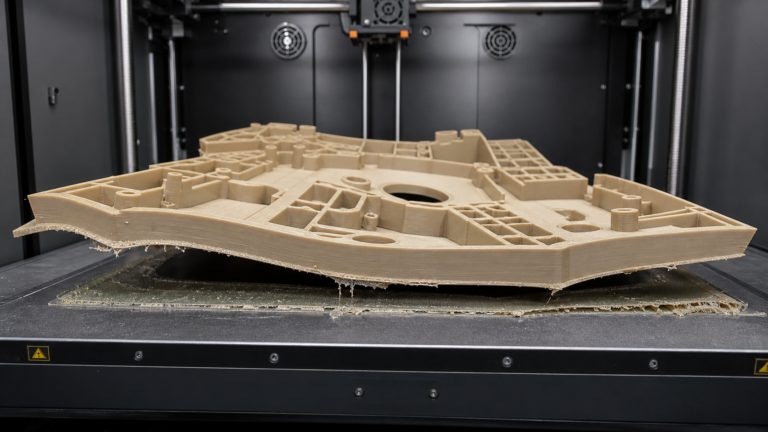
To check melt stability, you must calculate the resin's residence time in the hot runner at your target processing temperature. Then, compare this value against the material supplier's maximum recommended exposure time. This simple check helps prevent thermal degradation before it ruins your production run.
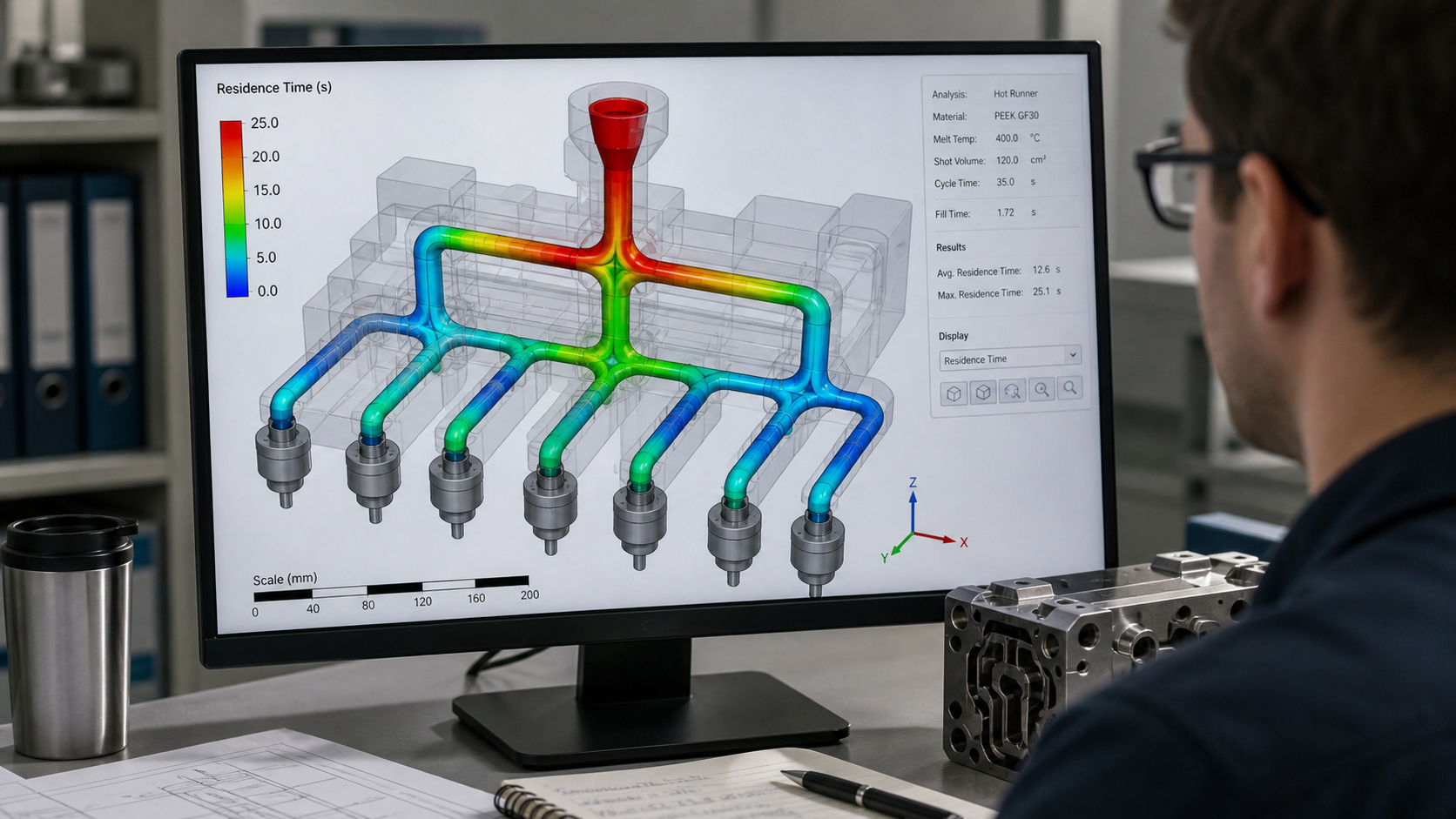
The concept of residence time is simple: it's how long the molten polymer sits inside the heated runner system before it gets injected into the mold cavity. If this time is too long for the material's thermal stability, the polymer chains start to break down. This degradation can cause a loss of mechanical properties, discoloration, or outgassing. We treat this as a non-negotiable first step. We look at the total volume of the melt channels in the hot-runner manifold and divide it by the volumetric flow rate per shot. This gives us a clear number in seconds. Then, we go straight to the material's technical data sheet or contact the supplier to find the maximum allowable time at that specific melt temperature.
Key Thermal Stability Indicators
We find it helpful to compare these factors, but we always insist on data for the exact grade we are using. Generalizations can be dangerous, as additives like flame retardants or colorants can sometimes reduce a base resin's stability.
| Factor | What We Look For | Why It Matters |
|---|---|---|
| Max Residence Time | Supplier data specifying time (in minutes) at a given temperature. | This is the most direct indicator. If our calculated time is close to or exceeds this limit, we know we have a problem. |
| Processing Temperature Window | The recommended range between melt and degradation temperatures. | A wider window offers more processing flexibility. A narrow window means residence time is even more critical. |
| Melt Flow Index (MFI) Shift | Test data showing how MFI changes after holding the melt at temperature for a set time. | A significant increase or decrease in MFI points to polymer chain scission (degradation) or cross-linking. |
Reviewing Filler Behaviour in the Selected Runner Geometry?
You chose a glass-filled material for strength, but now your parts are brittle. Abrasive fillers can wear out expensive tool components or, even worse, get damaged themselves during injection, ruining part performance.
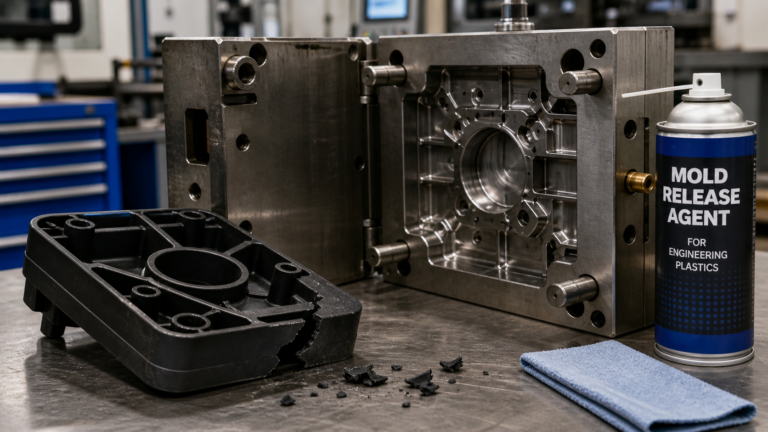
Review filler behavior by analyzing how the specific filler, like glass fiber or minerals, will interact with the runner's geometry. High-shear areas, sharp corners, and small gates can break fibers or cause excessive tool wear. A gentle, streamlined flow path is essential.
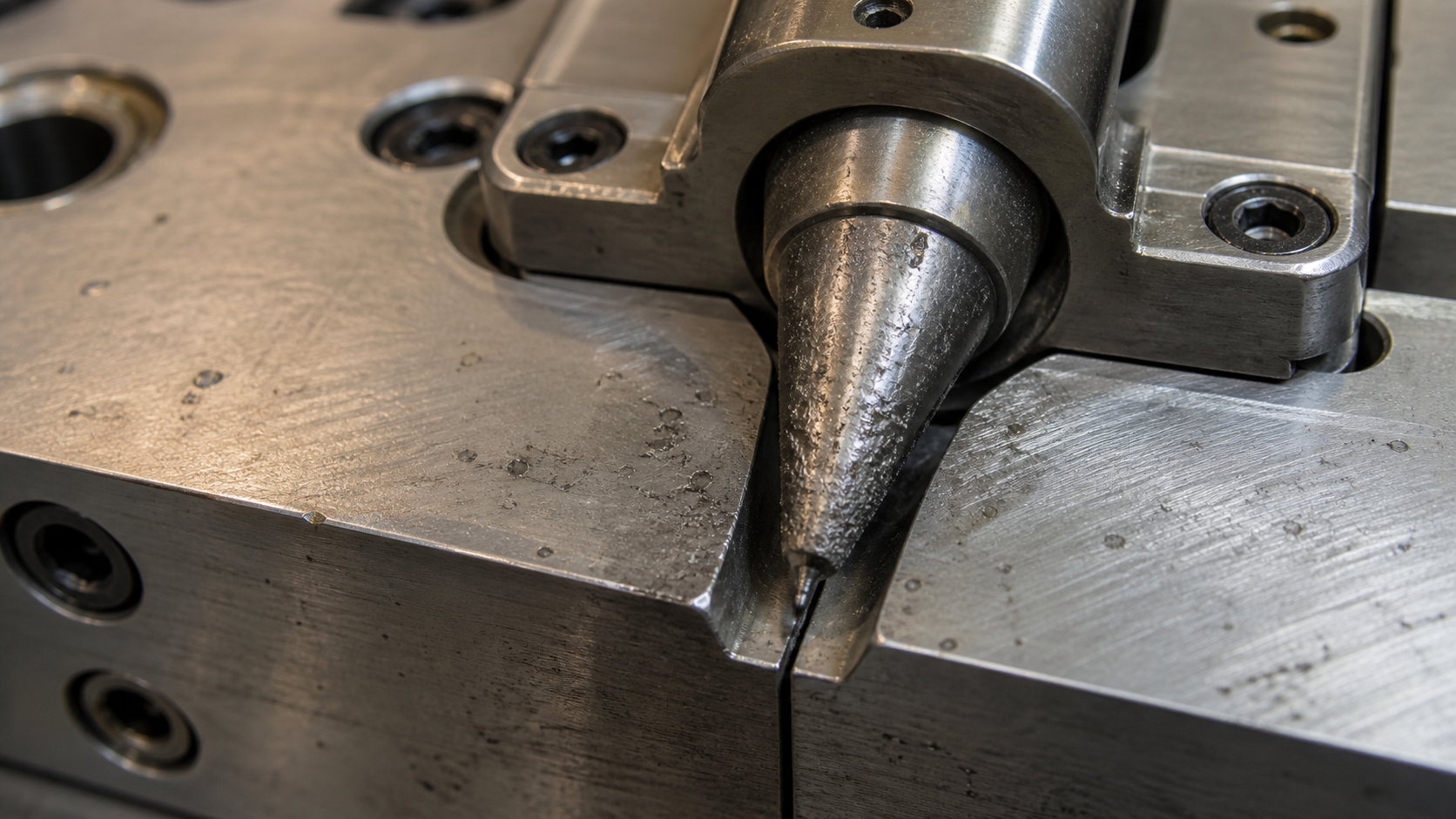
Fillers and reinforcements are not passive passengers in the molten polymer. They dramatically change how the material behaves. Glass fibers, for example, are notorious for causing abrasive wear, especially at the gates where velocity is highest. If the gate is too small or has a sharp edge, it acts like a sandblaster, quickly eroding the steel. Even more important is what happens to the fibers themselves. A runner system with sharp 90-degree turns or major restrictions can create high-shear conditions that literally snap the glass fibers into shorter, less effective lengths. We once saw a project where the final parts failed strength tests because the hot-runner system was reducing the average fiber length by almost 40%. The part was no longer meeting its design specification, all because of the runner geometry. That's why we always review the runner layout for smooth, gradual transitions and appropriately sized gates for any filled material we work with.
Requesting Grade-Specific Hot-Runner Evidence?
Relying on a generic data sheet for a specialized process is a recipe for failure. The standard document won't tell you how the material holds up in a hot runner, leaving you to discover problems during costly trials.
To de-risk the process, we directly ask both the resin supplier and the hot-runner manufacturer for evidence. We request case studies, processing guidelines, or testimonials of them successfully running our exact polymer grade through a similar runner system. This is non-negotiable.
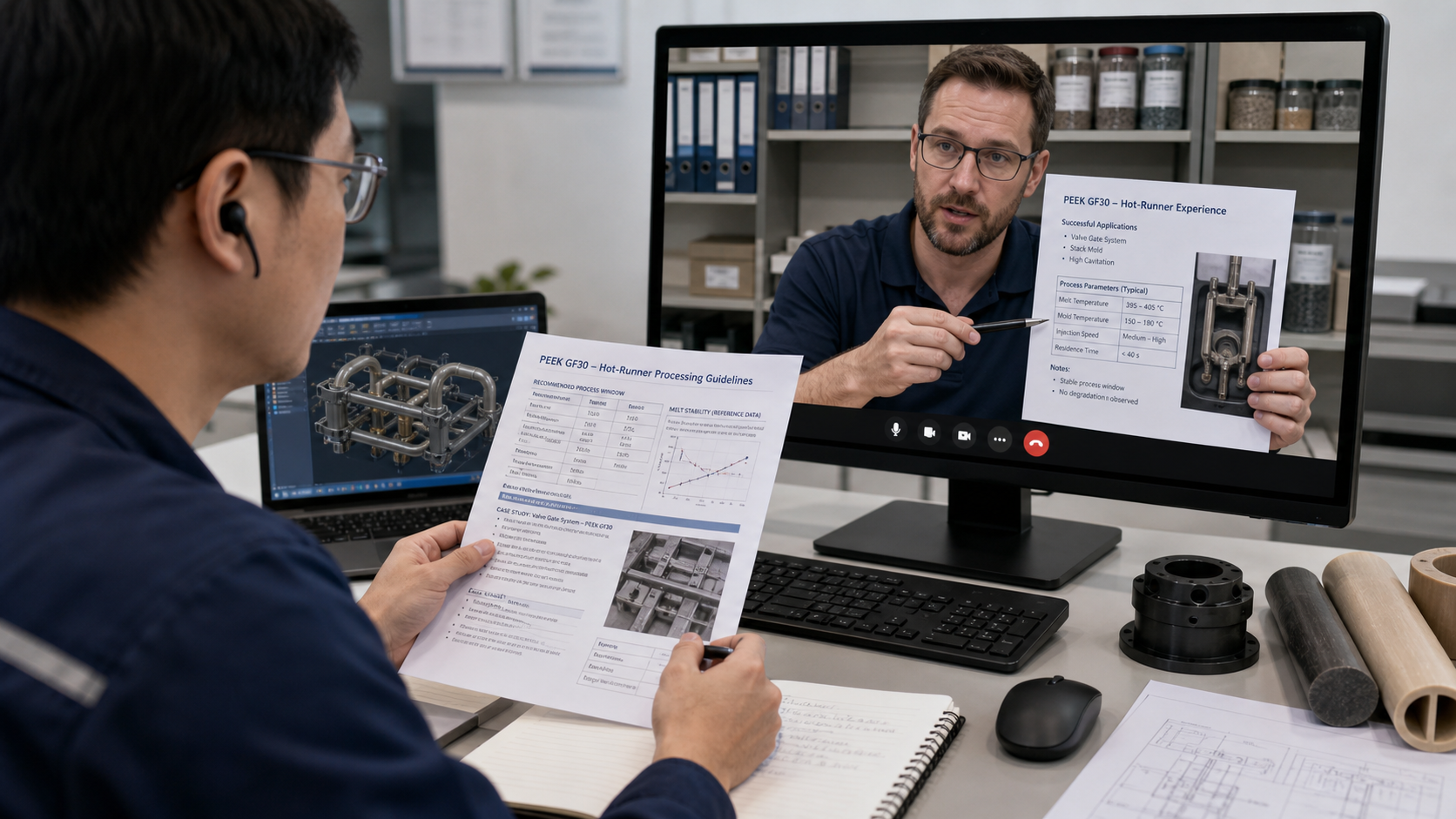
A polymer's data sheet is a starting point, not the final word. It provides basic properties but rarely contains information specific to hot-runner molding. To bridge this gap, we make it a standard practice to engage in a three-way conversation between our team, the material supplier, and the hot-runner provider. We don't just ask, "Is PEEK okay for your system?" We ask, "Do you have documented experience running this specific grade of PEEK, with 30% carbon fiber, through a valve-gate system with a 1.2mm orifice?" This level of specificity is crucial. Often, the suppliers have a wealth of internal data from other customers or their own lab trials. Getting this information upfront provides a validated starting point for process parameters like temperatures, injection speeds, and gate timing. It turns a speculative setup into a plan based on prior success, saving immense amounts of time and reducing the risk of damaging a multi-thousand-dollar tool.
Qualifying the Actual Resin-and-Runner Combination?
All the data sheets and supplier advice look good, but theory doesn't always translate to reality. Without a final test, you could be starting a full production run with a hidden flaw in the process.
Qualify the combination by running a systematic molding trial before signing off on the tool. We produce actual parts and meticulously check them for cosmetic quality, dimensional stability, and signs of material degradation. This final hands-on test is the only true confirmation of success.
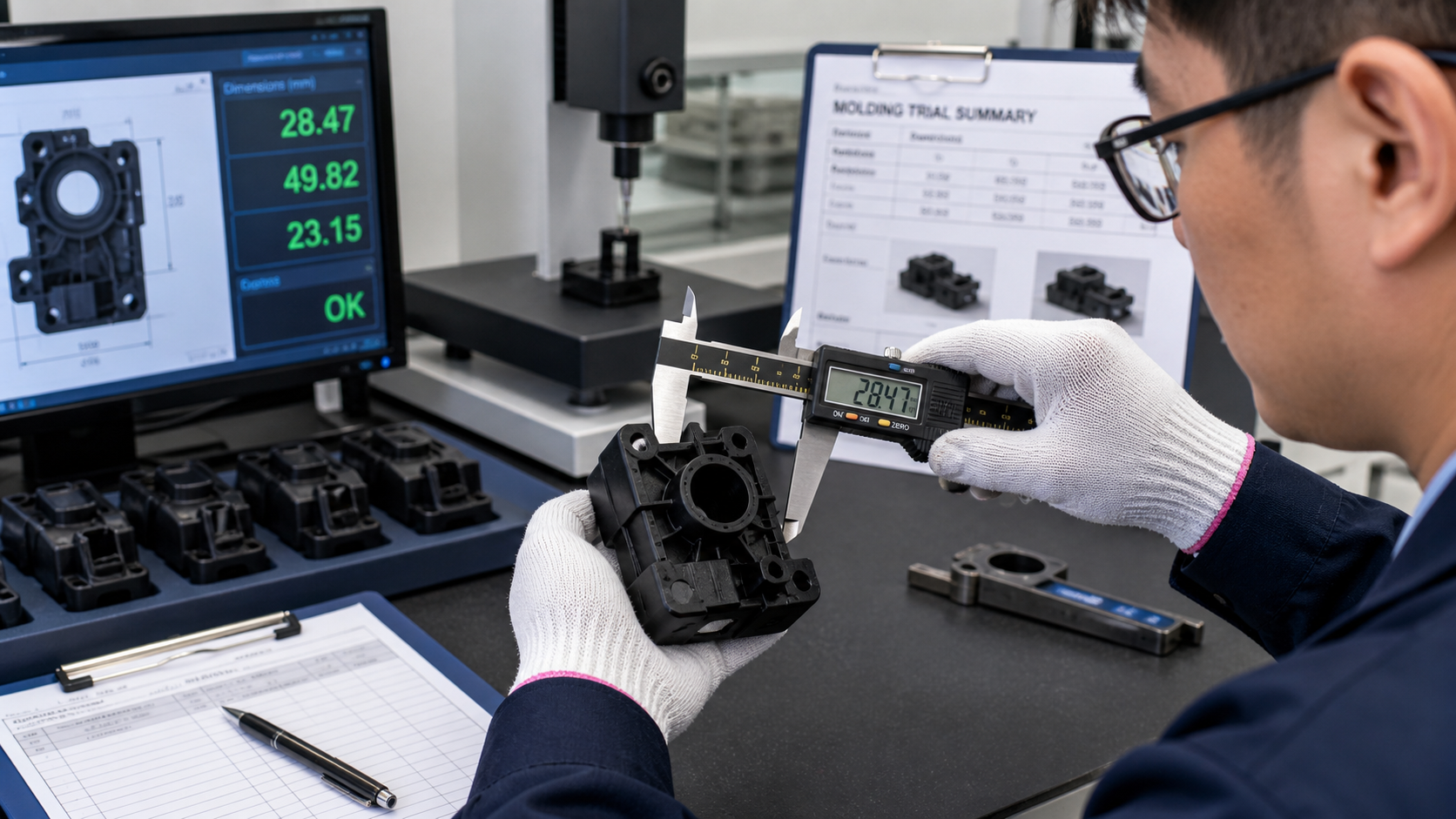
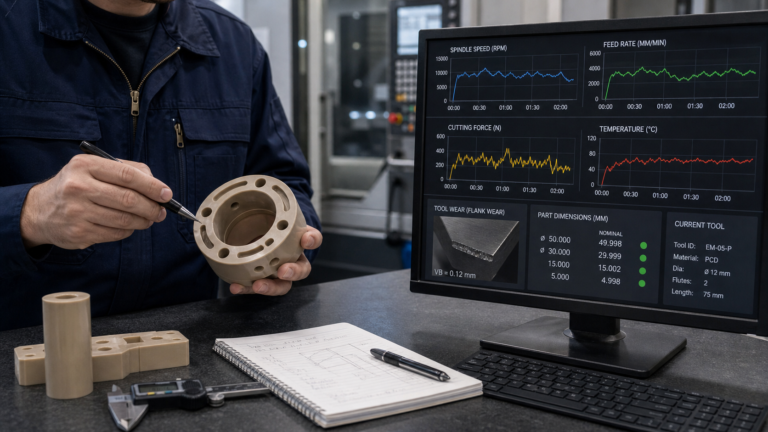
This is the moment of truth. After all the research, data review, and collaboration, the only way to be 100% sure is to run the material in the tool. We treat the initial molding trial as a formal qualification process. It's not just about making a part that looks okay; it's about systematically testing the limits of the process window. We perform tests like a gate-freeze study to ensure the gate is sealing properly and check parts from a short shot sequence to verify a balanced fill. We inspect the first and last parts of a small run for consistency. We're looking for subtle signs of trouble: a slight discoloration near the gate suggesting too much shear heat, minor sink marks indicating a pressure transmission issue, or dimensional changes that point to inconsistent packing. This qualification step provides the final, undeniable evidence that the chosen resin, hot runner, and process parameters all work together to produce a repeatable, high-quality component. Any shortcuts here are just postponing problems for later.
Conclusion
Ultimately, selecting a hot runner based on evidence from the specific grade—not just the polymer family—is key. This methodical approach prevents costly errors and ensures reliable, high-quality production.