How Should PEEK Compounds Be Evaluated Under Sustained Compression?
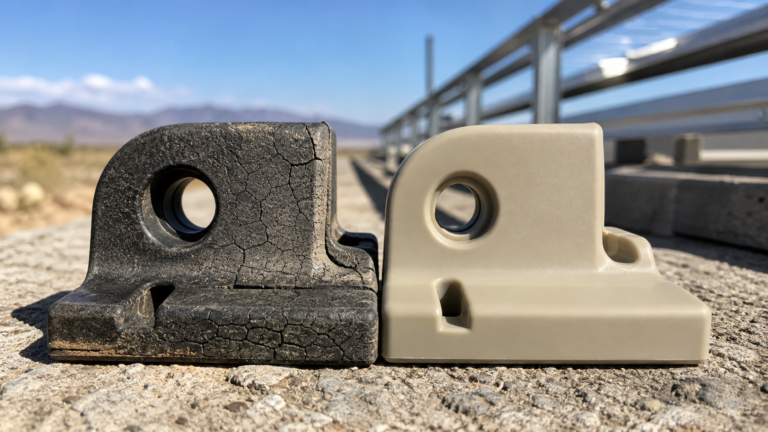
Choosing the right PEEK compound based on a datasheet can feel like a gamble. When a part fails under load, you're left wondering what went wrong with the material.
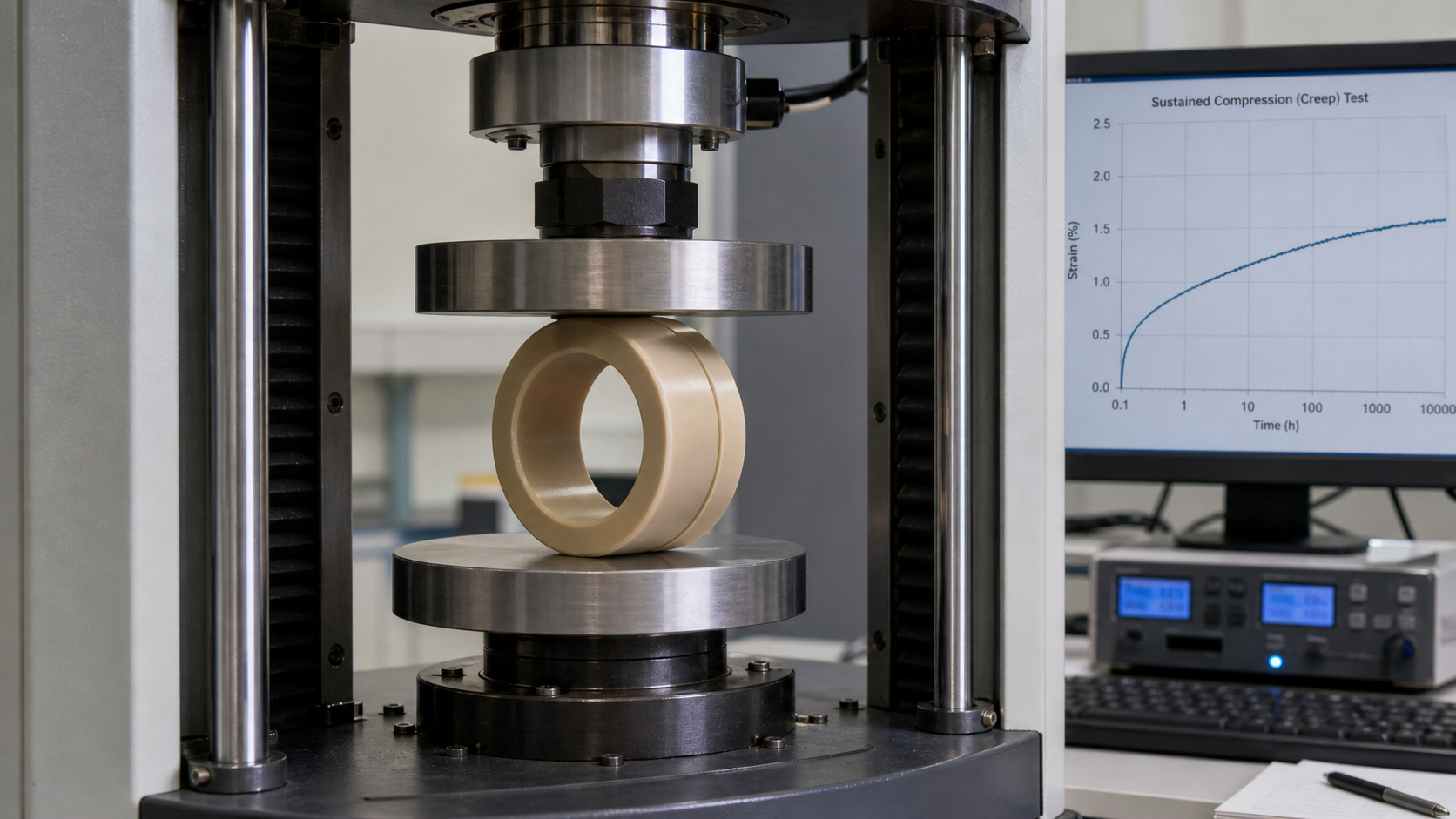
To properly evaluate PEEK compounds, you must measure both compressive strength and long-term creep strain. This is done under loads and for durations that match the real-world application, making bearing design an evidence-based decision rather than a guess based on a polymer name.
I've seen many projects where a standard material choice leads to unexpected problems. The issue is that a simple strength value on a technical datasheet doesn't tell the whole story, especially for parts that are under constant pressure for months or years. We need to go deeper to understand how a material will truly behave over its entire service life. The key is to shift from looking at a single number to understanding the material's behavior over time. Let's break down how we approach this to build confidence in a material choice.
Defining Compression Level and Loading Duration?
Your test conditions are meaningless if they don't reflect reality. Using the wrong numbers can lead to a part failing in the field, even if it passed the lab test.
You should define the compression level and loading duration by studying the application's maximum continuous load and longest service period. Using these real-world values ensures your test accurately predicts long-term performance and helps prevent unexpected creep failure in the final component.
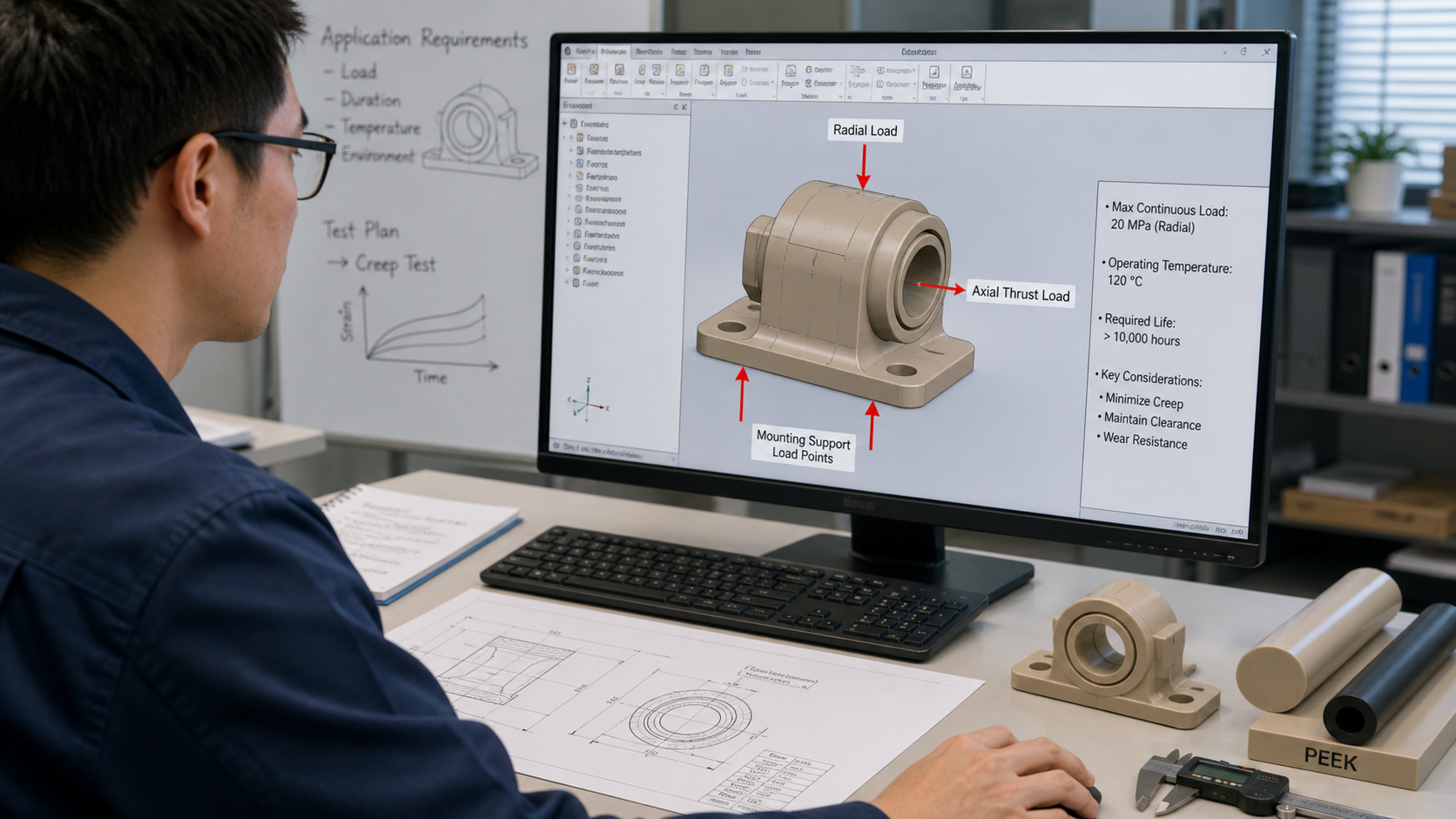
When we work with clients on projects involving custom components, the first step is always to understand the service environment. A generic test at 23°C for 24 hours tells you very little if your part operates at 150°C under a constant load for two years. We have to match the test to the job. This means asking detailed questions about the equipment's lifecycle and operating conditions.
Key Factors for Application-Specific Testing
We must look beyond the standard datasheet. An application-based approach provides a much clearer picture of future performance. I find that laying it out in a table helps clarify the difference in thinking. This method helps us weigh the documented improvements in friction and wear against any potential tradeoffs in mechanical strength or creep resistance.
| Parameter | Standard Datasheet Approach | Application-Specific Approach |
|---|---|---|
| Load Level | Uses a standardized, often high, short-term load to find the ultimate failure point. | Uses the maximum continuous static load the component will actually experience in service. |
| Duration | Typically a very short test, sometimes lasting only minutes. | Matches the longest expected continuous service period, which could be thousands of hours. |
| Temperature | Often performed at a standard room temperature (e.g., 23°C). | Conducted at the component’s maximum continuous operating temperature. |
| Outcome | Provides a single value for ultimate compressive strength. | Generates a creep curve showing deformation over time under realistic conditions. |
Measuring Strain Throughout the Test?
A simple pass-or-fail result from a load test is not enough information. You completely miss how the material slowly deforms, which is often the real cause of failure.
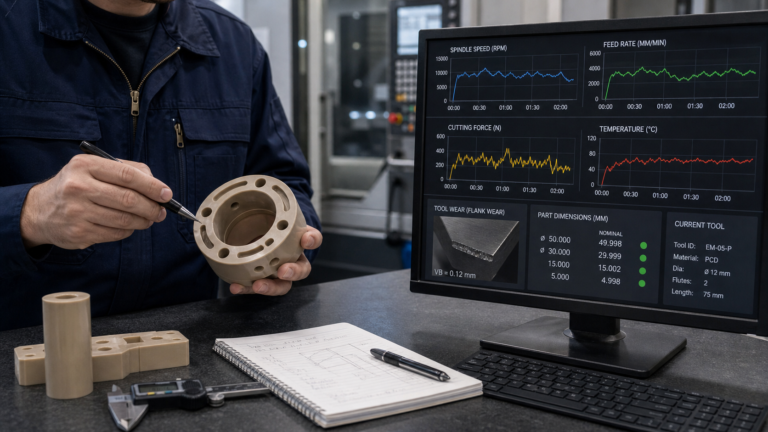
You should measure strain continuously throughout the entire test, often using extensometers or digital imaging systems. This provides a full creep curve, revealing how the material deforms over time and allowing for much better predictions of long-term dimensional stability.
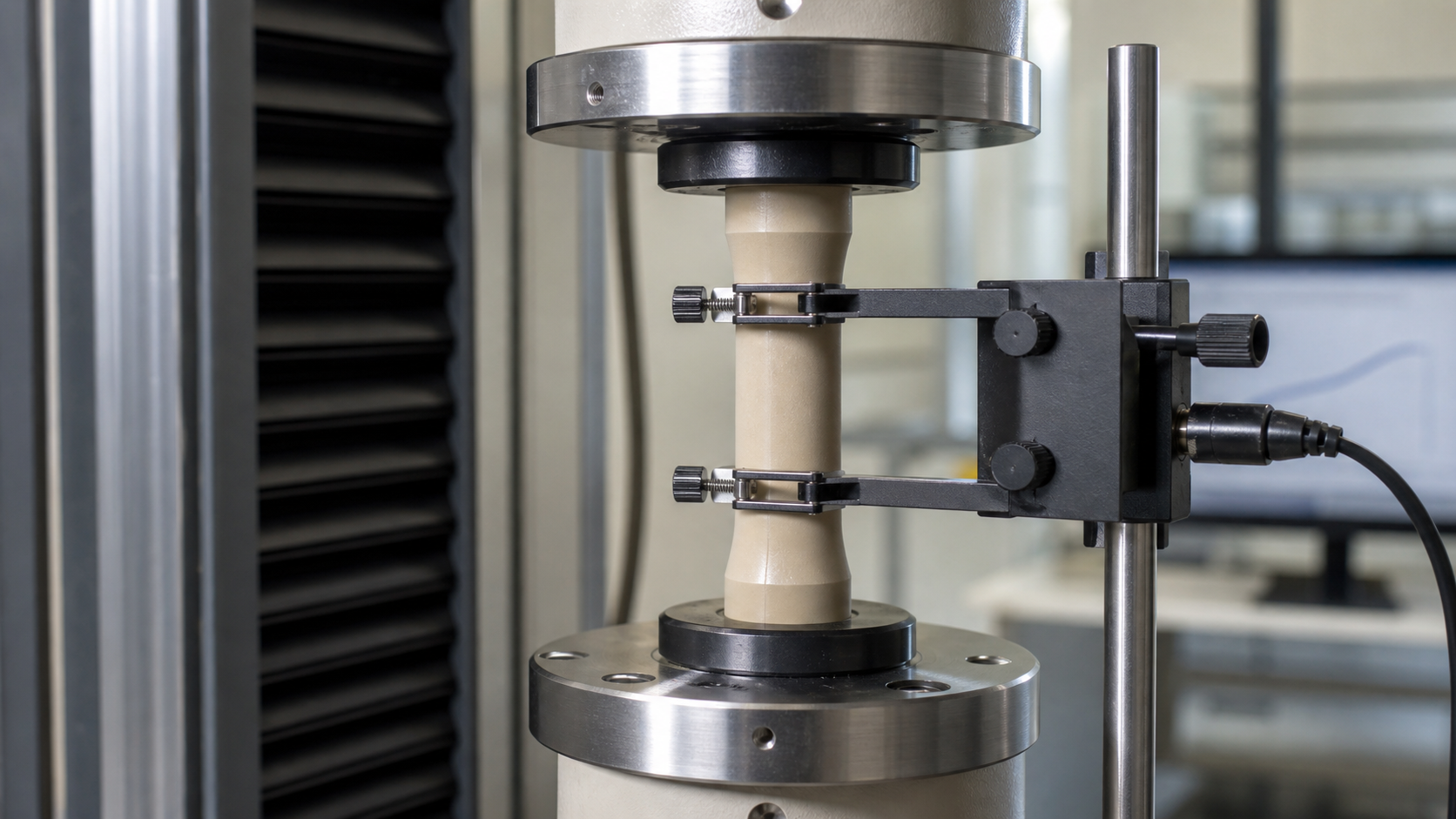
When a material is held under a constant load, it doesn't just compress once and then stop. It continues to deform very slowly in a process called creep. Measuring this is critical. I remember a case with a high-precision seal where the initial compression was fine, but over six months, the seal deformed just enough to cause a leak. This would have been predicted if we had measured the creep strain over time.
This continuous measurement gives us a creep curve, which typically has three stages. First is the initial, rapid deformation. Second is the long, slow, steady-state deformation where the part will spend most of its life. The final stage is where deformation speeds up right before failure. For design purposes, we are most interested in that long, steady second stage. Different PEEK compounds, like a carbon-fiber reinforced grade versus a bearing grade with internal lubricants, will have very different creep curves. Our job is to find the material whose curve shows it will remain within the required dimensional tolerances for the entire life of the part. This is an essential part of our material selection support process.
Checking Retained Function After Sustained Loading?
The component might survive a long-term load test, but is it still usable? A part that is permanently deformed, even slightly, may no longer fit or function correctly.
After sustained loading, you must check the part's retained function by measuring its final dimensions against the drawing tolerances. It's also wise to re-test key mechanical properties to ensure the material hasn't been weakened or degraded by the long-term stress.
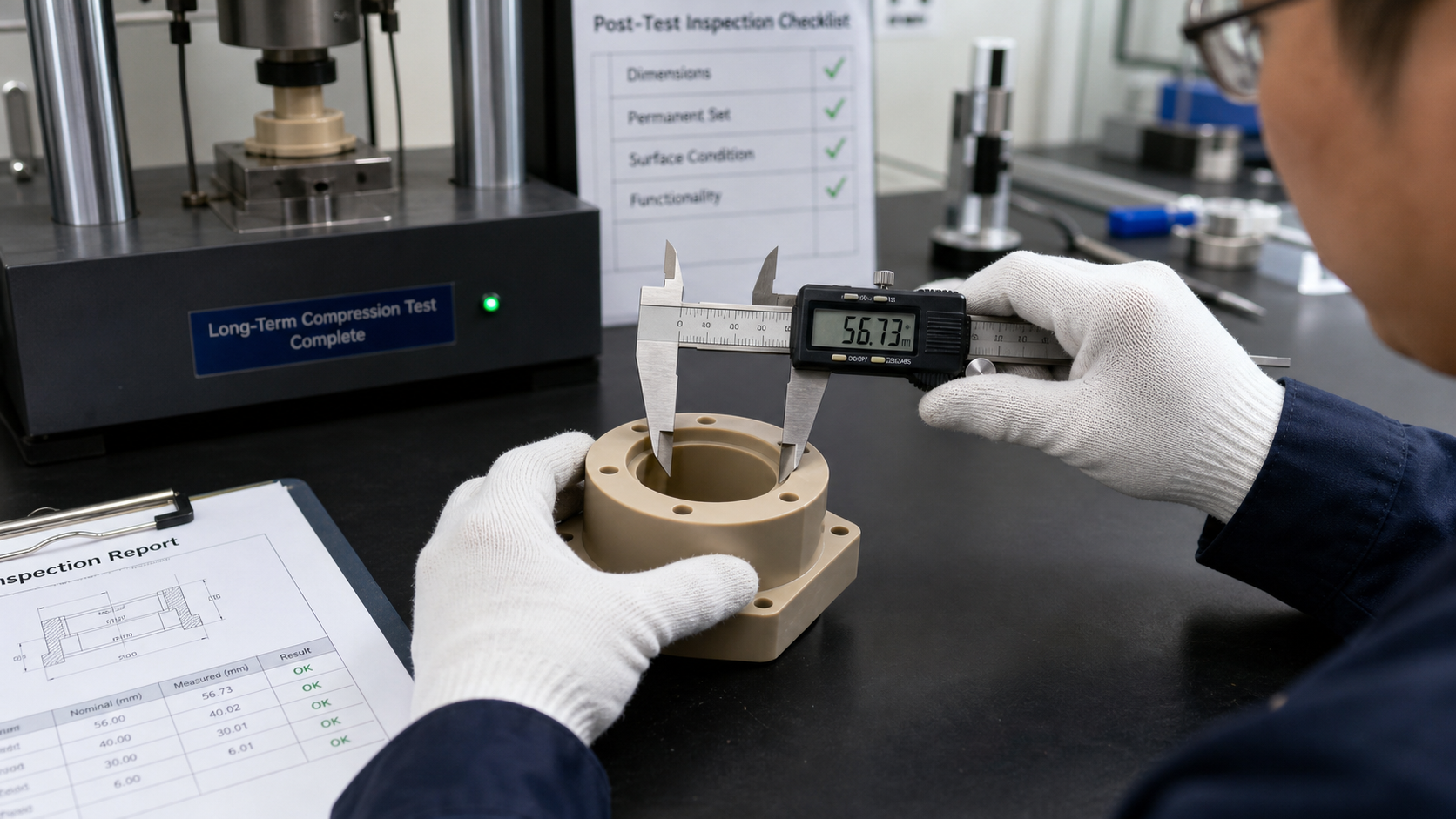
Once the long-duration test is complete, the work isn't over. The first thing we look at is "permanent set," which is the amount of deformation that doesn't recover after the load is removed. For a high-performance polymer component we support, like a valve seat or a bearing, even a tiny permanent change in shape can ruin its performance. We compare these post-test dimensions directly against the original CNC machining drawing to see if it's still within the acceptable tolerance range.
Beyond just measuring size, we also need to know if the material itself has changed. Has the sustained stress introduced micro-cracks or weakened the polymer chains? To find out, we can take the component that just finished the creep test and subject it to other mechanical tests. For example, we might run another compressive strength test to see if its ultimate strength has decreased. This confirms that the material not only held its shape but also retained its structural integrity. This comprehensive check ensures that the component will not only survive but continue to function safely and reliably after years of service.
Using Long-Term Deformation in Bearing Design?
So you have all this great test data, but how do you actually use it? A pile of creep curves and numbers is useless if you can't apply it to a real design.
You use long-term deformation data to calculate a time-dependent "creep modulus." This value allows you to design bearings and other components that will not deform beyond their critical tolerances over their entire planned service life, creating a truly reliable and evidence-based design.
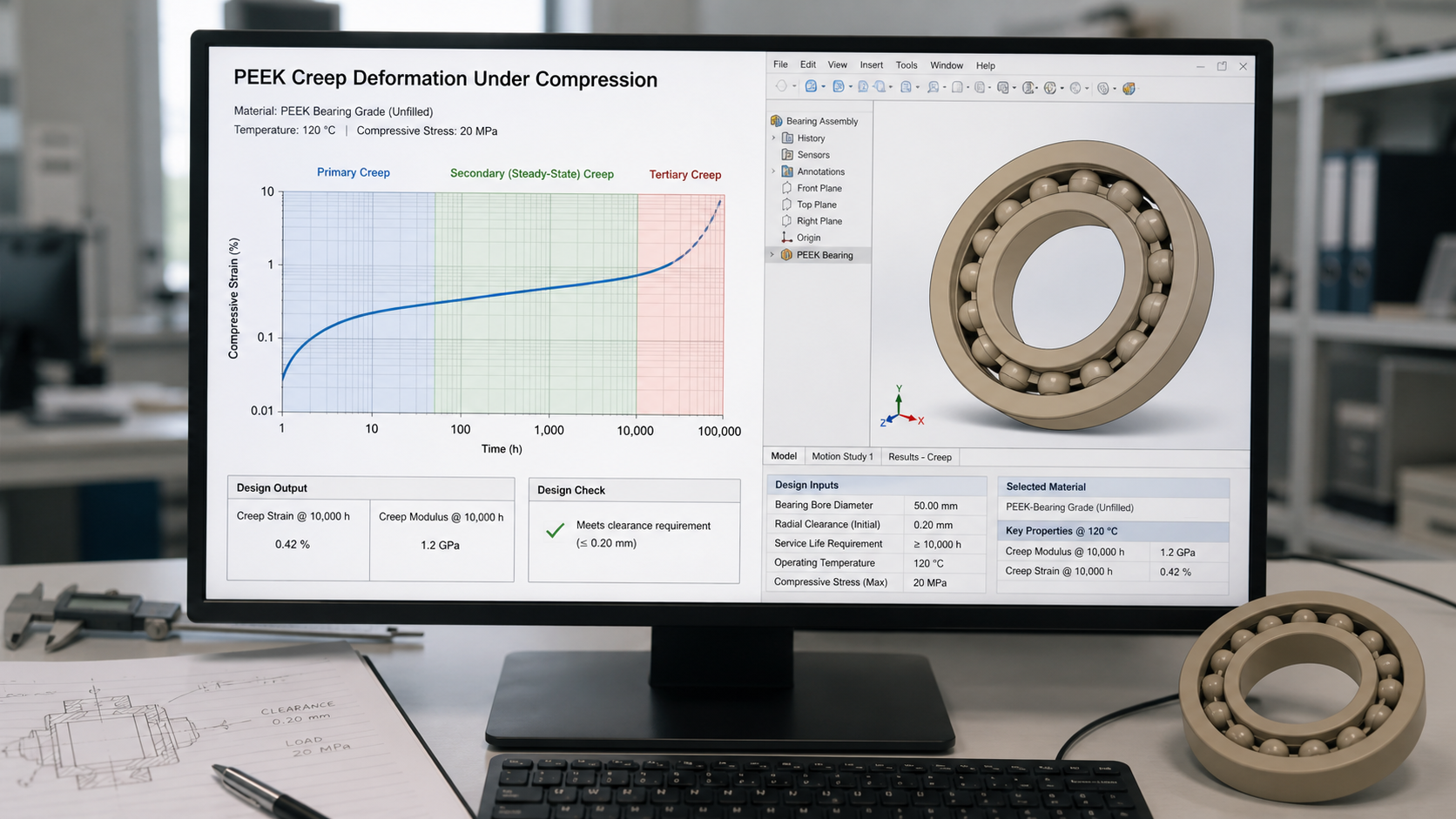
This is where everything comes together. Instead of using a single, static elastic modulus from a datasheet, we use the creep data to understand how the material's stiffness changes over time and at a specific temperature. This gives us the "creep modulus." With this number, we can make an evidence-based design decision.
For example, a client might tell us, "This PEEK bearing must maintain a clearance of 0.2 mm for at least 10,000 hours at 120°C under a 20 MPa load." Using our long-duration test data, we can look at different PEEK compounds. A low-friction bearing grade might show too much creep and violate the clearance requirement. A stiffer, carbon-fiber reinforced PEEK grade might show very little creep but have higher friction. This is the tradeoff we discussed earlier. The long-term data allows us to have an informed conversation and select the exact material formulation that meets all the critical requirements of the application. It turns a guess into a calculated engineering choice. We limit these findings to the specific materials and conditions we study; we don't treat them as general evidence of our own product performance.
Conclusion
To properly evaluate PEEK, use long-term compression tests that copy the real application. This makes bearing design an evidence-based decision, not a guess based on a material's name.