Why Might Unfilled PI Be Preferred for Electrical Insulation?
Choosing the right polymer for electrical insulation seems simple until a part fails. Assuming all polyimides are the same can lead to unexpected conductivity and costly damage in your application.
Unfilled polyimide (PI) is often preferred for electrical insulation because common reinforcing fillers, like carbon fiber or graphite, are electrically conductive. These additives can dramatically reduce the material's resistivity, turning a would-be insulator into a semiconductor and creating pathways for current to flow where it shouldn't.
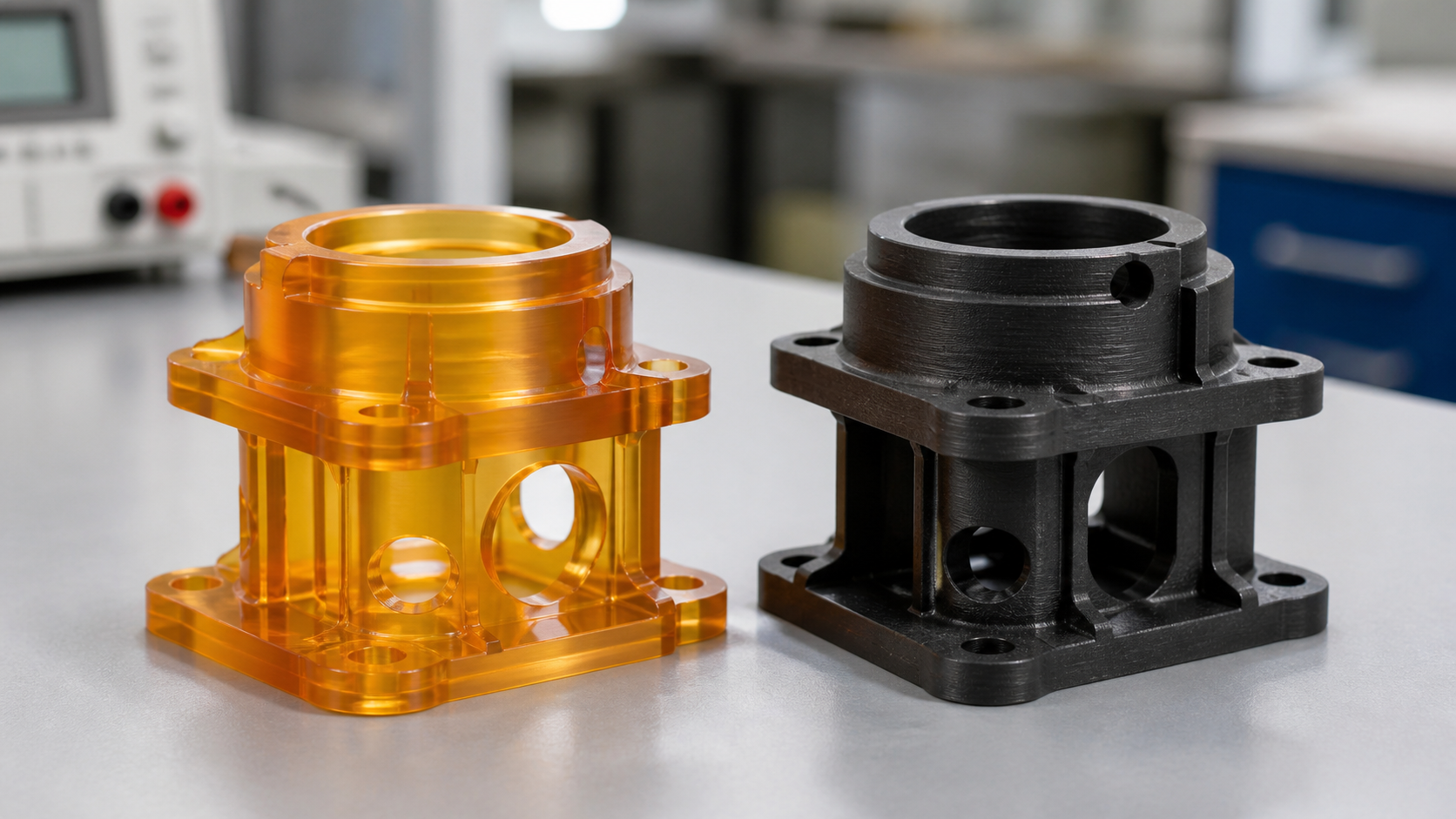
When I work with engineers on material selection, the conversation often starts with a polymer family name, like "PI." But the name itself tells you very little about its real-world performance. The specific grade, determined by its manufacturing route and any fillers, is what truly matters. This is especially true when you need a material to stop the flow of electricity. It's easy to overlook how a simple additive, meant to improve strength, can completely change the electrical behavior of a component. We need to dig deeper than the name on the datasheet. So, how do we make sure the grade we choose is actually an insulator?
Checking Whether Fillers Alter Electrical Behaviour?
You need a high-performance polymer for a demanding environment. But you worry that adding fillers for strength might secretly turn your insulator into a conductor, creating a new problem.
You can check if fillers alter electrical behavior by reviewing the technical data sheet for properties like volume resistivity or dielectric strength. Conductive fillers like carbon fiber and graphite will show significantly lower values, while unfilled grades retain the high intrinsic electrical resistance of the base polymer.
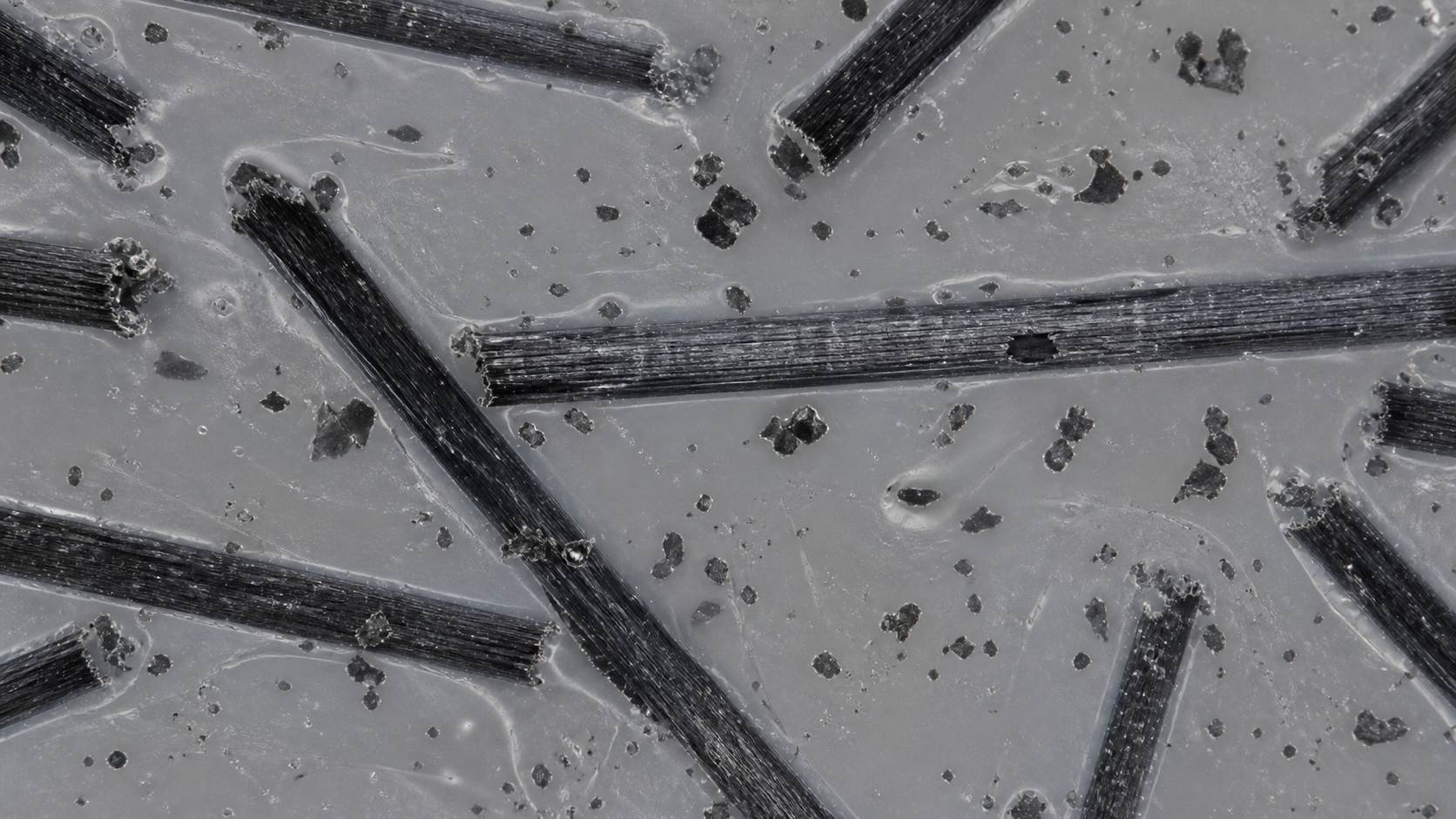
The first step I always take is to treat different polymer grades as completely separate materials, because they are. We never assume properties are interchangeable, even within the same family like polyimide. The base PI resin is an excellent electrical insulator. However, it's often modified with fillers to enhance other properties, such as mechanical strength or wear resistance. The problem is that some of the most common fillers are conductive.
Comparing Filler Effects on PI
When we look at a data sheet, we're searching for specific clues. A low volume resistivity value is a major red flag for an insulation application. Here is a simple breakdown of how different fillers can impact electrical performance:
| Filler Type | Primary Purpose | Typical Effect on Electrical Insulation |
|---|---|---|
| None (Unfilled) | General purpose, high insulation | Excellent insulator, maintains high resistivity of the base resin. |
| Graphite / Carbon Fiber | Improve wear resistance, strength, static dissipation | Becomes conductive or semi-conductive, poor insulator. |
| Glass Fiber | Increase stiffness and strength | Remains a good insulator, but properties may differ from unfilled grade. |
Looking at this, it becomes clear. If your primary requirement is to prevent electrical current from flowing, an unfilled grade is the safest starting point. The decision must be evidence-based, relying on the manufacturer's tested data for that specific grade.
Balancing Insulation With the Required Mechanical Support?
Your component must be an excellent electrical insulator, but it also needs to be mechanically strong. Choosing an unfilled grade for insulation might mean sacrificing the stiffness or wear resistance you need.
To balance insulation with mechanical support, you can either select non-conductive fillers like glass fibers to boost strength, or use an unfilled grade and adjust the part's geometry—like increasing its thickness—to meet mechanical load requirements without compromising electrical performance.

This is a classic engineering trade-off that comes up all the time. I remember working on a project for a part used in semiconductor processing equipment. The component needed to insulate a high-voltage probe, but it also had to hold the probe securely in place without flexing. The original design used a graphite-filled PI for its excellent stiffness and low friction. Mechanically, it was perfect. However, during testing, they experienced current leakage that disrupted sensitive measurements.
The graphite, which made the part strong, was also creating an electrical pathway. We looked at the problem together. The electrical insulation was non-negotiable. So, we had to find another way to get the mechanical stability they needed. We switched the material to a specific unfilled PI grade that had a very high dielectric strength. To address the lower stiffness, we worked with the design engineer to add reinforcing ribs and increase the wall thickness in critical areas. The final part was slightly bulkier, but it performed its dual functions perfectly: it was a robust mechanical support and a reliable electrical insulator. This shows that sometimes the solution lies in both material selection and part design.
Testing the Supplied Grade Under Relevant Conditions?
A material's data sheet looks perfect for your application. But lab conditions are not the real world, and you know that factors like heat and humidity can ruin electrical performance.
You should test the supplied polymer grade by exposing it to your application's actual operating conditions, including temperature, humidity, and frequency. Data sheet values are typically measured under ideal lab conditions and may not accurately predict performance in a real-world environment.
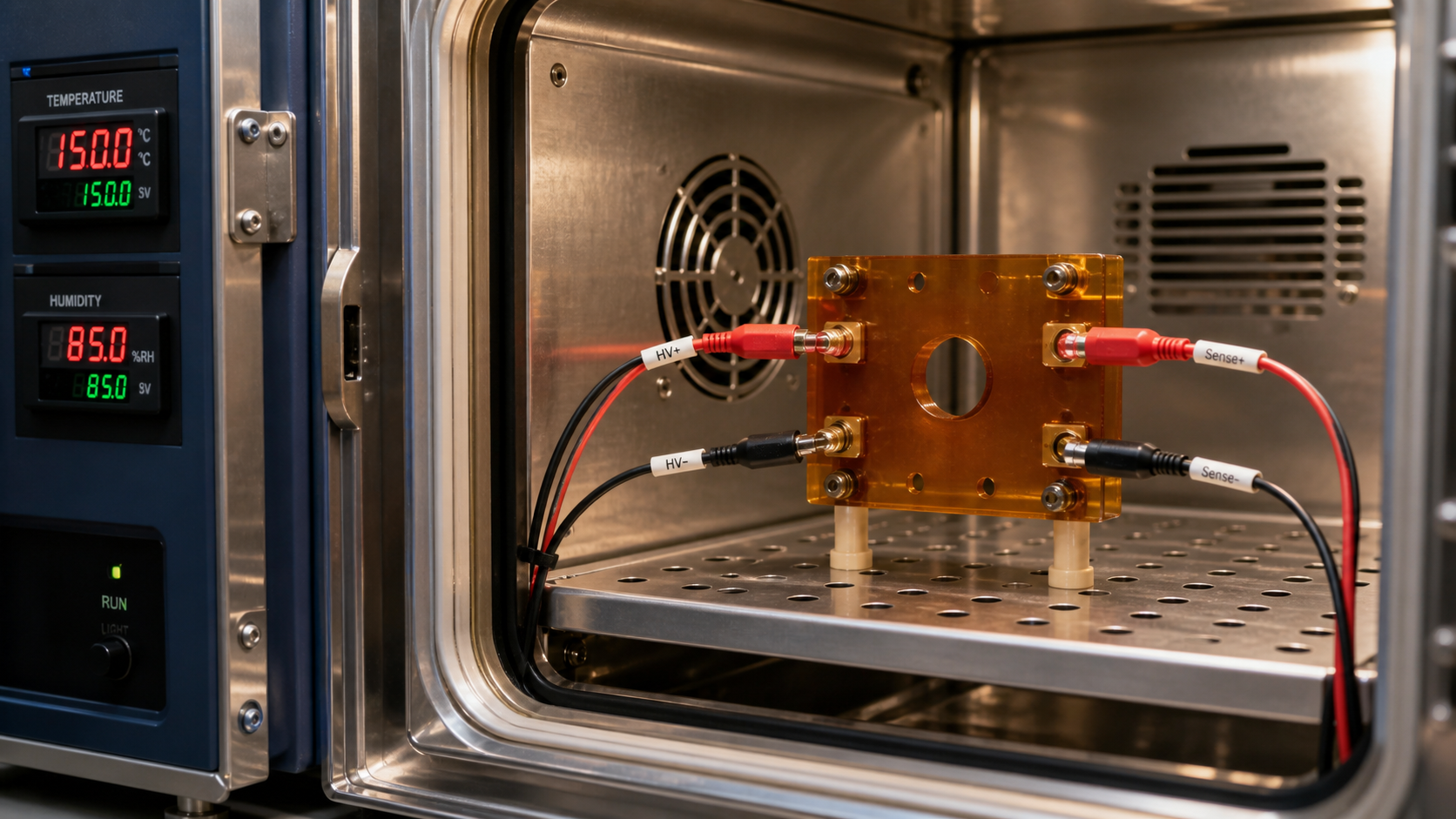
A technical data sheet is a starting point, not a guarantee. The values presented are measured in a highly controlled laboratory setting, usually at room temperature and a standard humidity level. Your application is almost certainly different. For electrical components, temperature and moisture are two major factors that can change a material's behavior. Many polymers, including some PIs, can absorb a small amount of moisture from the air. This absorbed water can significantly lower the material's volume resistivity. Likewise, as temperature increases, insulating properties can degrade.
Our role at VantPoly is to ensure you get the exact material you need for your own validation. When we supply a material, we provide full traceability back to the manufacturer and the specific production batch. This is critical. It means that the material you test is the exact same material you will get in production. We make it clear that the supplier's test data is their own, and we encourage our customers to perform their own testing under conditions that mimic their application as closely as possible. This is the only way to be certain that a component will perform reliably over its entire service life.
Specifying Unfilled PI Where the Evidence Supports It?
You have done the research and completed your tests. Now, you need to ensure you get the exact same high-performance, insulating material for every future order, without any surprises.
To specify unfilled PI correctly, you must use the exact manufacturer's grade name on all technical drawings and purchase orders. Avoid generic terms like "Polyimide" or "PI," as this prevents suppliers from substituting a different, potentially conductive grade that could cause failures.
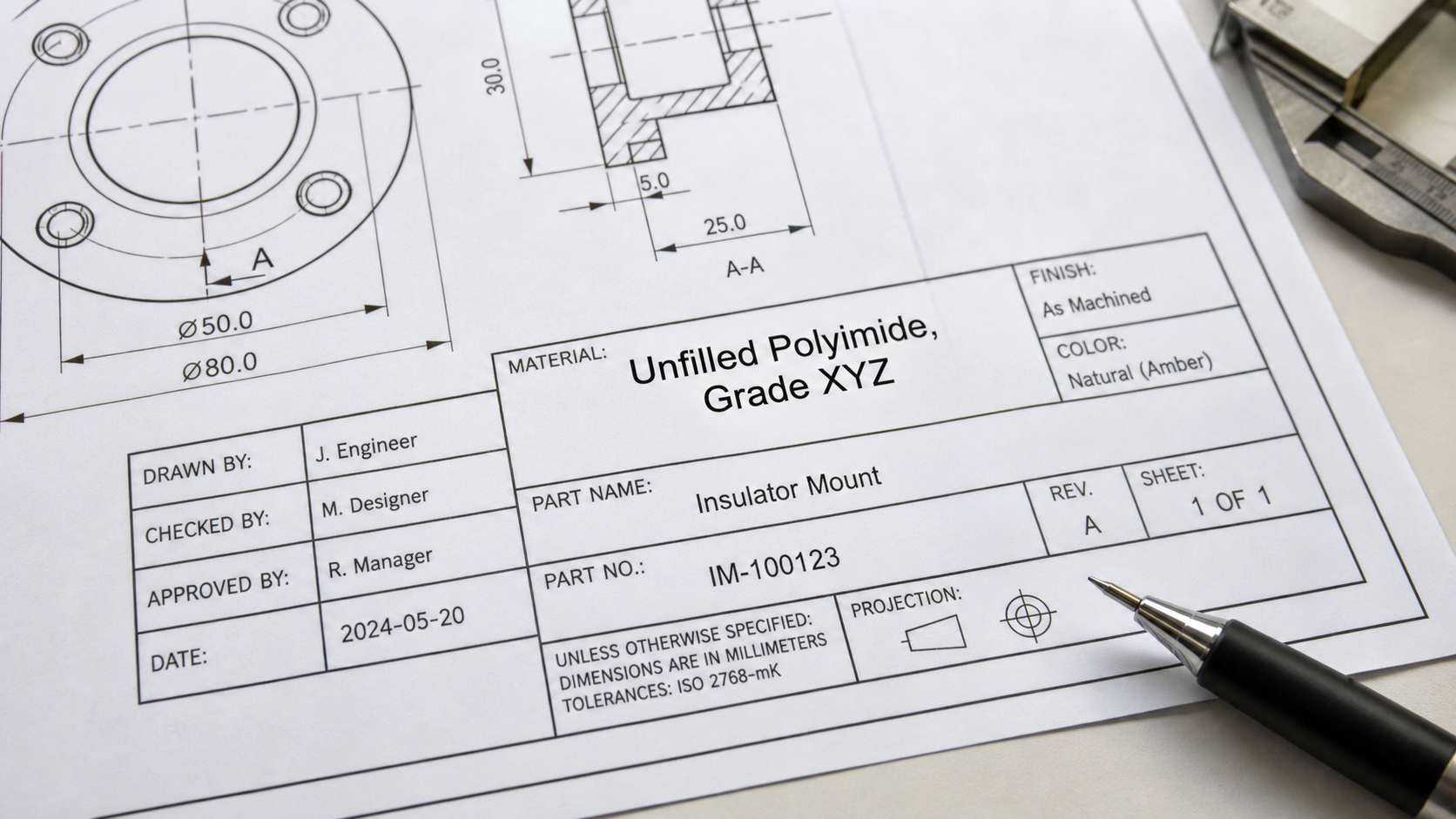
Making the final material specification is where all the research pays off. This is how we make material selection an evidence-based decision rather than a guess. Once you have the data—from the supplier's data sheet and your own validation testing—that shows a specific unfilled PI grade meets your electrical and mechanical needs, that grade name needs to be locked in. I have seen situations where a drawing simply called for "PI," leaving the door open for interpretation. A purchasing department might source a cheaper, graphite-filled grade that technically is "PI," but it will not perform as an insulator.
This can lead to field failures that are difficult to diagnose. The solution is simple: be precise. If your testing validated "Manufacturer ABC's Polyimide Grade 123," then that exact text should be in the material specification block of your engineering drawing. This small detail is your best insurance against material-related problems down the line. It transforms your specification from a loose guideline into an enforceable requirement. It ensures that the component you get tomorrow is identical to the one you qualified today, providing the consistency that critical applications demand.
Conclusion
For reliable electrical insulation, an unfilled PI is often the best choice. Always verify the specific grade, because fillers intended for strength can turn your insulator into an unwanted conductor.