PEEK Plate Procurement: Asking About Stress Before Cutting?
Have you ever machined a pricey PEEK plate, only to watch it warp like a potato chip? This internal stress can ruin parts, waste material, and throw your project off schedule.
To prevent warping, you must investigate the PEEK stock's manufacturing history and annealing records before you buy. We recommend performing a sample cut to reveal movement and comparing suppliers based on documented evidence of stability, not just on a polymer name.
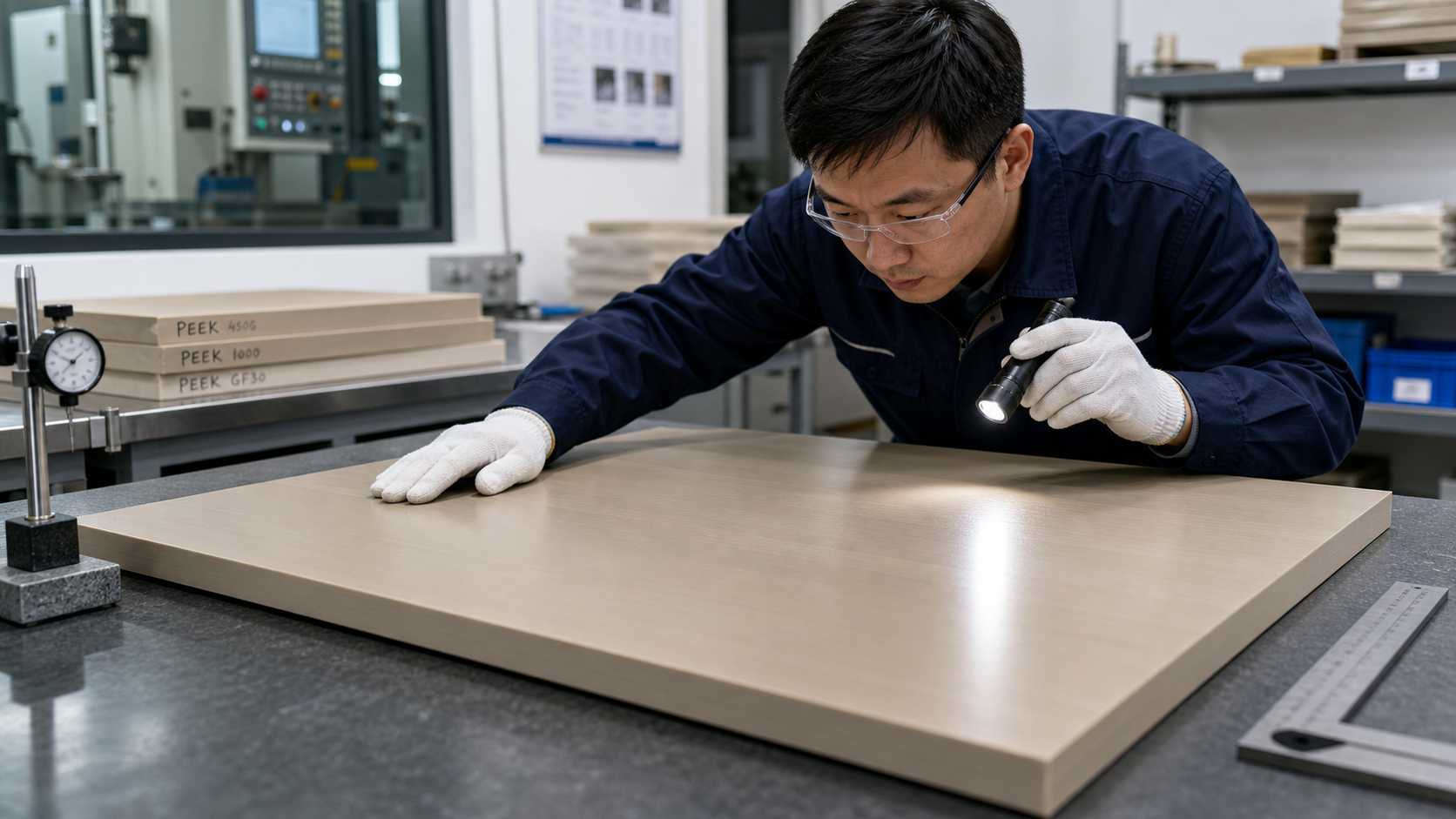
It’s a frustrating experience, and I've seen it happen more than once. A beautiful, flat plate goes into the CNC machine, and a twisted, useless part comes out. The key is to turn this guessing game into a methodical process. It all starts with asking the right questions about how the material was made long before it ever reached your workshop. I treat this discussion as anecdotal, and you should always independently confirm any remedy for your specific grade of PEEK. Let's break down what to look for.
Requesting the Stock Shape's Manufacturing History?
You bought two PEEK plates that look identical, but one machines perfectly while the other twists. This inconsistency ruins parts and makes it impossible to quote jobs accurately.
Ask your supplier for details on the extrusion or compression molding process. Key information includes processing temperatures, cooling rates, and any post-processing. This history directly impacts the level of locked-in stress, which affects stability during machining.
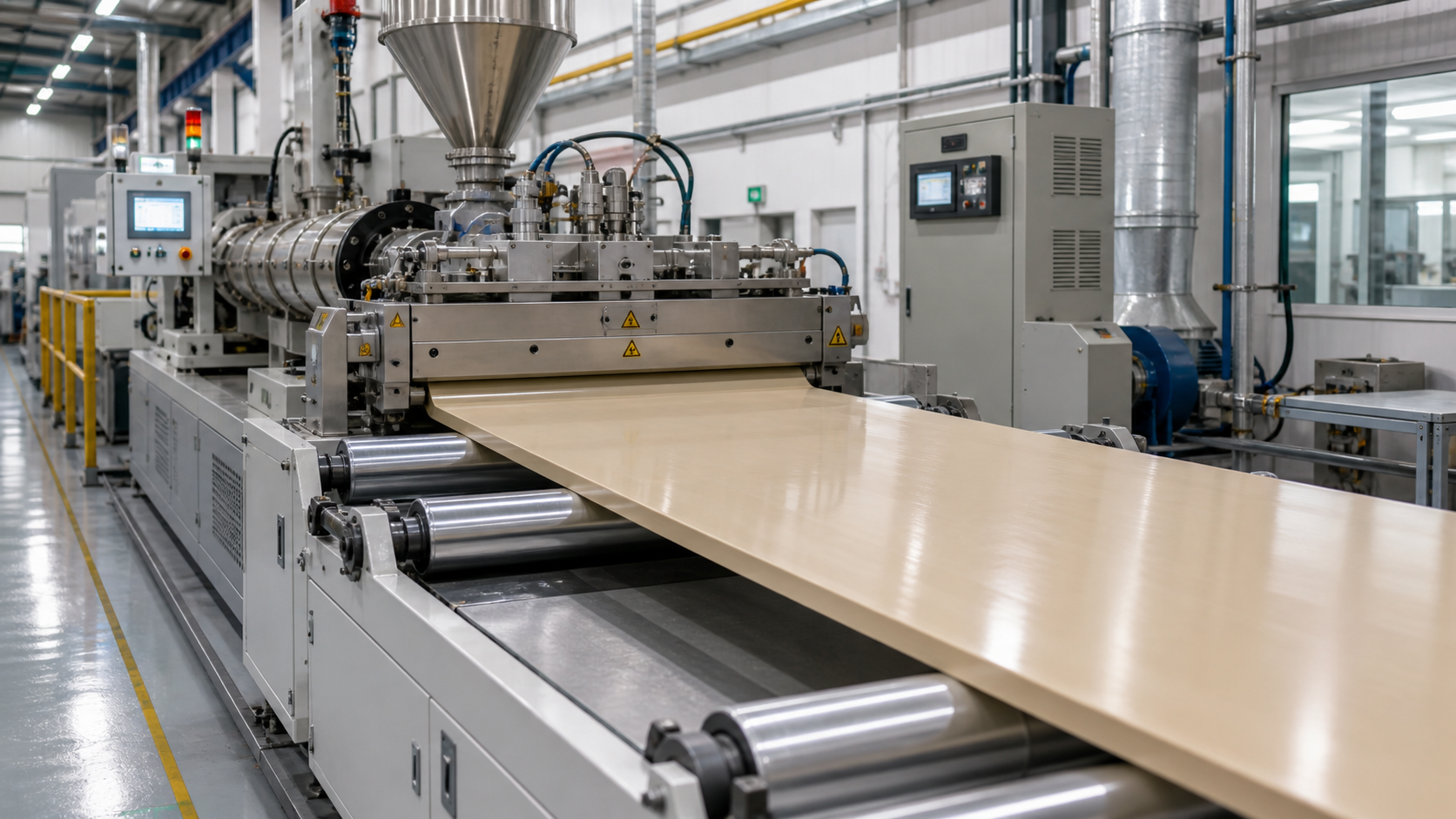
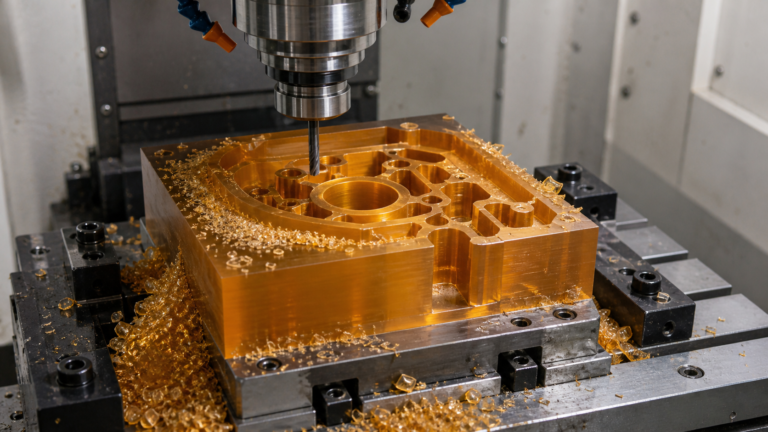
The way a PEEK plate is formed is the root cause of most internal stress. Whether it’s extruded or compression molded, the process variables are critical. We always start here when evaluating a new material source. A rapid or uneven cooling rate is a primary offender. When the outside of the plate cools and solidifies much faster than the inside, it traps stress within the material. When you machine away that outer "skin," you release the tension, and the part moves. For high-precision components, especially those made from glass-filled PEEK, understanding this history isn't just helpful; it's essential.
Key Manufacturing Factors to Investigate
We find that a transparent supplier will be able to discuss these factors with you. A supplier who claims it "doesn't matter" is a red flag for us.
| Factor | Why It Matters for Stress | What to Ask |
|---|---|---|
| Forming Method | Extrusion and compression molding introduce stress in different ways. Extrusion can create directional stress, while molding can have pressure-related stress. | “Was this plate extruded or compression molded?” |
| Cooling Rate | This is the biggest contributor. Slow, controlled cooling allows polymer chains to relax, minimizing stress. Fast cooling locks it in. | “Can you describe the cooling process used for this stock?” |
| Post-Processing | Was any secondary annealing or conditioning performed immediately after the shape was formed? This can be a good sign of quality control. | “Was any post-forming stress relief performed?” |
Checking What the Annealing Record Covers?
A supplier tells you the PEEK plate is "stress-relieved," but it still moves during machining. The term "annealed" can be vague, costing you time and expensive material.
An annealing record should detail the entire thermal cycle: heating rate, soak temperature, hold time, and cooling rate. This documentation proves the stress-relief process was performed correctly for the material's thickness, ensuring internal stresses are minimized.
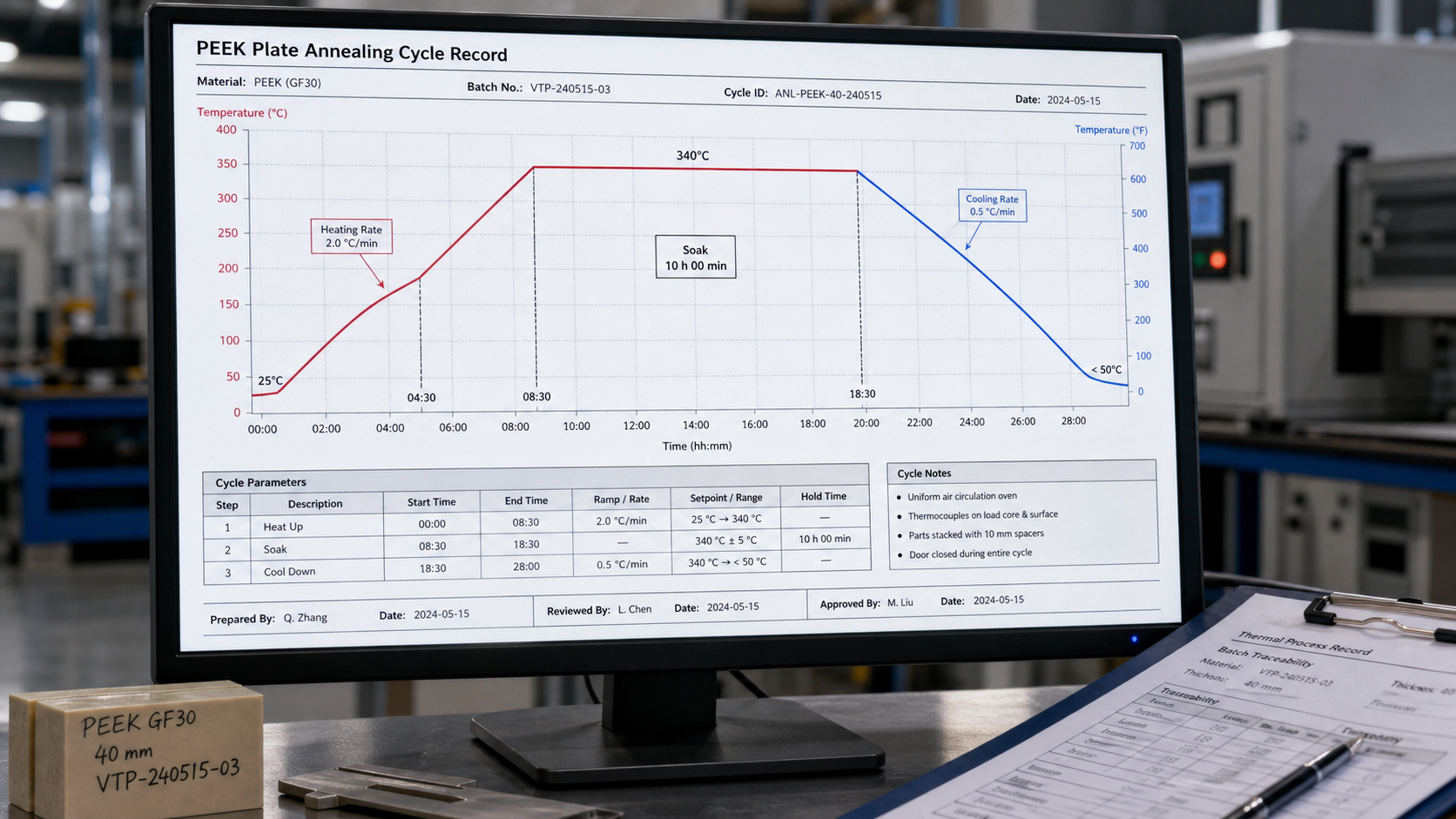
Annealing is the standard remedy for internal stress, but not all annealing processes are created equal. I once worked on a project where a customer's parts were warping badly. The supplier insisted the material was annealed. When we finally got their annealing records, we saw the problem immediately. They were using a very short cycle with a fast cooldown to save time and energy. It was fine for their 10mm plates, but for the 40mm plate our customer was using, the heat never fully penetrated the core. As a result, only the outer surfaces were stress-relieved. As soon as we machined into the center, the part moved. A proper annealing cycle must be tailored to the material's cross-section. The part needs to be heated slowly, held at temperature long enough for the entire part to equalize, and then cooled down very slowly. Without a record of that full cycle, a simple "yes, it's annealed" on a certificate doesn't mean much.
Using a Sample Cut to Reveal Movement?
The documentation looks good, but you're still not 100% confident in a new PEEK supplier. A bad batch could destroy a high-value production run, and you can't afford that risk.
Take a sample piece from the stock and perform significant material removal, like cutting it in half or hogging out a large pocket. Then, carefully measure the piece for any bowing or twisting. This physical test provides undeniable evidence of internal stress.
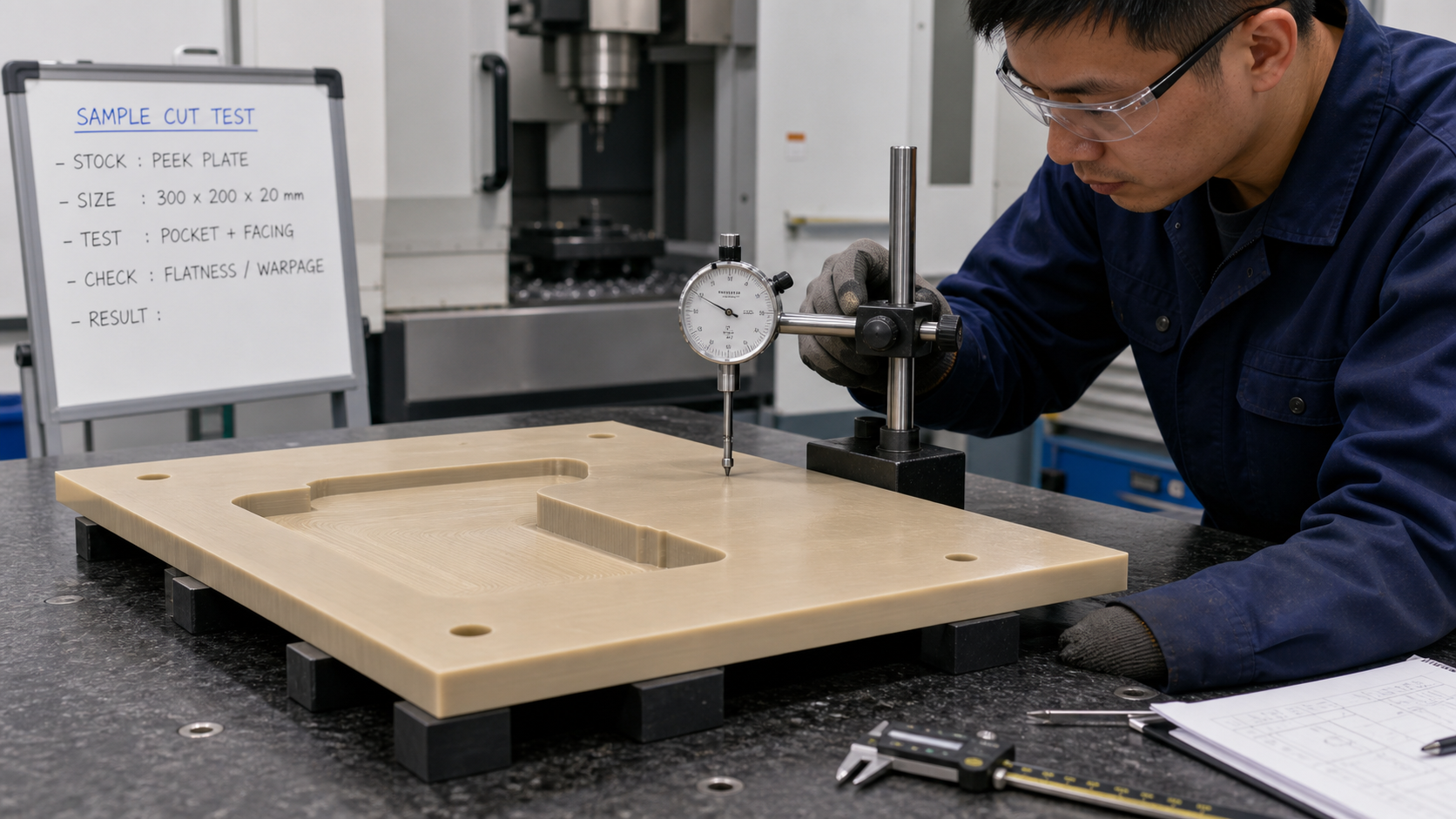
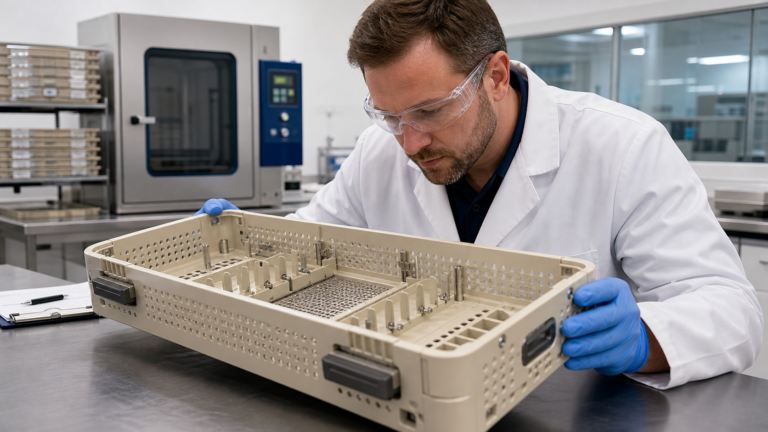
Documentation is important, but a physical test provides the ultimate proof. We often do this when qualifying a new material or supplier for a critical application. It's a small investment upfront that can save a fortune down the road. One of the simplest tests is the "split test." We take a rectangular sample, say 200mm long by 50mm wide, and make a saw cut down the middle, stopping about 10mm from the end. If the material is stressed, the two "legs" of the sample will either spring open or pinch closed. The amount of movement gives you a very real indication of the stress inside. For plates, we might machine a large, deep pocket in the center or take heavy facing cuts off both sides. We always recommend symmetric material removal—taking equal amounts from opposite faces in alternating steps—to help balance the release of stress. If the plate stays flat after this aggressive machining, we can proceed with confidence.
Comparing Suppliers by Documented Stock Stability?
You need a reliable source for stable PEEK, but every supplier just says "high quality." Making a decision based on price alone is a huge gamble that often backfires.
Compare suppliers by requesting and evaluating their manufacturing process data, full annealing cycle records, and any internal test results for stock stability. A transparent supplier who provides this evidence is often more reliable than one who relies on a brand name.
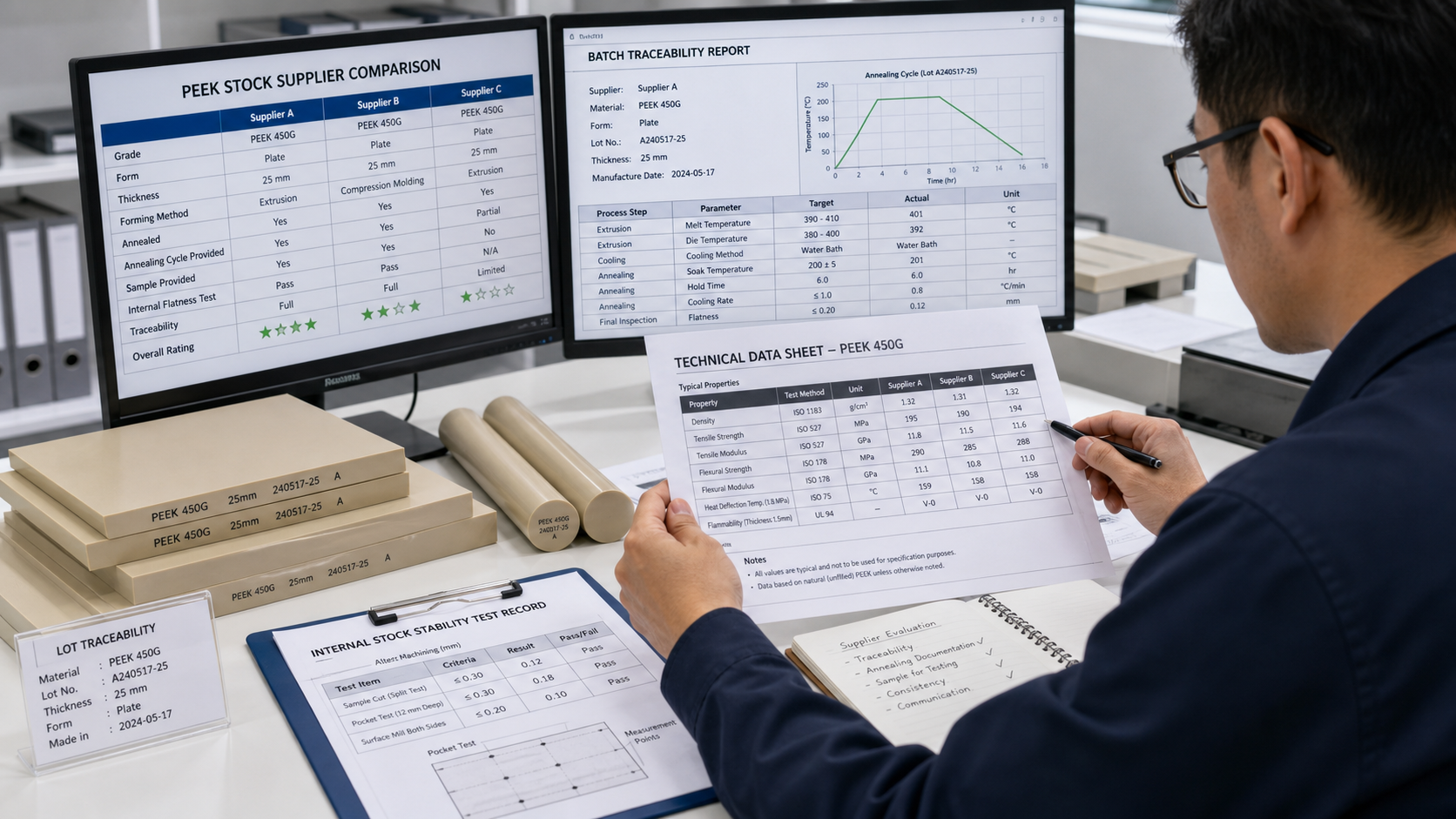
When we choose a supply partner, we're not just buying a polymer; we're buying a predictable process. The goal is to find a supplier who understands the importance of stability and has the controls in place to deliver it consistently. Price is always a factor, but the cost of one warped part made from cheap material can wipe out any initial savings. We build a scorecard for potential suppliers. We ask for their process information, annealing records, and their willingness to provide a sample for our own testing. A supplier who is open and shares this data becomes a partner. One who is secretive or dismissive is a risk. Over time, you build a relationship with suppliers who provide material that behaves predictably, which is the foundation of any successful precision machining operation.
Supplier Evaluation Checklist
Here’s a simple framework we use to compare potential suppliers of high-performance polymer stock shapes.
| Evaluation Criteria | What to Look For | Red Flags |
|---|---|---|
| Traceability | Clear lot and batch numbers linking the stock shape back to the raw resin batch. | No batch records or an unwillingness to provide them. |
| Annealing Documents | A detailed chart or report showing the full thermal cycle (time and temperature). | A simple certificate that just says “Annealed.” |
| Sample for Testing | Willingness to provide a representative sample from the same batch for your evaluation. | Refusal to provide samples or charging an excessive price for them. |
| Consistency | Ask for data from previous batches to see if their process is stable over time. | Major variations in their process documents from one batch to the next. |
Conclusion
Evaluating PEEK for stress before cutting is critical. By checking manufacturing history, demanding proper annealing records, and testing samples, you make an evidence-based choice for stable, reliable machining results.