PI Stock Shapes Versus Direct-Formed Parts?
Struggling to choose between machining polyimide stock shapes and direct-forming? The wrong choice wastes money and compromises performance. We'll help you compare these routes for an evidence-based decision.
For low quantities or simple shapes, machining polyimide stock shapes is often best. For high volumes of complex parts, direct-forming becomes more economical despite initial tool costs. The choice depends on balancing material waste against tooling investment and required part properties for your specific PI grade.
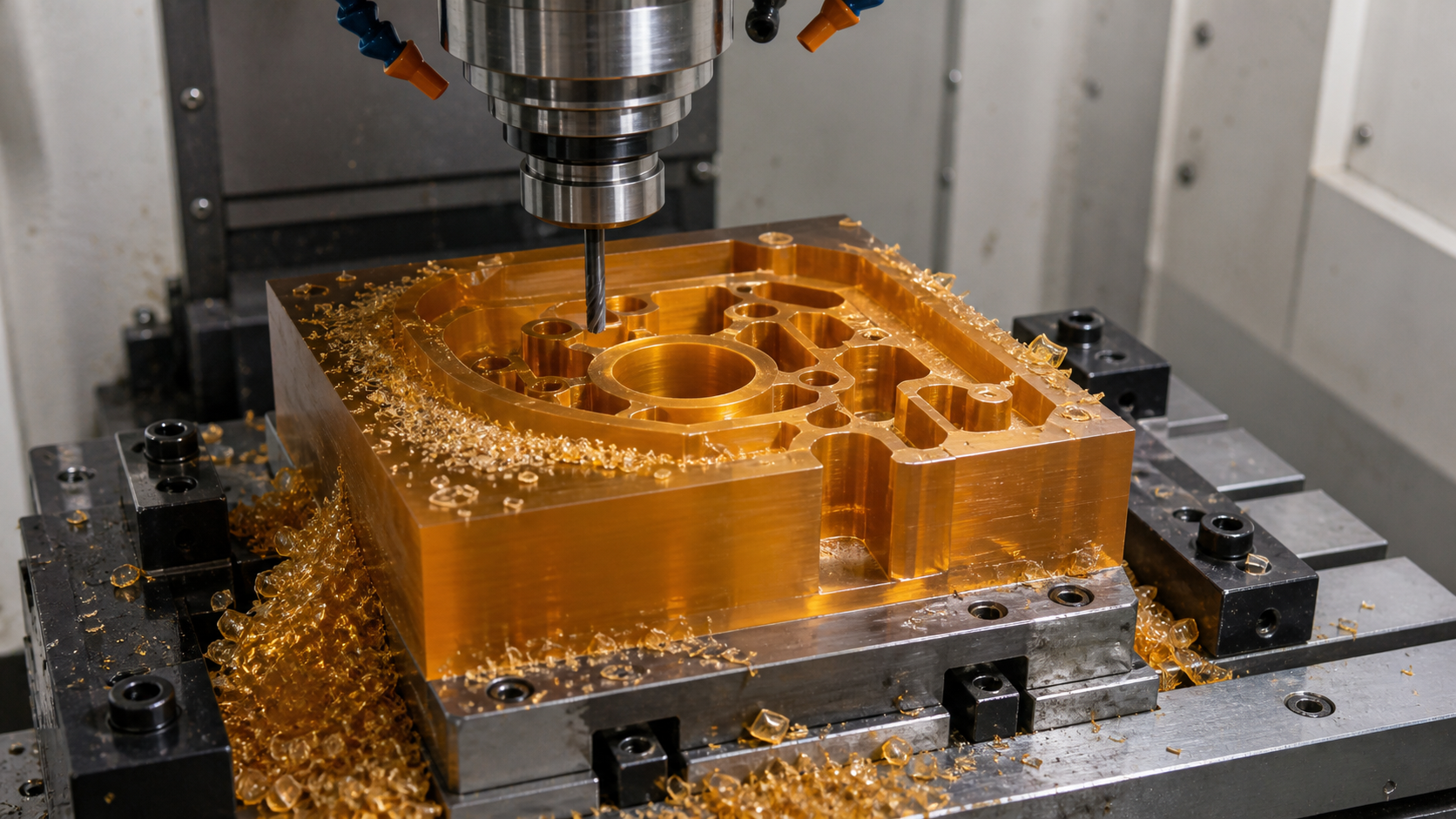
This choice isn't just about the polymer's name; it's about making a smart financial and engineering decision. Let's break down the key factors, starting with the most immediate one: cost. The numbers often tell a surprising story, and understanding them is the first step to optimizing your production plan. We help customers walk through this analysis to ensure their project starts on the right foot, avoiding costly assumptions and focusing instead on a clear, documented plan that fits their budget and production scale.
Comparing Machining Waste With Direct-Forming Tool Cost?
Worried about the high cost of polyimide waste from machining? Every chip is money lost. But direct-forming requires a big upfront tooling investment. Let's see how these costs compare.
Machining has higher per-part material waste but no tooling cost, ideal for prototypes and small batches. Direct-forming minimizes waste but requires expensive molds, making it cost-effective only at high volumes where the tool cost is spread across many parts. A breakeven analysis is essential.
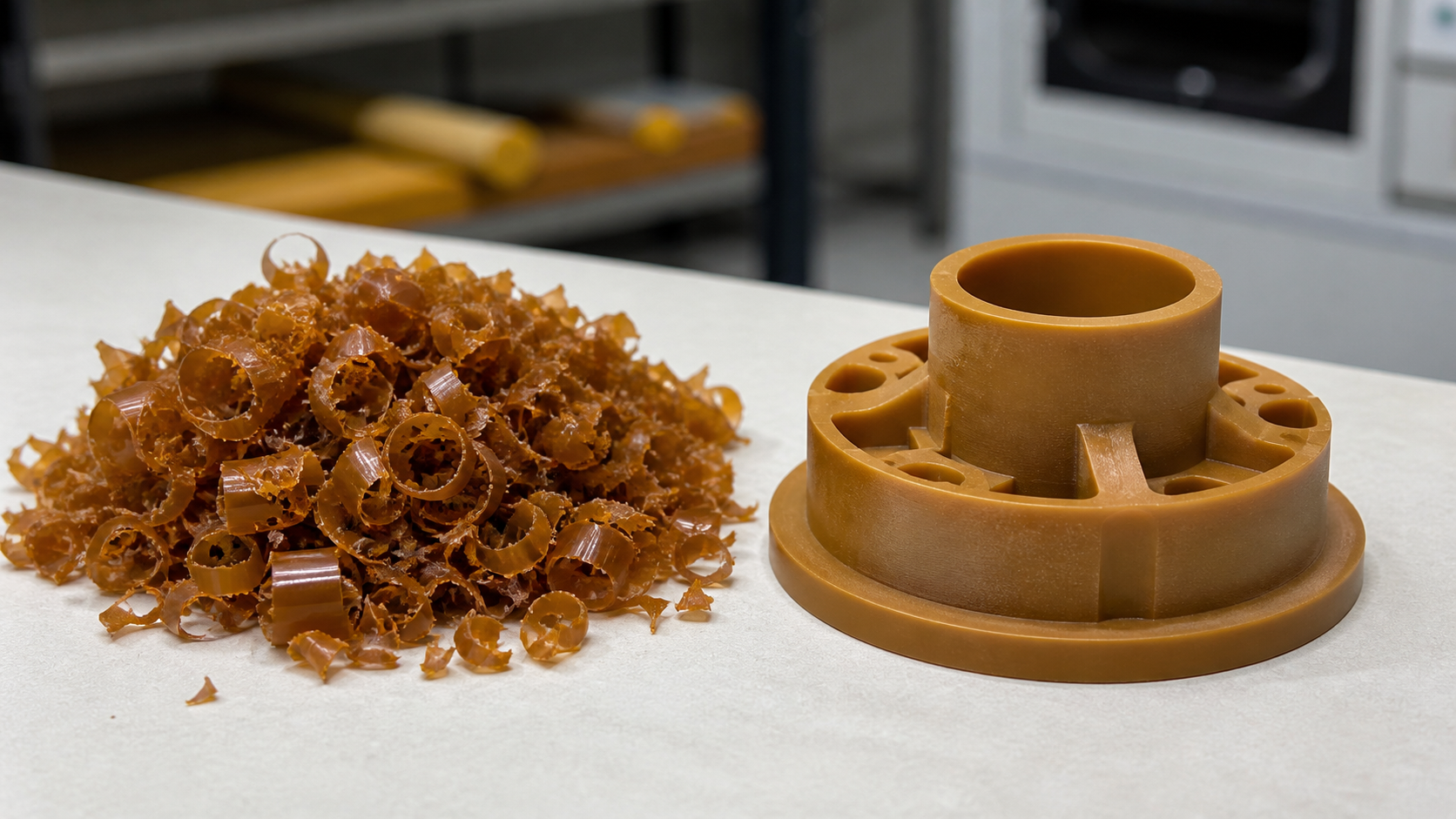
Polyimide is a premium material, so its cost is a major factor in any project. When we machine a part from a solid rod or sheet, a significant amount of this expensive material can become waste. For a complex part, the material yield might be less than 50%. This means over half the material you buy is turned into chips. On the other hand, direct-forming processes like hot compression molding or sintering create a "net-shape" or "near-net-shape" part, resulting in very little material waste. The trade-off is the high initial cost of the mold or tool, which can run into thousands of dollars. The decision comes down to a simple cost analysis. We help customers calculate the breakeven point where the savings from reduced material waste in direct-forming outweigh the initial tooling cost.
Cost Breakdown: A Head-to-Head Comparison
| Factor | Machining from Stock Shapes | Direct-Formed Parts |
|---|---|---|
| Tooling Cost | Zero, uses standard cutting tools. | High, requires a custom mold. |
| Material Waste | High, especially for complex parts. | Very low, process is near-net-shape. |
| Per-Part Cost (Low Qty) | Lower, no tool cost to amortize. | Very high due to tool cost. |
| Per-Part Cost (High Qty) | Remains high due to waste. | Becomes much lower as tool cost is spread out. |
| Ideal For | Prototypes, 1-500 pieces. | Mass production, 1,000+ pieces. |
Checking Shape Complexity and Available Production Routes?
Does your polyimide part have intricate features, thin walls, or undercuts? Machining struggles with these, risking part failure. Let's check which production route best handles complex geometries.
CNC machining offers excellent flexibility for simple to moderately complex shapes and rapid design changes. Direct-forming excels at producing highly complex, net-shape parts with features like undercuts that are difficult or impossible to machine. The part's geometry often dictates the available production routes.
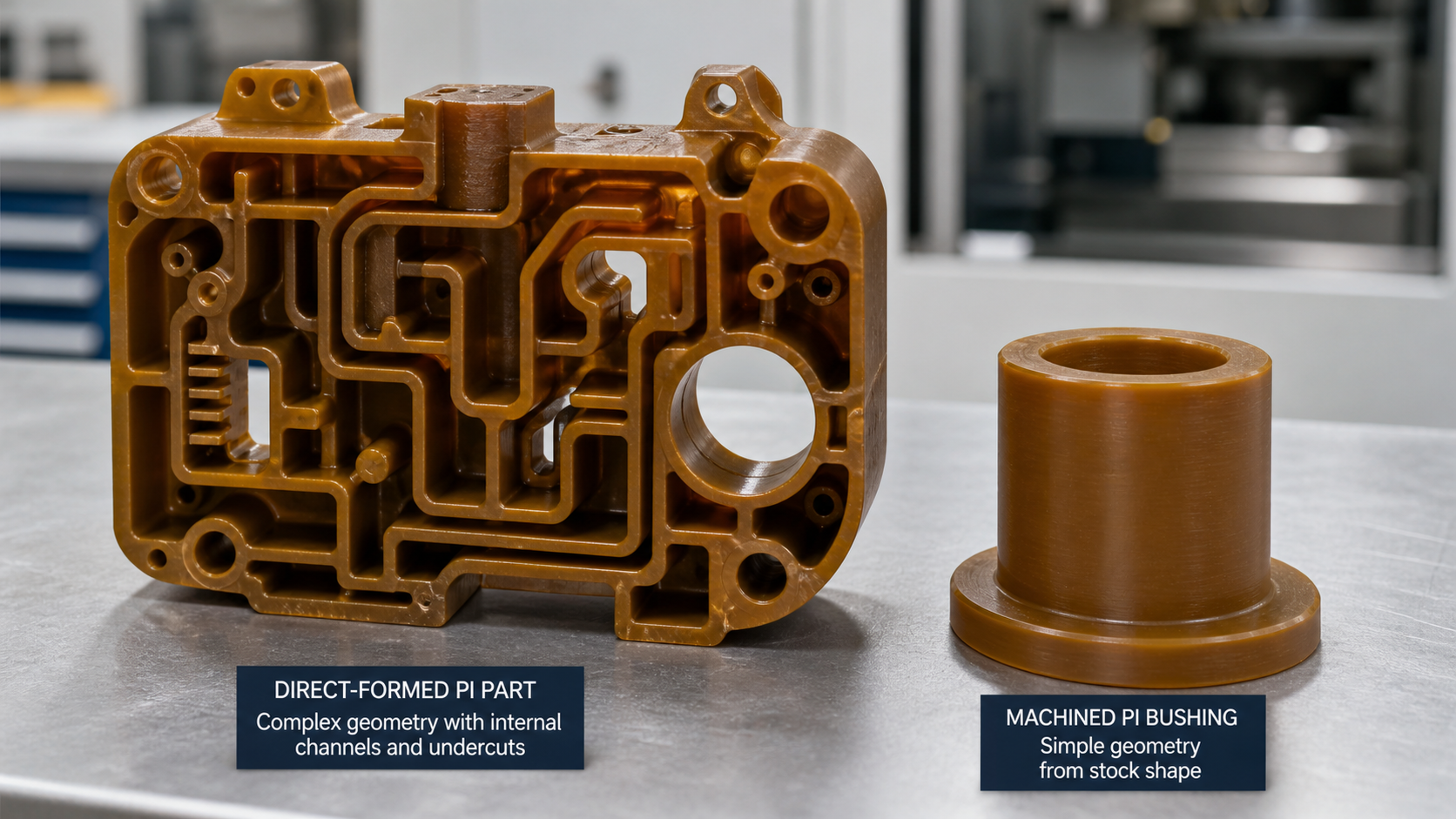
The physical shape of your part is a critical factor. CNC machining is a subtractive process; it carves material away. This works incredibly well for parts with straightforward geometries like bushings, washers, and insulators. However, it has limitations. For example, internal corners will always have a radius determined by the cutting tool's diameter. Creating deep, narrow pockets or internal features like undercuts can be impossible. Direct-forming, on the other hand, builds the part to its final shape from a powder. This allows for immense design freedom. Complex internal channels, non-uniform wall thicknesses, and intricate surface details can be incorporated directly into the mold. I remember a project with a tiny component that had an internal cross-channel. Machining it was out of the question, but direct-forming made it possible. We always review customer drawings to assess manufacturability and advise if a part's complexity makes one route more viable than the other. It is also important to remember that not all PI grades are available as both stock shapes and direct-formable powders, which can limit options.
Reviewing Property Evidence for Each Route?
Assuming a PI part has the datasheet properties, regardless of how it's made? This mistake can lead to unexpected failures. The manufacturing route itself changes the final part's performance.
Properties of machined parts come from the extruded or compression-molded stock shape. Direct-formed parts' properties depend on the powder and the sintering/molding cycle. Porosity, density, and crystallinity can differ, affecting mechanical strength and wear resistance. Always use data specific to the manufacturing process.
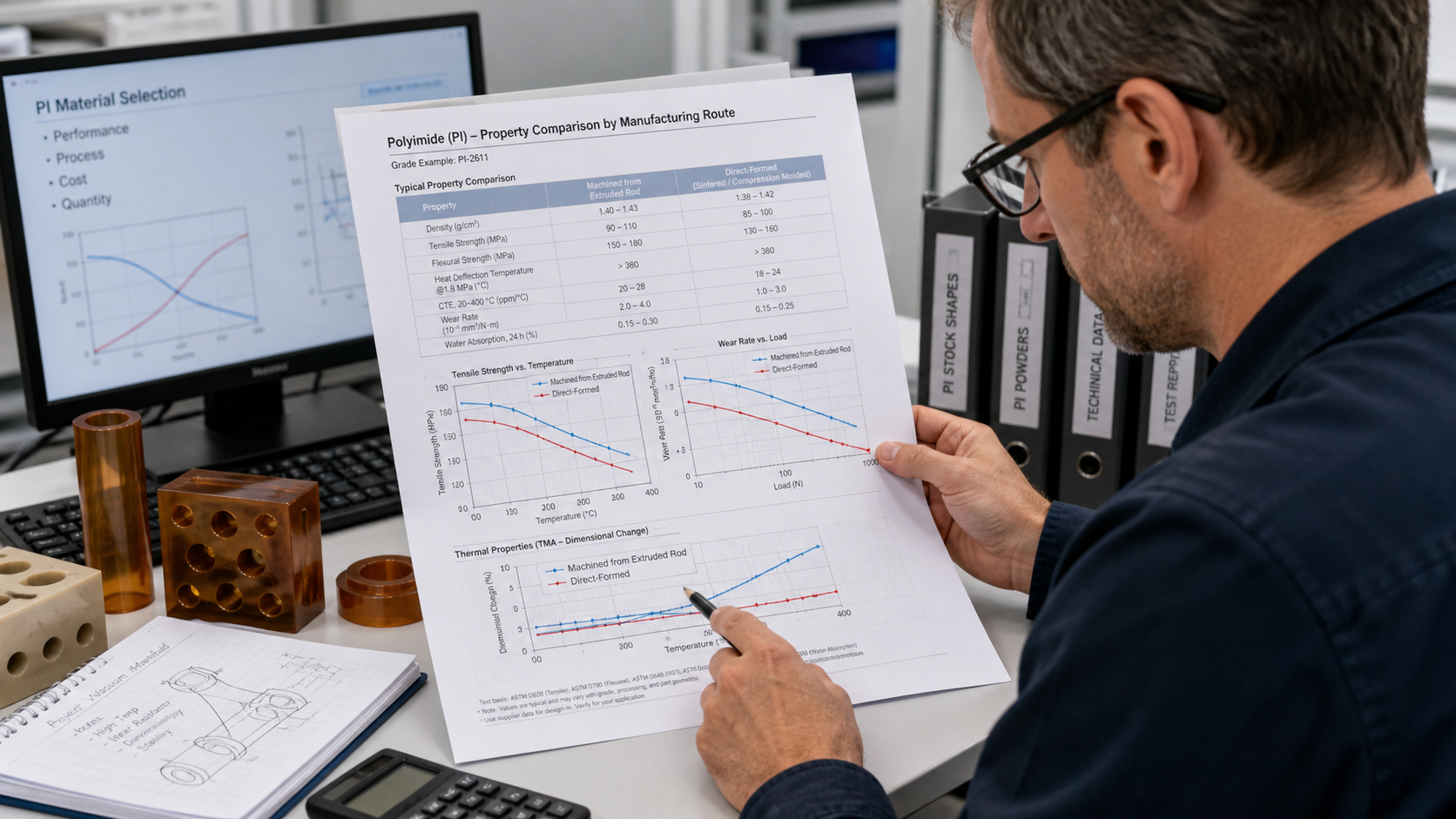
This is a point we emphasize constantly: we must distinguish PI grades and forms, not treat "polyimide" as a single material. A part machined from an isostatically pressed and sintered block will not have the exact same properties as a part that was direct-formed from powder, even if they are based on the same base resin. The manufacturing history—the pressures, temperatures, and cooling rates—creates a unique internal structure. This can affect density, porosity, and the level of internal stress. These differences directly impact mechanical properties like tensile strength, wear resistance, and thermal stability. When we work on a project, we are careful to use the correct technical data. We reference the manufacturer's datasheet for the specific grade and the specific form (e.g., "extruded rod" versus "direct-formed part"). It is critical to retain the original grade, test conditions, and application limits from the material supplier. We do not present this as our own test evidence; we present it as an evidence-based approach to making an informed engineering decision.
Choosing the Economic Route at the Required Quantity?
Ready to decide but unsure where the cost tips in favor of one method? Guessing is risky and expensive. Let's create a clear framework for choosing the most economic route.
For quantities from one to a few hundred, machining is typically the most economic route due to no tooling costs. For thousands of parts, direct-forming is usually cheaper per piece. The exact breakeven point depends on part size, complexity, and material cost.
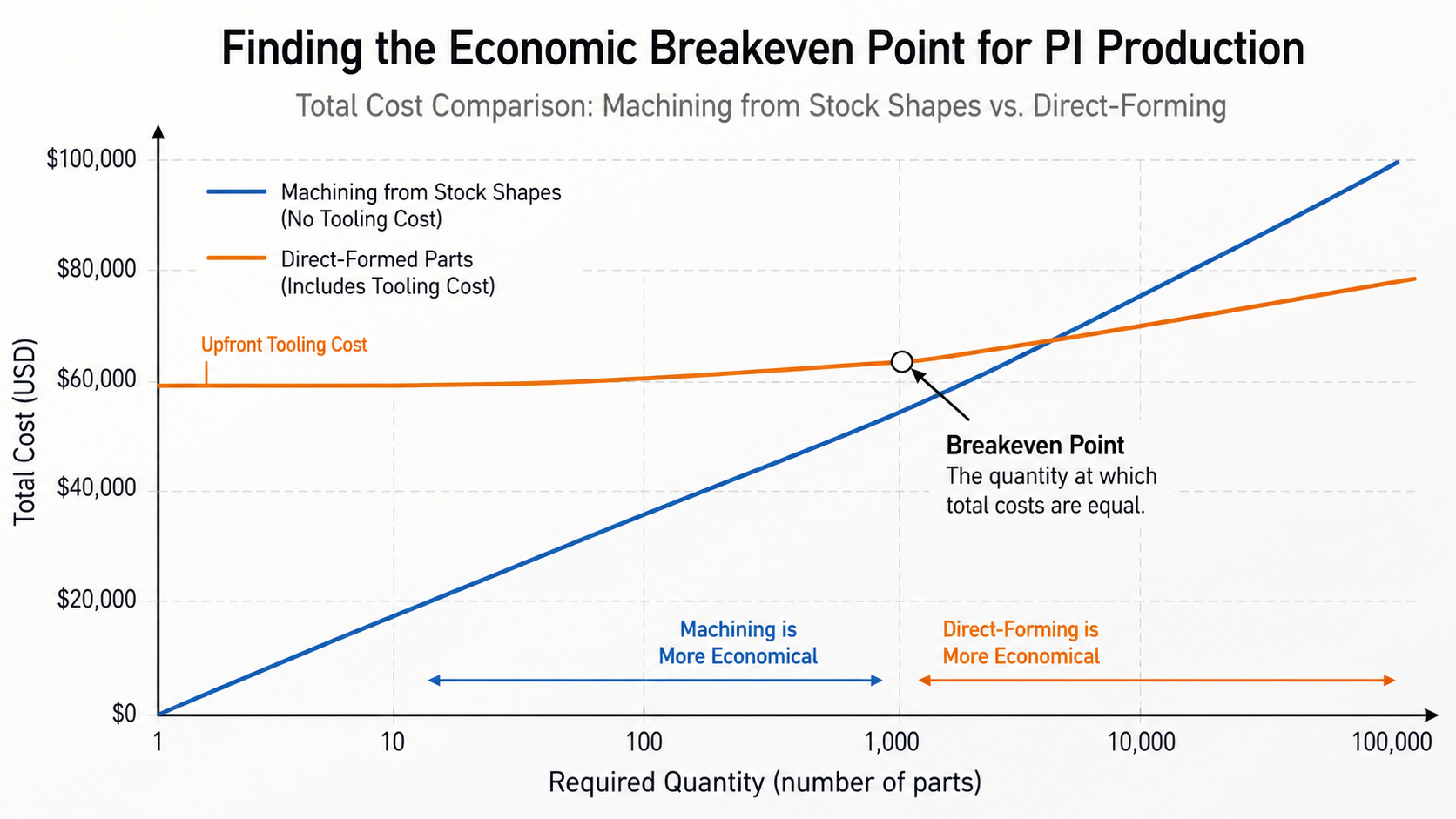
The final decision often comes down to quantity. For a single prototype or a small batch of ten parts, machining is almost always the winner. The cost is simply the material and machine time. There is no expensive tool to pay for. As the required quantity increases into the thousands, the math flips. The high cost of the direct-forming mold gets divided by the total number of parts, making the per-part cost drop significantly. At these volumes, the material savings from eliminating waste make direct-forming the clear economic choice. The tricky part is the "in-between" quantity, perhaps a few hundred to a thousand pieces. Here, we have to look at other factors. Is the part design stable and finalized? If so, investing in a tool might make sense. But if the design is likely to change, sticking with machining provides flexibility without the risk of scrapping an expensive mold. We guide our customers through this by examining their total project cost, considering quantity, part complexity, and design maturity to choose the route that makes the most sense for their specific situation.
Conclusion
Choosing between machined and direct-formed PI isn't about the polymer name. It’s an evidence-based decision balancing part quantity, shape complexity, total cost, and specific grade properties for your application.