Can Alternating High-Performance Polymers Create a Reliable Print?
Printing with two high-performance polymers sounds great, but parts often delaminate and fail. This wastes time and expensive materials, leaving you with a useless part and a lot of frustration.
Yes, you can create a reliable print, but success depends on more than just the polymer names. You must systematically check the chemical compatibility, manage the thermal mismatch during the build, and test the actual bond strength at the interface. It's an evidence-based decision.
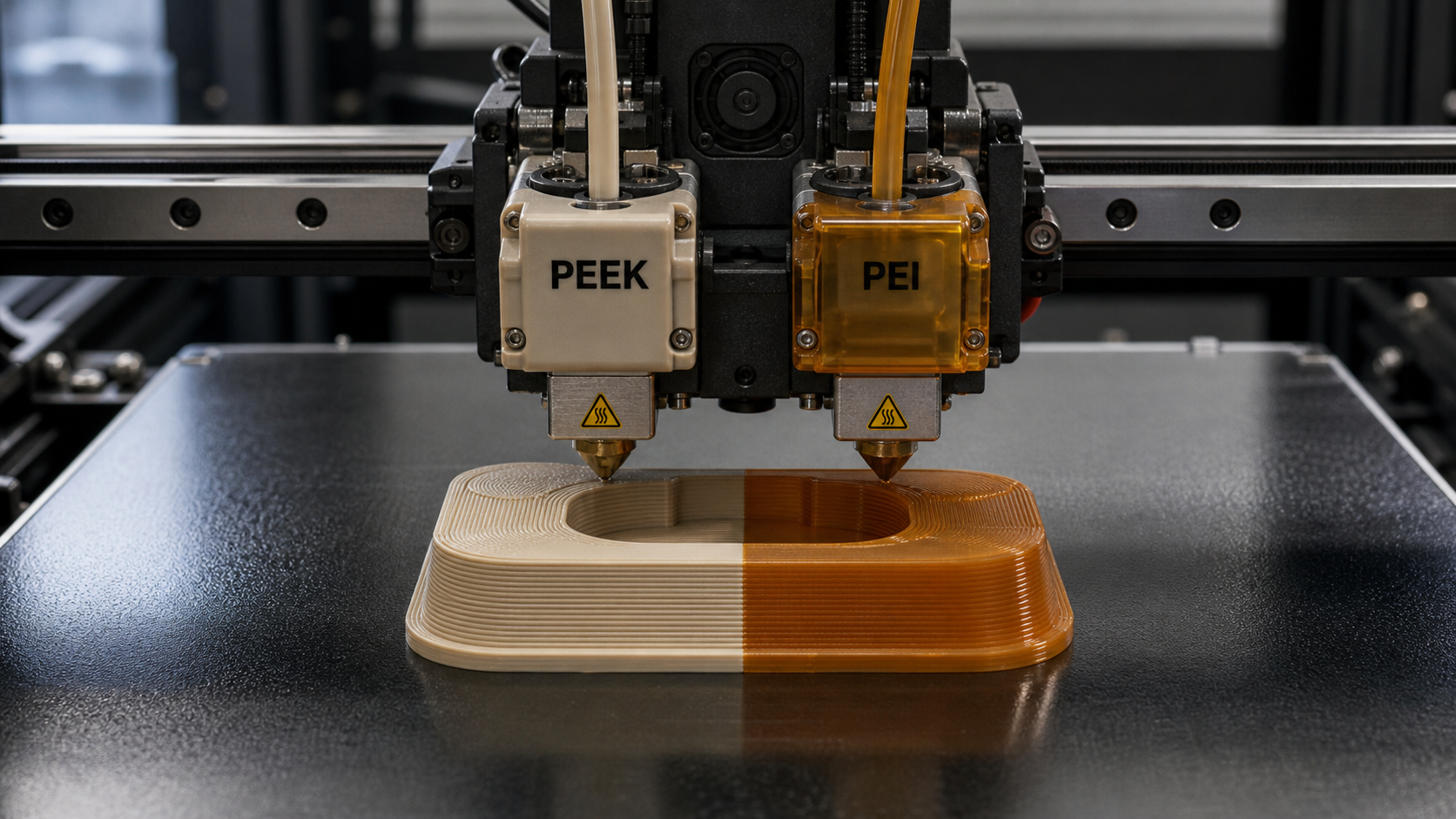
The promise of combining the unique properties of two different high-performance polymers into a single component is incredibly powerful. You might want the chemical resistance of PEEK in one area and the lower cost of PEI in another. However, getting these materials to stick together reliably is a major engineering challenge. I've seen many projects stall because the team assumed two materials would work together just because they sound similar. The reality is that a successful multi-material print requires a careful, step-by-step investigation before you ever hit "print" on a final part. Let’s walk through the critical checkpoints to turn that ambitious design into a functional, reliable component.
Checking Compatibility Where Two Polymers Meet?
You assume two high-performance plastics will bond well because they are both "strong." But after printing, the layers peel apart with almost no effort, ruining the part completely.
To check compatibility, first look at the polymer families. Materials from the same family, like PEEK and PEKK, usually bond well. Mixing different families, such as PEI and PPSU, is riskier and demands physical testing. Always verify compatibility for the specific grades you are using.
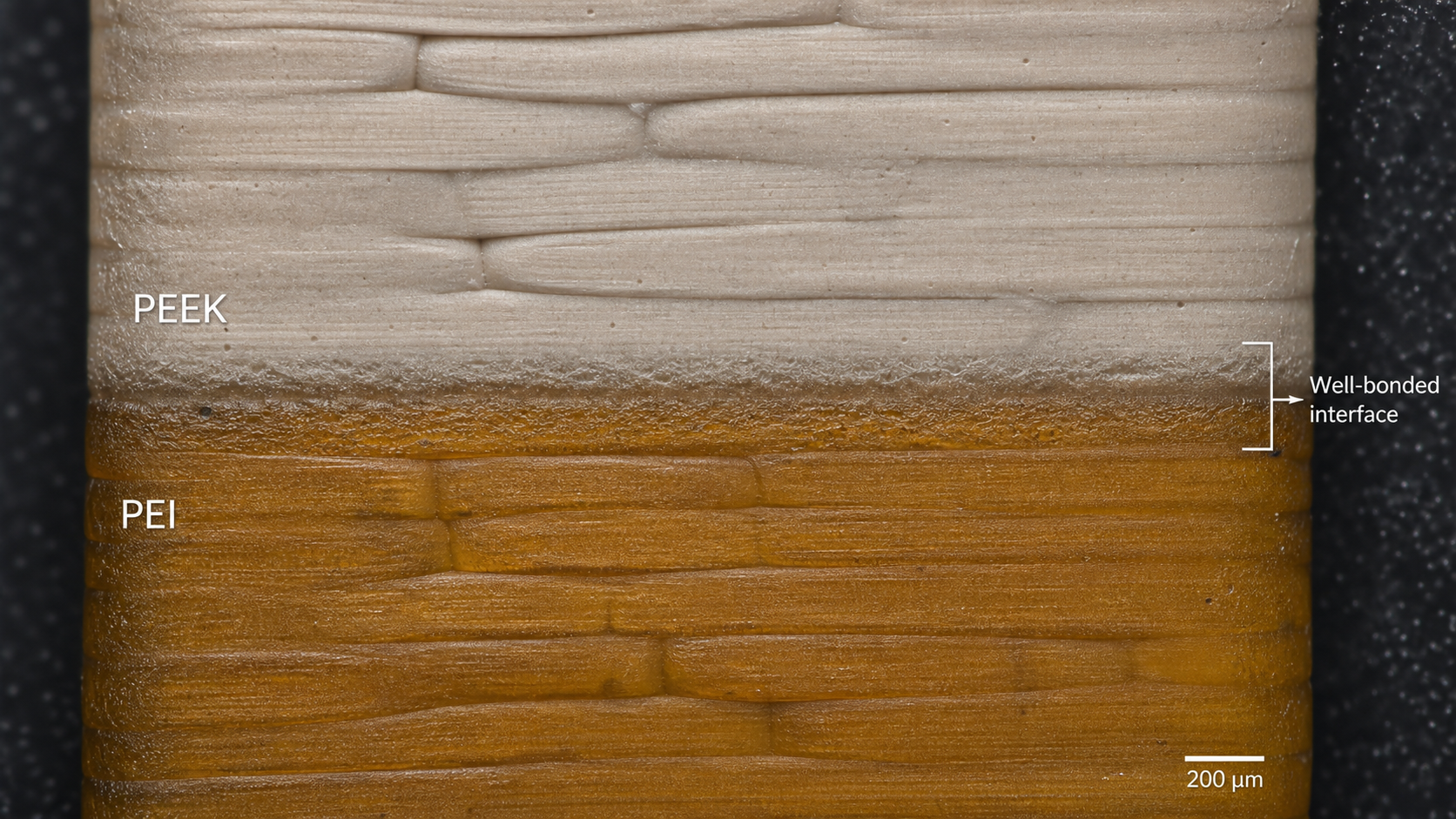
The first and most fundamental question is whether two polymers will even want to stick together at a molecular level. We often start by looking at their chemical families. Polymers are like people; they tend to get along better with their relatives. For instance, PEEK (Polyetheretherketone) and PEKK (Polyetherketoneketone) are both in the PAEK (Polyaryletherketone) family. Their similar chemical structures mean they are often miscible and can form a strong bond. In contrast, trying to print PEI (Polyetherimide) onto PEEK introduces a significant risk. They come from different families and may not bond well at all. I remember one project where we tried this exact combination; while the print looked fine coming off the machine, the parts could be snapped apart at the interface with my bare hands.
Beyond Polymer Family Names
Relying on the family name alone is not enough. We have to look deeper. Factors like additives, reinforcements (like glass or carbon fiber), and even colorants in a specific grade can interfere with bonding. A more scientific approach is to compare their solubility parameters, which predict how well two materials will mix. A small difference suggests better compatibility. We treat any new material combination as an unknown until proven otherwise.
| Polymer A | Polymer B | Family Relationship | Predicted Compatibility |
|---|---|---|---|
| PEEK | PEKK | Same (PAEK) | High – Good chance of forming a strong bond. |
| PEEK | PEI | Different (PAEK vs. PEI) | Questionable – Requires significant testing to confirm bond strength. |
| PPSU | PSU | Same (PSU) | High – Generally good compatibility within the sulfone family. |
| PEI | PPSU | Different (PEI vs. PSU) | Questionable – Unlikely to form a strong bond without compatibilizers. |
Comparing Their Thermal Requirements During the Build?
Your multi-material print looks perfect when it finishes. But as it cools down to room temperature, you hear a crack, and the part has warped into a useless shape.
Compare the glass transition temperature (Tg) and coefficient of thermal expansion (CTE) for both polymers. Large differences will create high internal stress as the part cools, causing warping or delamination. You need materials with closely matched thermal behavior for a stable build.
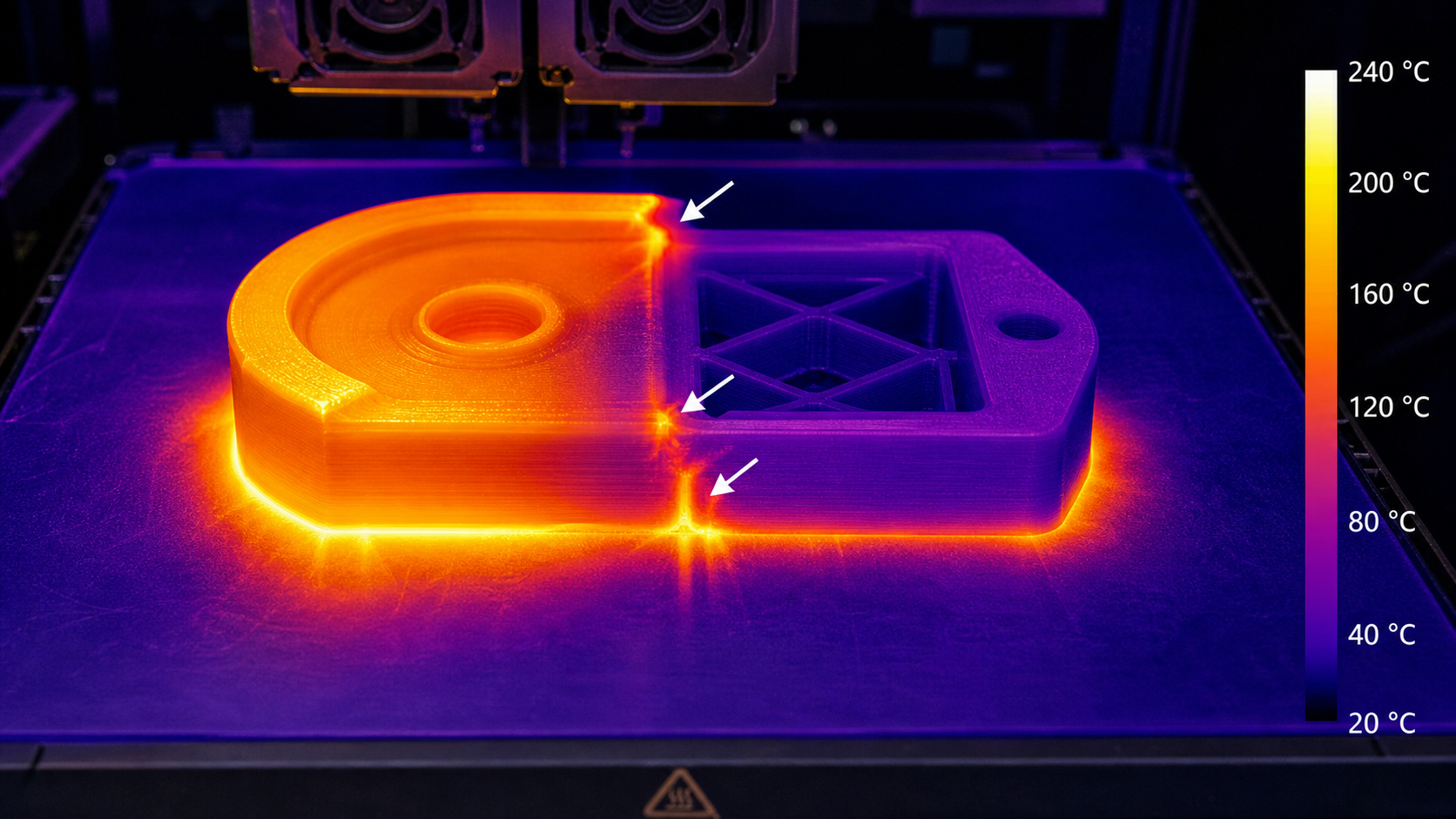
Even if two materials are chemically compatible, they can tear each other apart if their thermal behavior is too different. The two most important numbers to look at are the glass transition temperature (Tg) and the coefficient of thermal expansion (CTE). Tg is the temperature where the polymer goes from a rigid, glassy state to a more rubbery one. The CTE tells us how much the material expands when heated and shrinks when cooled. When you print one material on top of another, they are both at very high temperatures. As they cool, a material with a high CTE will try to shrink much more than one with a low CTE. This mismatch creates immense stress right at the interface. If the stress is greater than the bond strength between the layers, the part will either warp, crack, or delaminate. I once wasted a whole spool of expensive PPSU filament because I paired it with another material with a significantly lower CTE. The part literally curled up off the build plate as it cooled, pulling itself apart. You must keep the printing environment, especially the chamber temperature, carefully controlled to manage this cool-down process and minimize stress.
Testing Interface Strength Separately From Bulk Strength?
You look at a datasheet and see both polymers have great tensile strength. But when you use the part, it fails right at the seam where the two materials meet.
Do not rely on standard datasheets for multi-material parts. You must print specific test specimens, like lap shear coupons, that are designed to put stress directly on the interface. This gives you real data on the bond strength, not the material's bulk strength.
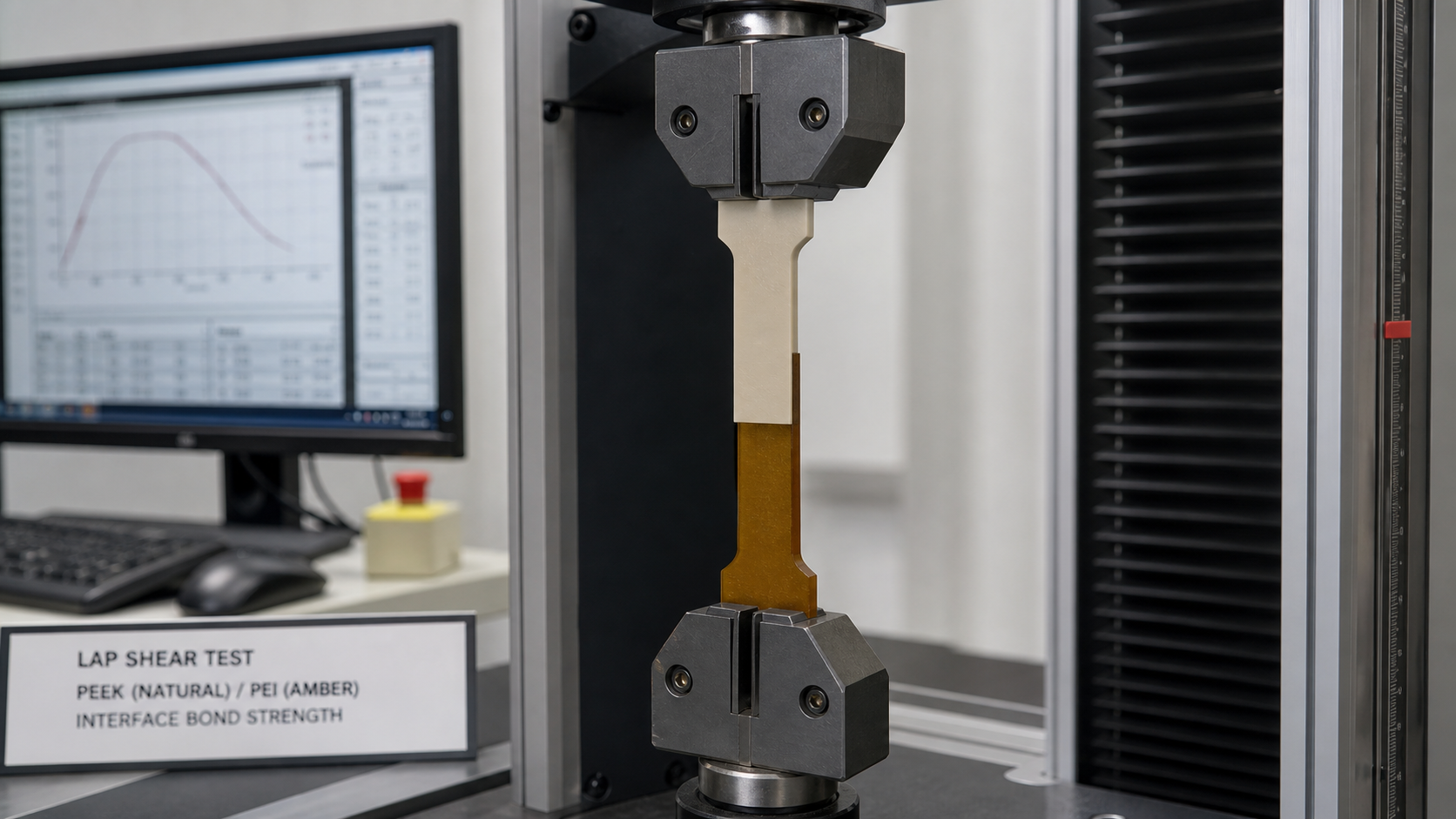
A material's datasheet tells you about its bulk properties—how strong a solid piece of that one material is. It tells you nothing about how well it sticks to something else. This is the critical mistake many people make. They assume that because PEEK is strong and PEI is strong, a PEEK-PEI part will also be strong. The weak point, however, is almost always the interface between them. The only way to know the true strength of that bond is to test it directly. We do this by printing special test coupons. For example, a lap shear specimen is designed so that when you pull it apart, all the force is concentrated on the bonded area between the two materials. I once worked on a component where the datasheets looked perfect. But when we ran our own interface tests, the bond strength was less than 20% of the weaker material's bulk strength. The interface was the weak link. This evidence-based approach is non-negotiable. Without this data, you are just guessing, and with high-performance polymers, that is a very expensive guess to make. This testing transforms an assumption into a hard number you can use for your design calculations.
Deciding Whether Multi-Material Printing Is Feasible?
You have a great idea for a multi-material component. But you are hesitant to invest the time and money because you are afraid the final part will just fail.
Feasibility is a simple, evidence-based decision. If the polymers are chemically compatible, their thermal mismatch is manageable, and your own interface strength tests meet the part's requirements, then it is feasible. If any of these checks fail, you must reconsider your materials.
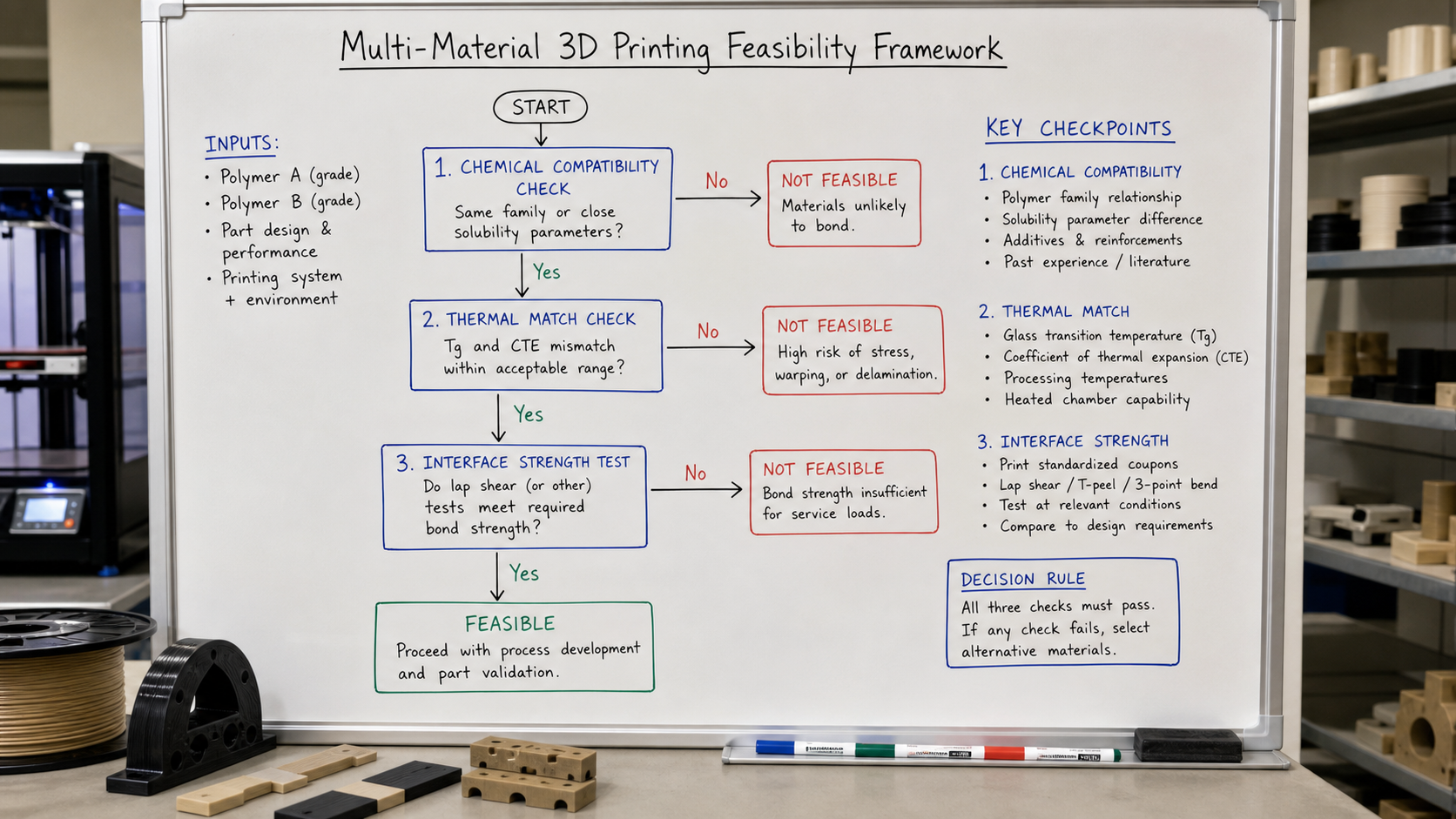
After going through the checks, the final decision becomes much clearer. It’s no longer a matter of opinion or hope; it’s about what the evidence tells you. We treat this as a final quality gate before committing to a complex and expensive print. First, did the chemical compatibility check pass? If not, the project stops here. Second, is the thermal mismatch (CTE and Tg) within an acceptable range that your printer’s heated chamber can manage? If it’s too large, the internal stress will likely cause failure. Third, and most importantly, did your physical interface strength tests produce values that meet or exceed the mechanical loads the part will see in its real-world application? If the answer to all three questions is "yes," then you can proceed with confidence. If any answer is "no," then it's back to the drawing board to select a different material combination. This systematic process is how we avoid costly failures. Remember, all of this advice is anecdotal, based on my experience. You must always confirm these steps for your specific grade of material and application to make a truly informed, evidence-based decision.
Conclusion
Reliable multi-material prints are achievable. Success means moving beyond brand names to systematically check chemical compatibility, manage thermal properties, and test the real-world interface strength before committing to production.