Can Annealing Make PEEK Stiffer but Less Ductile?
Your PEEK part isn't performing as expected after processing. You wanted more stiffness, but now it's brittle and failing. Understanding how thermal treatments like annealing change material properties is crucial.
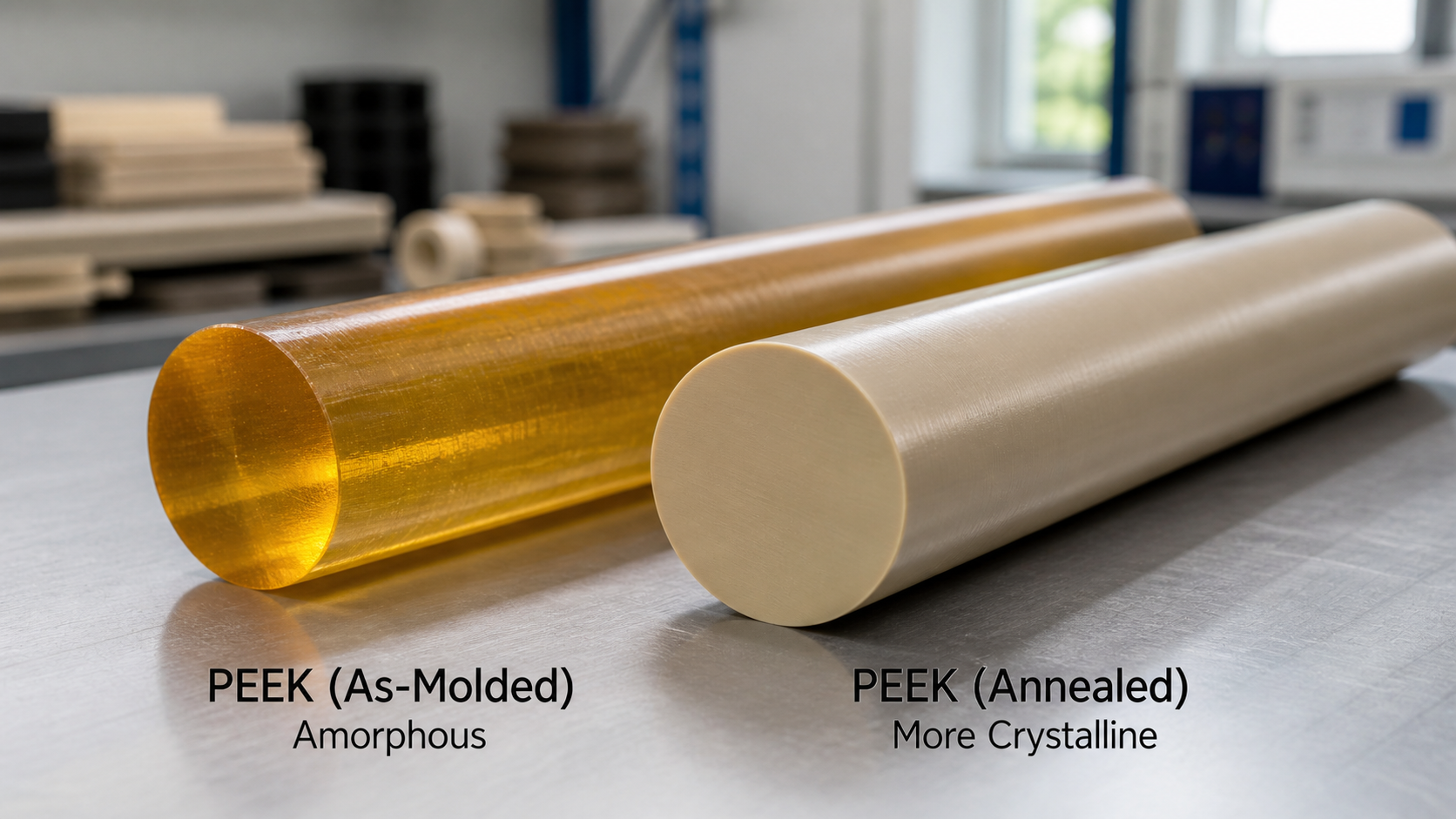
Yes, annealing PEEK makes it stiffer but less ductile. The process increases crystallinity, which raises the material's modulus (a measure of stiffness). However, this more ordered molecular structure restricts chain movement, reducing the material's ability to stretch before breaking, which is measured as elongation.
You can see the datasheet values change after annealing, but what does that mean for the component you’ve designed? This tradeoff between stiffness and ductility isn’t just a number on a page; it’s a fundamental choice that impacts whether your part will perform reliably or fail unexpectedly in the field. To make an informed decision, you have to look beyond the polymer's name and dig into the mechanical test data. Let's explore how we can measure this tradeoff and use the information to define what your application truly needs.
Measuring Modulus and Elongation in the Same Trial?
You need to know how both stiff and ductile your PEEK material is. Simply guessing one property based on the other can lead to parts that crack during assembly or deform in service.
Yes, a single tensile test provides the data to determine both properties. The test pulls a standardized specimen apart, measuring force and stretch. Modulus is calculated from the initial stiffness, while elongation is the total percentage of stretch at the moment the specimen breaks.
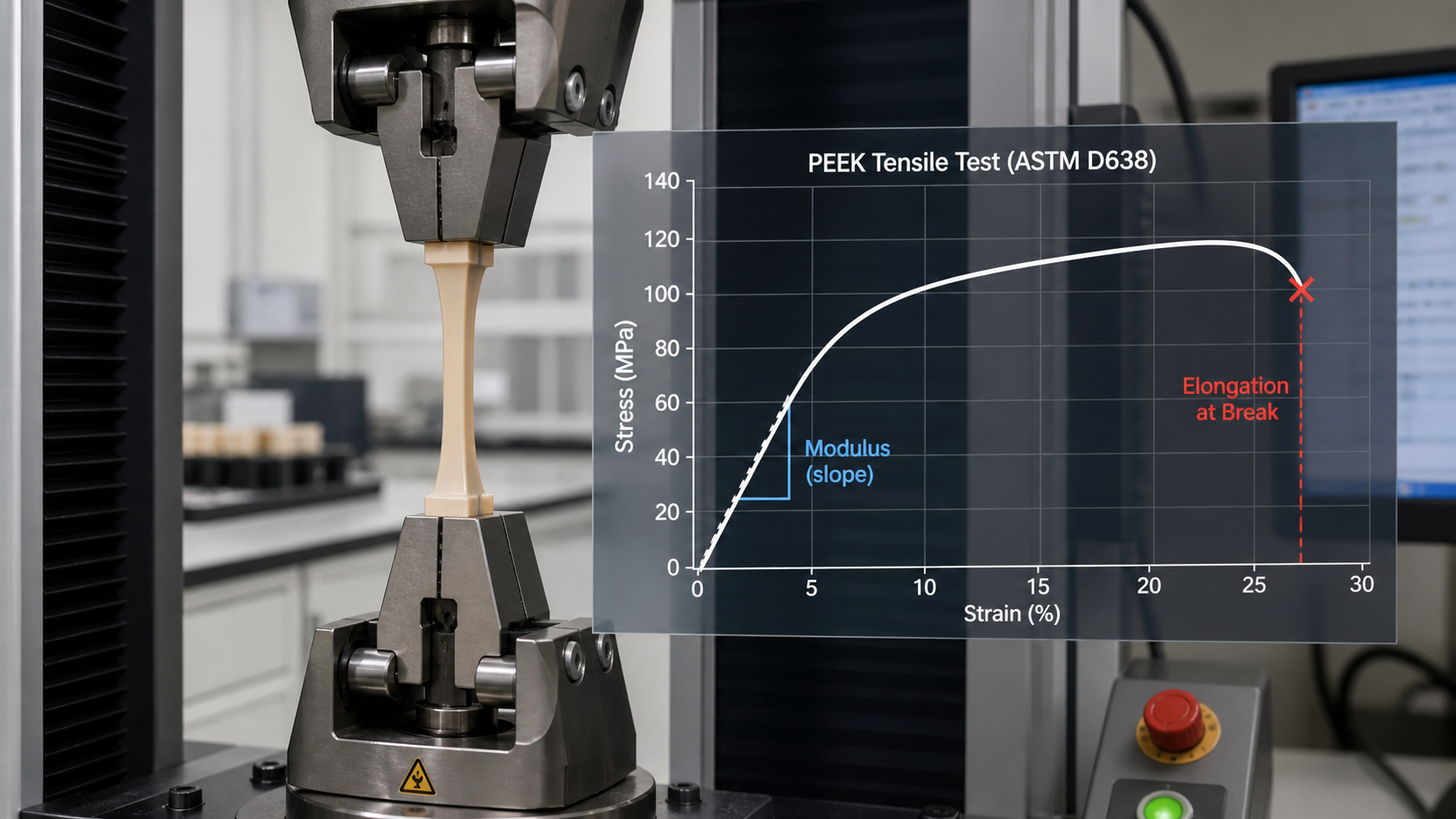
When we need to confirm the mechanical properties of a material, we rely on standardized tests like the tensile test, often following ASTM D638. A test machine grips a precisely shaped "dog bone" specimen and pulls it at a constant speed until it snaps. Throughout the test, the machine records the force applied and the distance the specimen stretches. This data creates a stress-strain curve, which is a mechanical fingerprint of the material. I remember a project where we saw a 20% increase in modulus but a 50% drop in elongation for an annealed part. The client was happy with the new rigidity until the part cracked during assembly. That taught us to always look at both numbers.
Understanding the Stress-Strain Curve
The curve tells two different stories. The initial, steep, straight-line portion of the curve represents the elastic region. The slope of this line is the Young's Modulus, or modulus of elasticity. It tells us how much force is needed to cause a small, temporary deformation. A steeper slope means a higher modulus and a stiffer material. The second story is about total ductility. We look at the very end of the test, at the point of fracture. The total strain, or stretch, at this point is the elongation at break, usually given as a percentage. It tells us how much the material can deform permanently before it fails.
| Property | As-Molded PEEK (Amorphous) | Annealed PEEK (Crystalline) |
|---|---|---|
| Tensile Modulus | ~3.6 GPa | ~4.1 GPa (Higher) |
| Elongation at Break | ~25% | ~15% (Lower) |
The test values we review are based on supplier data sheets, and we always retain the original test conditions and grade details without presenting this as our own test evidence.
Relating Crystal Development to the Observed Tradeoff?
You know that annealing changes PEEK's properties, but you're not sure why. Without understanding the reason, you are just guessing at your processing parameters and hoping for the best result.
Annealing provides heat that allows PEEK's disorganized polymer chains to arrange themselves into tightly packed, ordered crystalline structures. These rigid crystals increase stiffness but limit the chains' ability to slide past one another, which reduces the material's overall ductility and elongation.
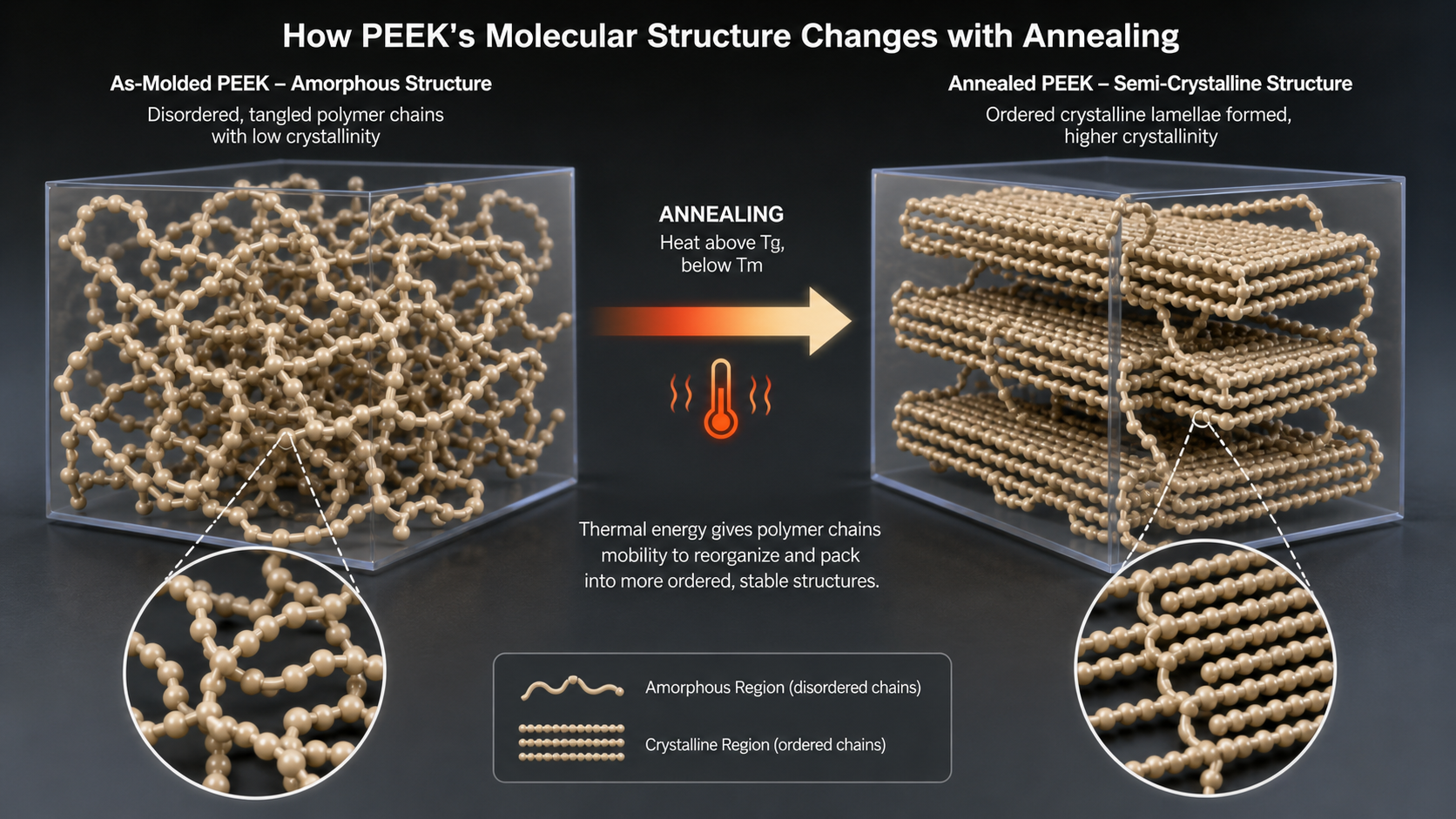
Polyetheretherketone (PEEK) is a semi-crystalline polymer. This means its internal structure is a mix of two distinct regions: amorphous and crystalline. The amorphous regions are like a tangled bowl of spaghetti, where the long polymer chains are completely disorganized. These regions give the material its toughness and ability to stretch. The crystalline regions are the opposite; here, the chains have aligned themselves into neat, tightly packed, and highly ordered structures. These regions provide strength and stiffness. The ratio of these two regions determines the material's final properties.
When we anneal PEEK, we heat it to a temperature above its glass transition temperature (Tg) but below its melting temperature (Tm). This gives the tangled chains in the amorphous regions enough energy and mobility to rearrange themselves into more crystalline structures. As crystallinity increases, the material becomes more dominated by these rigid, ordered regions. This is the direct cause of the tradeoff. The very mechanism that increases stiffness—locking the polymer chains into place—is what prevents them from moving and stretching, thereby reducing ductility. It's like comparing a pile of loose chain (amorphous) to a welded chain-link fence (crystalline). One can be pulled and shifted easily, while the other is rigid and unyielding.
Checking Whether the Part Needs Flexibility or Rigidity?
You are focused on making a PEEK part "strong," but what does that really mean? Choosing to maximize stiffness when your application actually needs flexibility can cause a part to snap under stress.
Analyze the part's function in its environment. If the component is a structural support that must resist bending under load, prioritize rigidity (high modulus). If it is a snap-fit clip, a seal, or an impact-absorbing element, prioritize flexibility (high elongation).
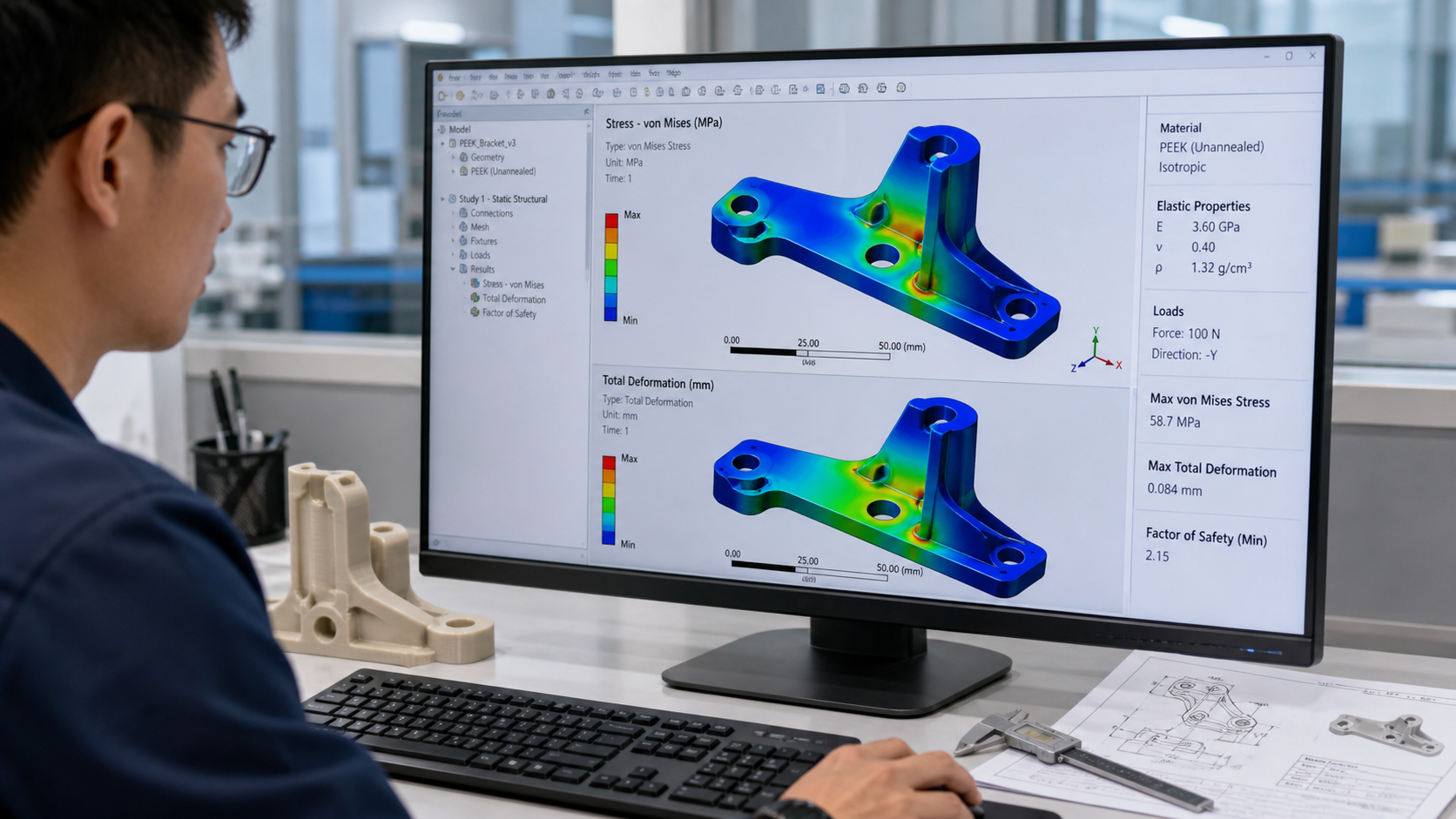
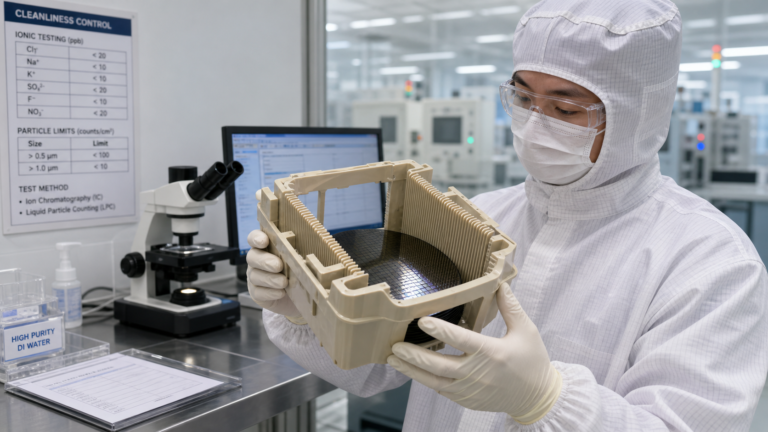
Making an evidence-based decision starts with asking, "What is this part's primary job?" We can’t just rely on a polymer's name; we have to look at the application. For some parts, rigidity is non-negotiable. Think of a wafer handling component in a semiconductor tool; any deflection could misalign or damage a costly silicon wafer. The same goes for structural brackets in aerospace or fixtures in medical devices that demand precise alignment. In these cases, an annealed, high-modulus PEEK is often the right choice.
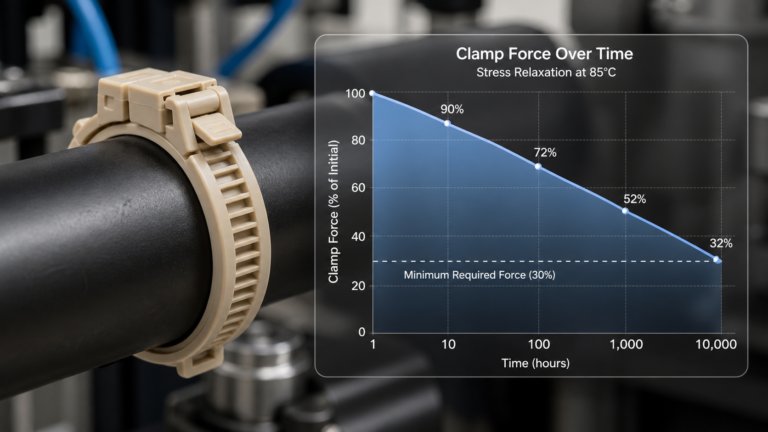
On the other hand, many applications depend on flexibility. A customer once came to us with a failing PEEK clip. They kept asking for a "stronger" grade. After we reviewed the application, we realized the problem wasn't strength but a lack of ductility. The part was being annealed to a point where it became too stiff and brittle to flex during installation. It would simply snap. The solution was to use an unannealed PEEK with higher elongation. The part was less stiff, but it could now perform its function without failing. Other examples include seals that need to conform to a surface or components that must absorb vibration. Prioritizing the right property is key.
Choosing Acceptance Limits for Both Properties?
You know you need a balance of stiffness and ductility, but how much is enough? Without clear, defined limits, you have no consistent way to accept or reject production batches of your parts.
Define numerical acceptance windows for both properties on your drawing. For example, specify a minimum required modulus to prevent deflection and a minimum required elongation to prevent fracture. These limits should be based on functional testing and engineering requirements.
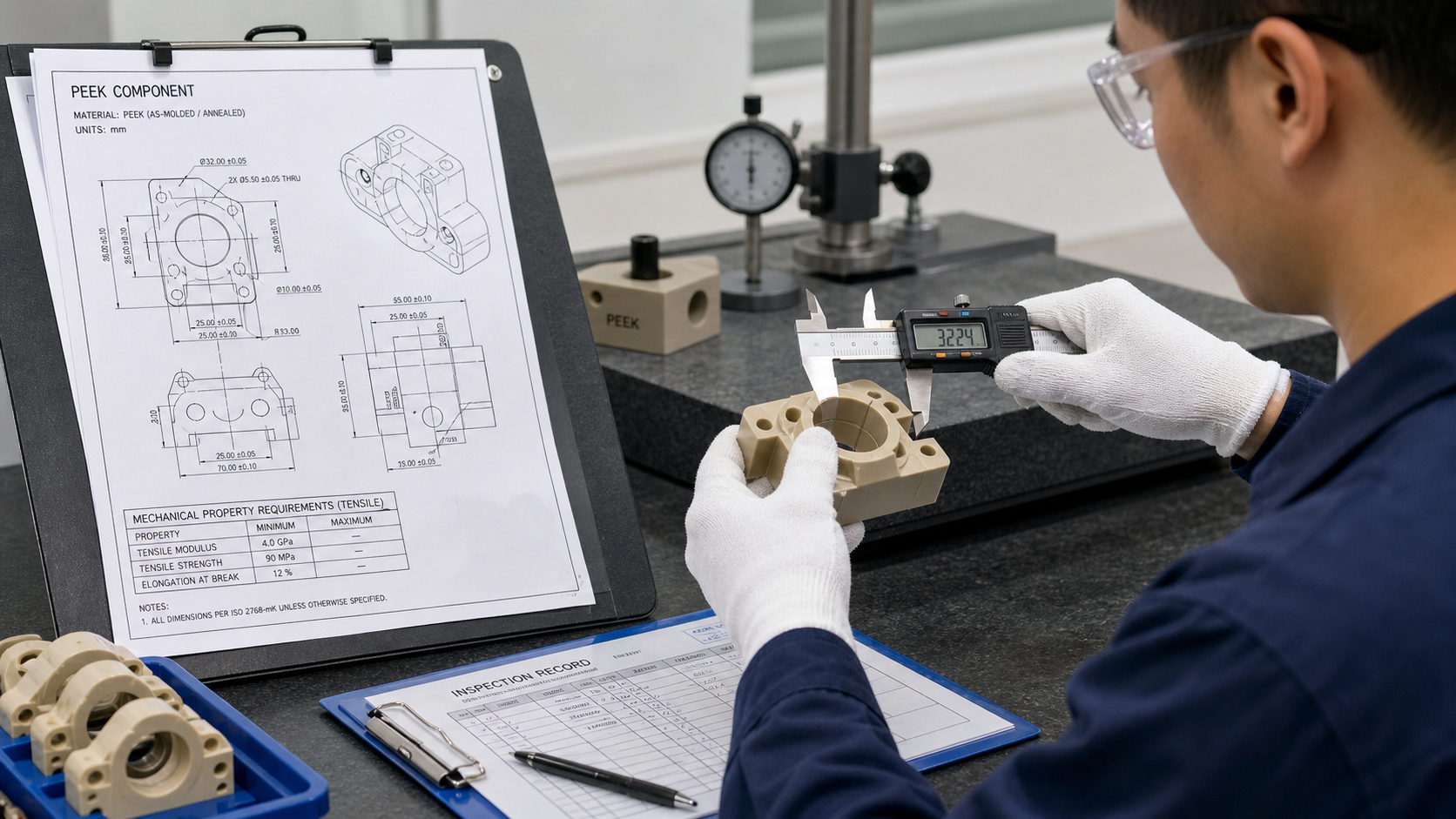
The goal isn't to hit one perfect number but to operate within an acceptable process window. This window ensures that every part you receive will perform as intended. Defining this window starts with your design requirements. For example, if FEA simulations show that your part will fail if it deflects more than 0.1 mm under load, you can calculate the minimum modulus needed to prevent that, and then add a safety factor. If a clip must bend 20 degrees during assembly, functional testing can help you determine the minimum elongation required to survive that without cracking.
These limits should be clearly stated on the component drawing. For a critical fluid handling part, we worked with a client to define these limits precisely. The part needed a minimum modulus of 4.0 GPa to prevent creep under pressure, but also a minimum elongation of 12% to avoid cracking when fittings were tightened. We specified both on the drawing, and now a tensile test is performed on a sample from each material batch to ensure it falls within that window. This removes all the guesswork from quality control and ensures long-term reliability for the customer.
Conclusion
Annealing PEEK creates a stiffer but less ductile material. You must measure both properties and work with your manufacturing partner to choose the right balance for your specific application's needs.