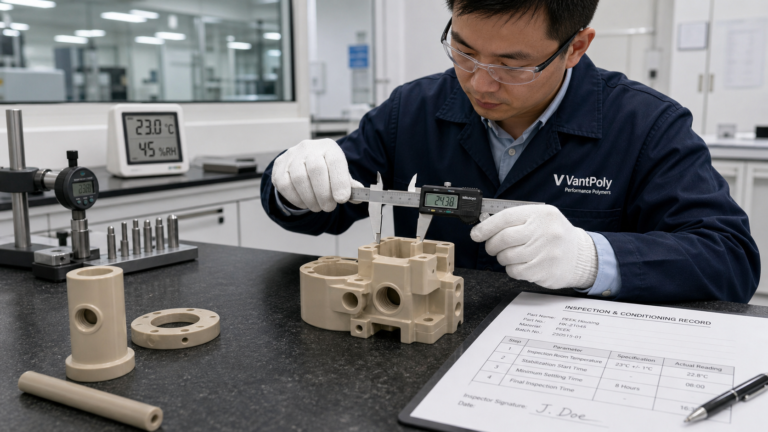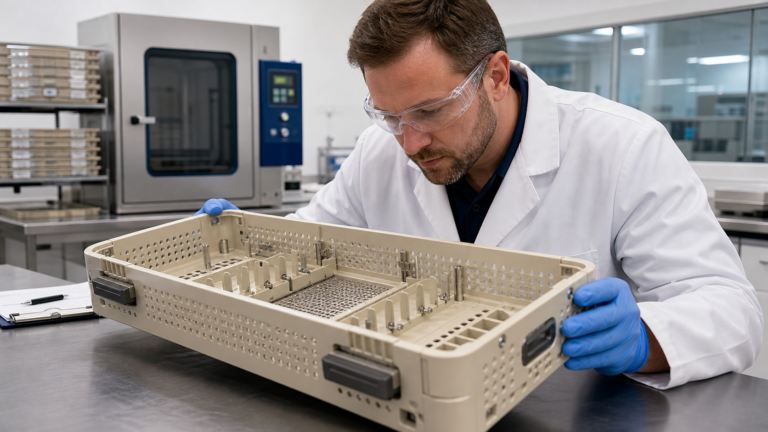
Why Must PPS and LCP Be Distinguished Before Troubleshooting?
Your injection molded parts are failing, and you have tried every process tweak you know. You adjusted temperatures, pressures, and speeds, but the problem persists. What if the issue isn't your process?
Distinguishing between Polyphenylene Sulfide (PPS) and Liquid Crystal Polymer (LCP) is the essential first step in troubleshooting because they have fundamentally different processing windows, melt behaviors, and mechanical properties. Applying advice for one material to the other will not work and can lead to wasted time and material.
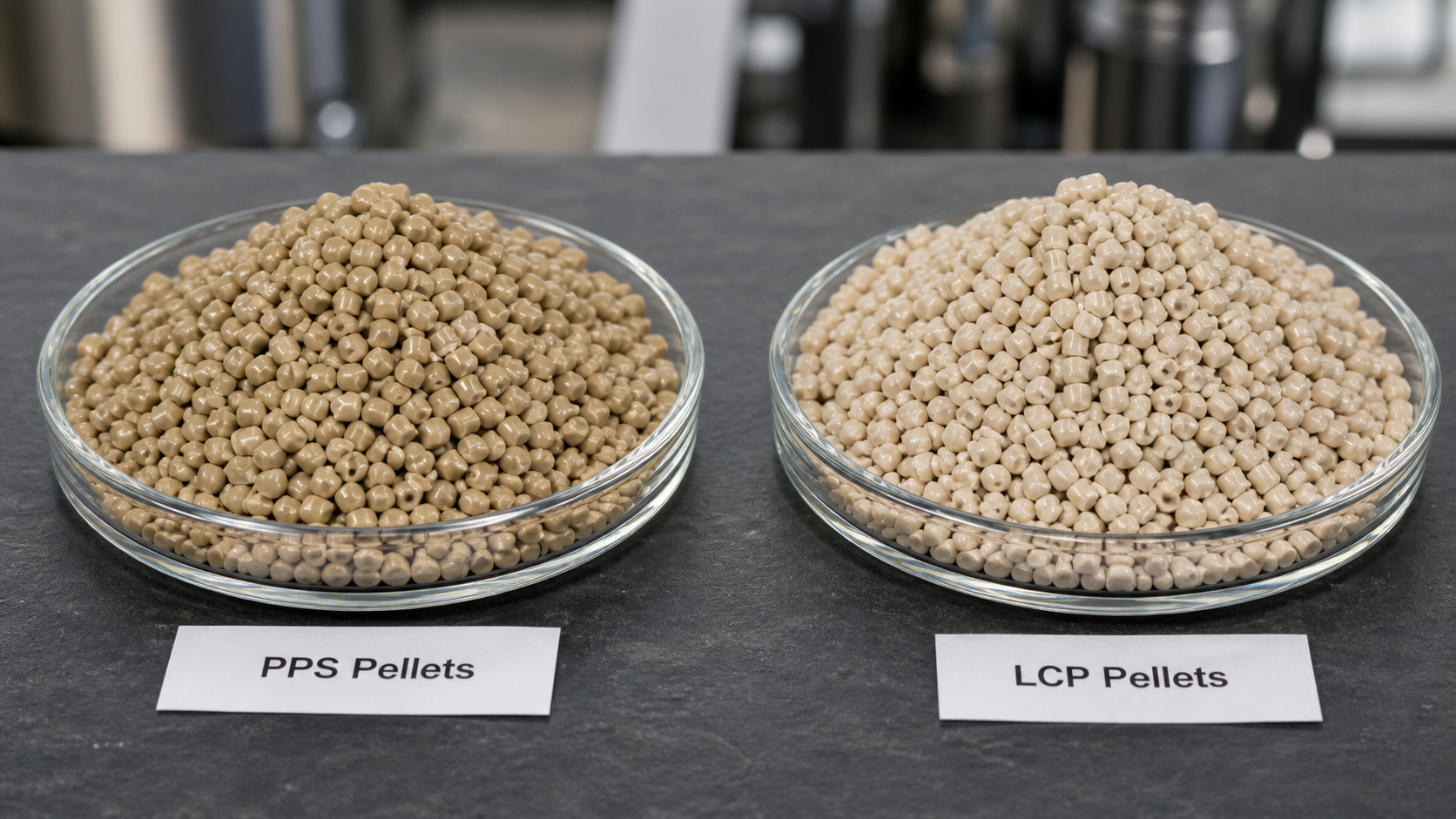
I've seen teams spend days chasing a processing issue when the real problem was a simple case of mistaken identity. They were trying to solve a puzzle with the wrong instruction manual. This experience taught me that before we touch a single setting on the molding machine, we must be absolutely certain about the material in the hopper. Let's walk through why this disciplined approach is so critical and how it can save you from a major headache. Making material confirmation an evidence-based decision is the foundation of effective troubleshooting.
Resolving the Resin Identity Before Using Processing Advice?
You have a processing guide for what you think is PPS, but your parts keep breaking. You are losing valuable machine time and material with every failed shot. What if the guide is right, but the material is wrong?
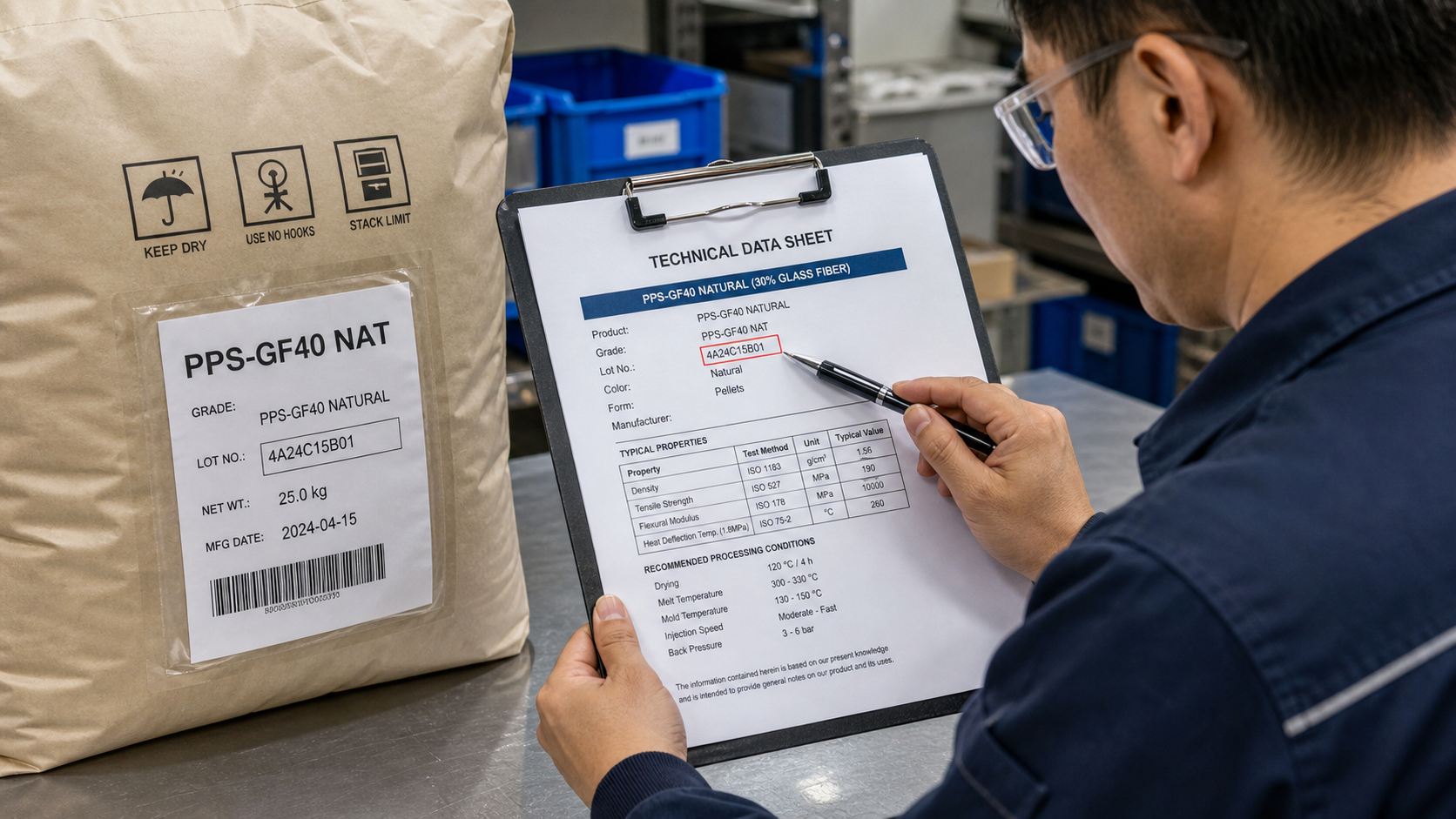
You must resolve the resin's identity by physically checking the lot number on the material bag against the official material certificate. This evidence-based step ensures you are using the correct processing data sheet, preventing you from chasing problems with irrelevant advice and saving valuable production time.
I remember a specific case where a molder was struggling with extreme brittleness in a small, thin-walled electronic connector. They had lowered pack and hold pressures to the absolute minimum, thinking they were overpacking the part. Yet, even the short shots were cracking and breaking during ejection. This was a critical clue. When an under-filled part breaks, the problem is often not processing pressure but either a mechanical issue with the mold or a fundamental material problem. We suggested they stop adjusting the machine and instead verify the polymer. They had been told it was PPS, but when we checked the lot number on the bag against the certificate, it was confirmed to be LCP. The troubleshooting approach had to change completely.
Troubleshooting Starting Points: Brittleness Defect
| Parameter to Investigate | Initial Assumption (PPS) | Actual Material (LCP) |
|---|---|---|
| Primary Cause | Overpacking and high internal stress. | Poor weld line strength or mechanical binding due to low melt strength. |
| First Adjustment | Reduce pack pressure and hold time. | Increase injection speed and melt temperature to improve weld lines. |
| Mold Temperature | Increase mold temp to improve flow and reduce stress. | Check for specific mold temp to control flow front and molecular orientation. |
| Ejection | Check for overpacked part sticking to core pins. | Check for delicate features breaking due to mechanical binding and low green strength. |
Comparing PPS and LCP Grade Requirements?
You have two high-temperature materials that look almost identical. It is easy to assume their processing needs are similar. This assumption can lead to failed parts, flash, and even tool damage. You must understand their core differences.
Comparing PPS and LCP reveals two very different materials. PPS is a standard semi-crystalline polymer with predictable melt behavior. LCP has a unique rod-like molecular structure that orients with flow, causing extreme shear-thinning and creating parts with properties that vary significantly with flow direction.
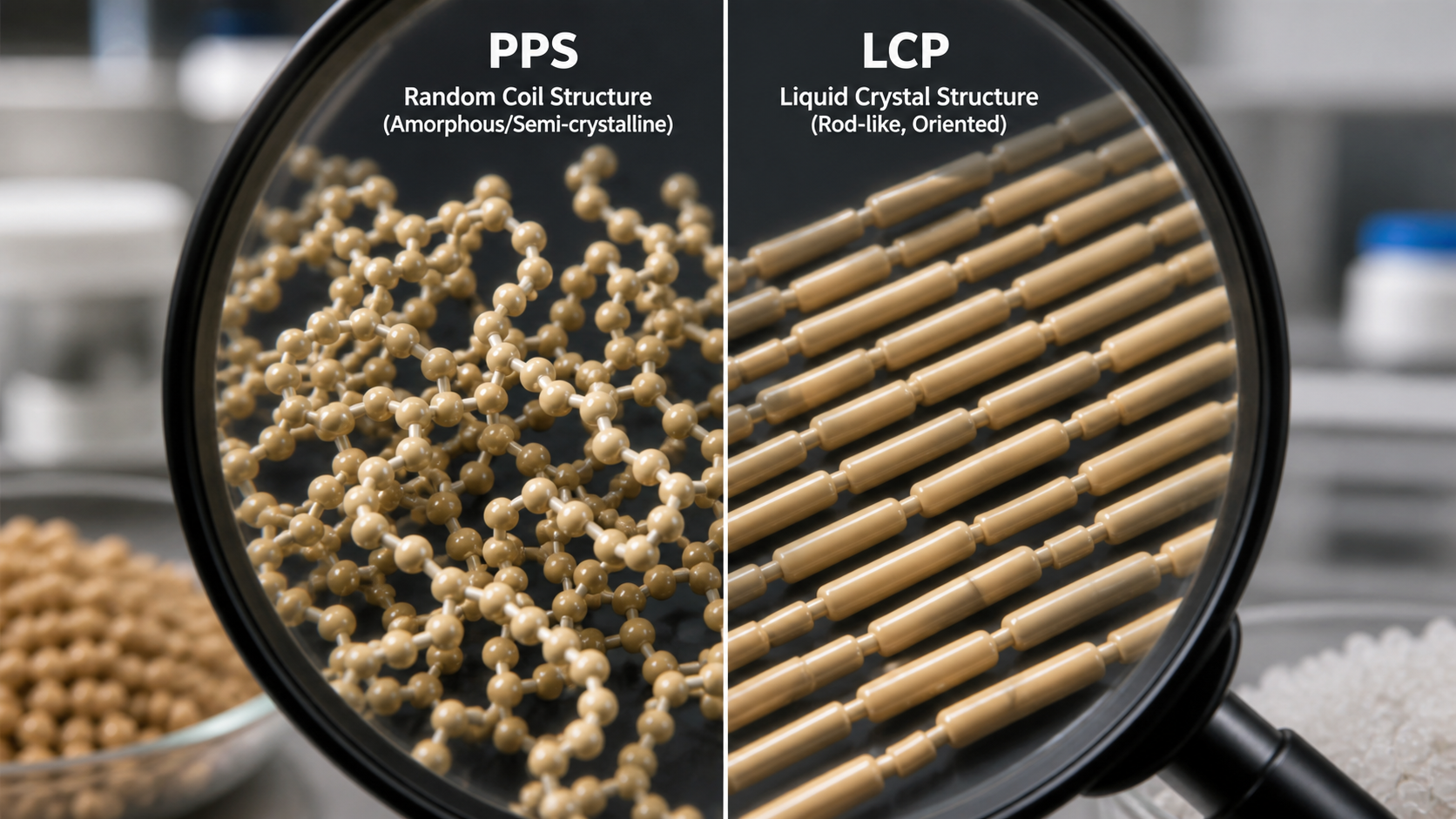
The processing requirements for these materials are worlds apart. With a 40% glass-filled PPS, my focus would be on achieving a high mold temperature, often above 135°C (275°F), to ensure proper crystallization. This is key for achieving the material's full mechanical and thermal properties. We would use sufficient back pressure to ensure a consistent melt, and we would carefully control the melt temperature to avoid degradation. The material behaves like a typical engineering thermoplastic.
LCP, on the other hand, is all about managing its liquid crystal structure. Its viscosity is highly dependent on shear rate. As you inject it faster, it gets thinner and flows with incredible ease, which is great for filling very thin walls. However, this flow orients the polymer chains and any fillers, creating massive anisotropy. The part will be exceptionally strong in the direction of flow but potentially very weak at weld lines where flow fronts meet. Therefore, troubleshooting an LCP often focuses on injection speed, gate location, and melt temperature to manage weld line strength and warpage, which comes from this directional orientation.
Checking Labels Against the Material Certificate?
The material is in a plain bag marked only with a lot number. You are being told to run it. Proceeding without verification is a huge risk that can cost thousands in wasted material and machine time. There is a simple, non-negotiable step to take first.
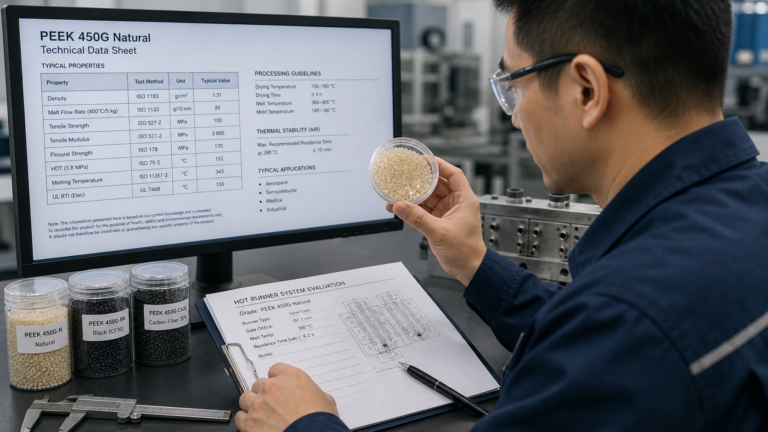
Always check the lot number and product code on the bag's label against the details on the material's certificate of analysis (COA) or technical data sheet (TDS). This simple action confirms the polymer family, specific grade, filler type, and manufacturer, providing the correct baseline for processing.
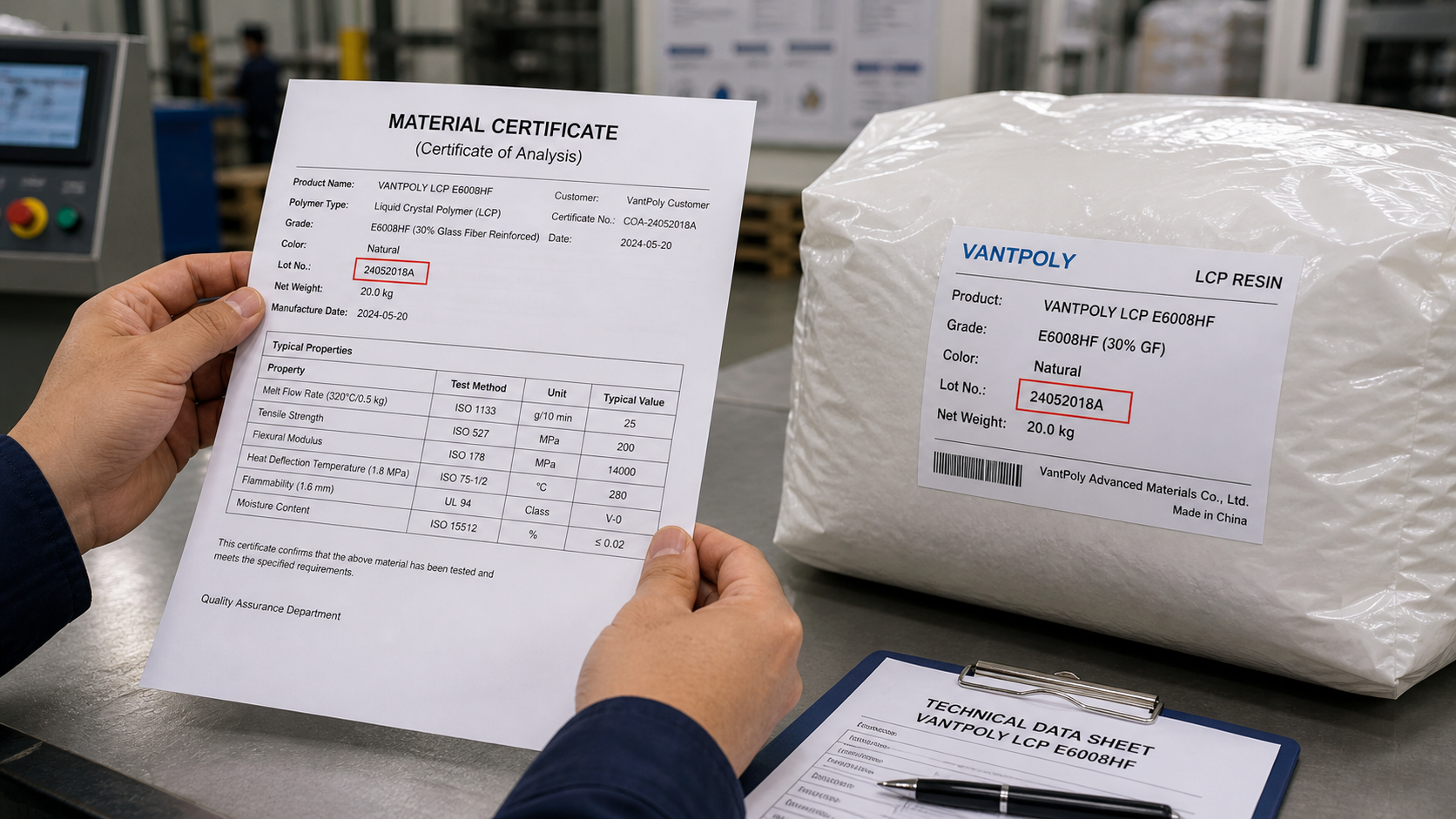
This verification step should be a core part of any molder's quality process. The label on the bag or drum contains critical information: the manufacturer's name, the product trade name, the full grade designation (which often includes codes for fillers and additives), a color code, and the unique lot or batch number. The material certificate should have all this same information printed on it. The first step is to ensure they match exactly.
I once worked with a team that was fighting warpage in a large, flat component. They were using the processing parameters for an unfilled polymer. After hours of frustration, we asked for a photo of the bag label and the corresponding certificate. It turned out the grade they were running was a glass-and-mineral-filled compound. This type of filler creates very different, non-uniform shrinkage compared to an unfilled grade. Their warpage problem was not a simple processing issue; it was a direct result of differential shrinkage from the filler orientation, a factor they were not considering. Once we used the correct data sheet for that specific filled grade, we could adjust the process to account for this behavior and bring the parts into spec.
Restarting Troubleshooting With a Confirmed Material Baseline?
You have been randomly tweaking settings, but the problem is not getting better. Each adjustment feels like a shot in the dark, and you are no closer to a solution. It is time to stop guessing and get methodical.
Once you have confirmed the exact material grade, restart troubleshooting by setting the machine to the mid-point of the manufacturer's recommended processing window from the technical data sheet. This creates a stable, data-driven baseline from which you can make small, systematic adjustments to solve the specific defect.
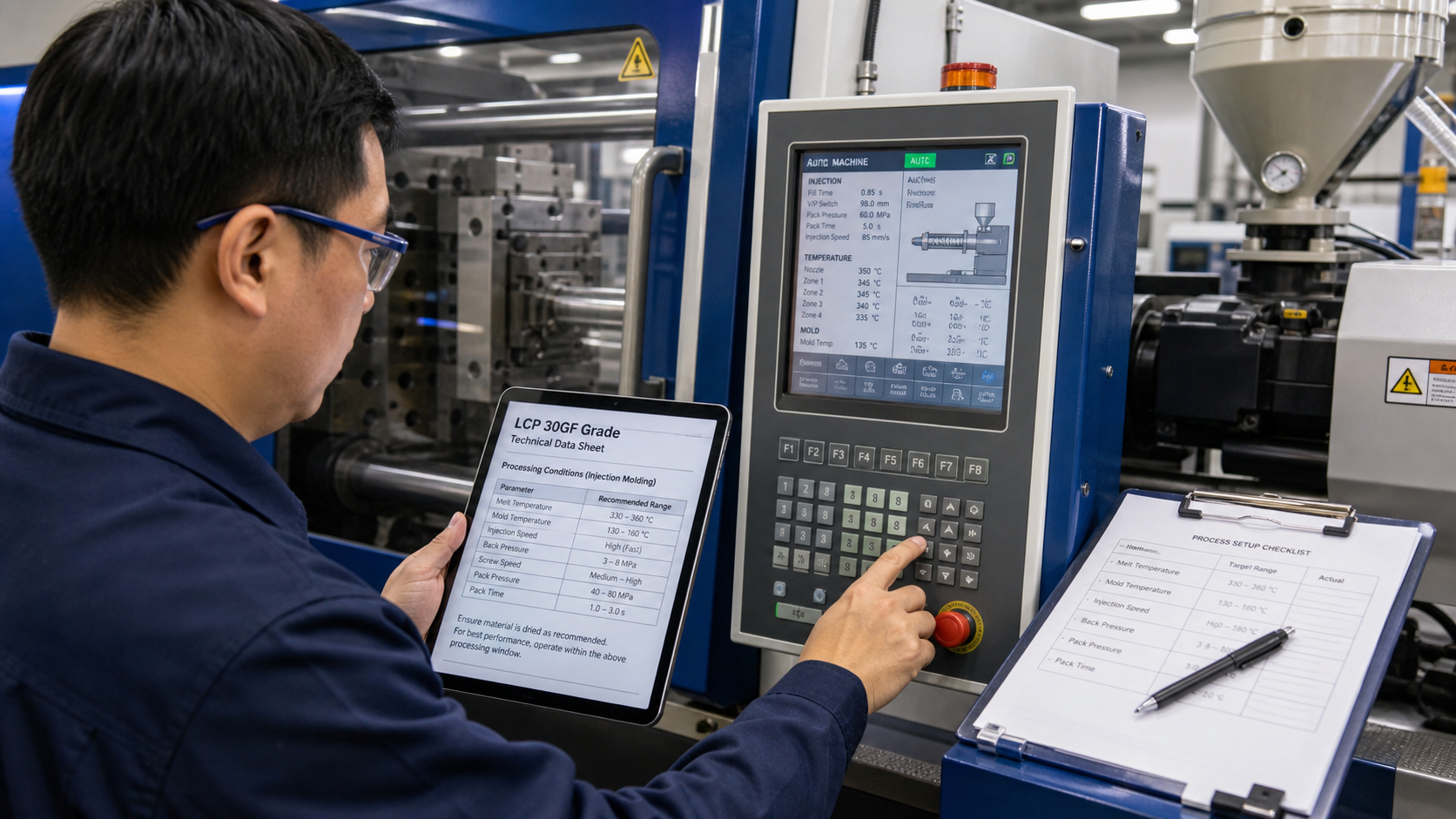
With a confirmed material identity, the path forward becomes clear. Let’s say we have confirmed the material is a specific 30% glass-filled LCP. The first thing we do is pull up that grade's official technical data sheet. We ignore our previous settings. We methodically go through the machine's control panel and set the barrel temperatures, mold temperature, back pressure, and injection speeds to the values recommended by the material supplier. This is our new, reliable starting point.
From this baseline, we can begin a structured investigation. If the problem is part brittleness, and we know LCP is sensitive to weld line integrity, our first controlled experiment would be to adjust the parameter that most affects weld lines: injection speed. We would increase the speed in small, documented steps, inspecting the parts after each change. This is no longer random tweaking. We are now using our material knowledge to form a hypothesis ("increasing fill speed will improve polymer chain entanglement at the weld line") and testing it methodically. This approach transforms troubleshooting from a frustrating art into a repeatable science.
Conclusion
Before you adjust a single process parameter, you must confirm the material's identity. This simple act of verification changes troubleshooting from guesswork into a structured, evidence-based process that saves time and money.