Does a PAI PV Rating Predict Every Bearing Application?
Struggling with bearing failures even when using a PAI grade with a high PV rating? The datasheet value is a starting point, not a performance guarantee for your specific machine.
A PAI PV rating does not predict performance in every bearing application. It is a value from a standardized test. Real-world success depends on heat dissipation, contact geometry, and operating conditions in your actual assembly. You must validate performance in your own environment.
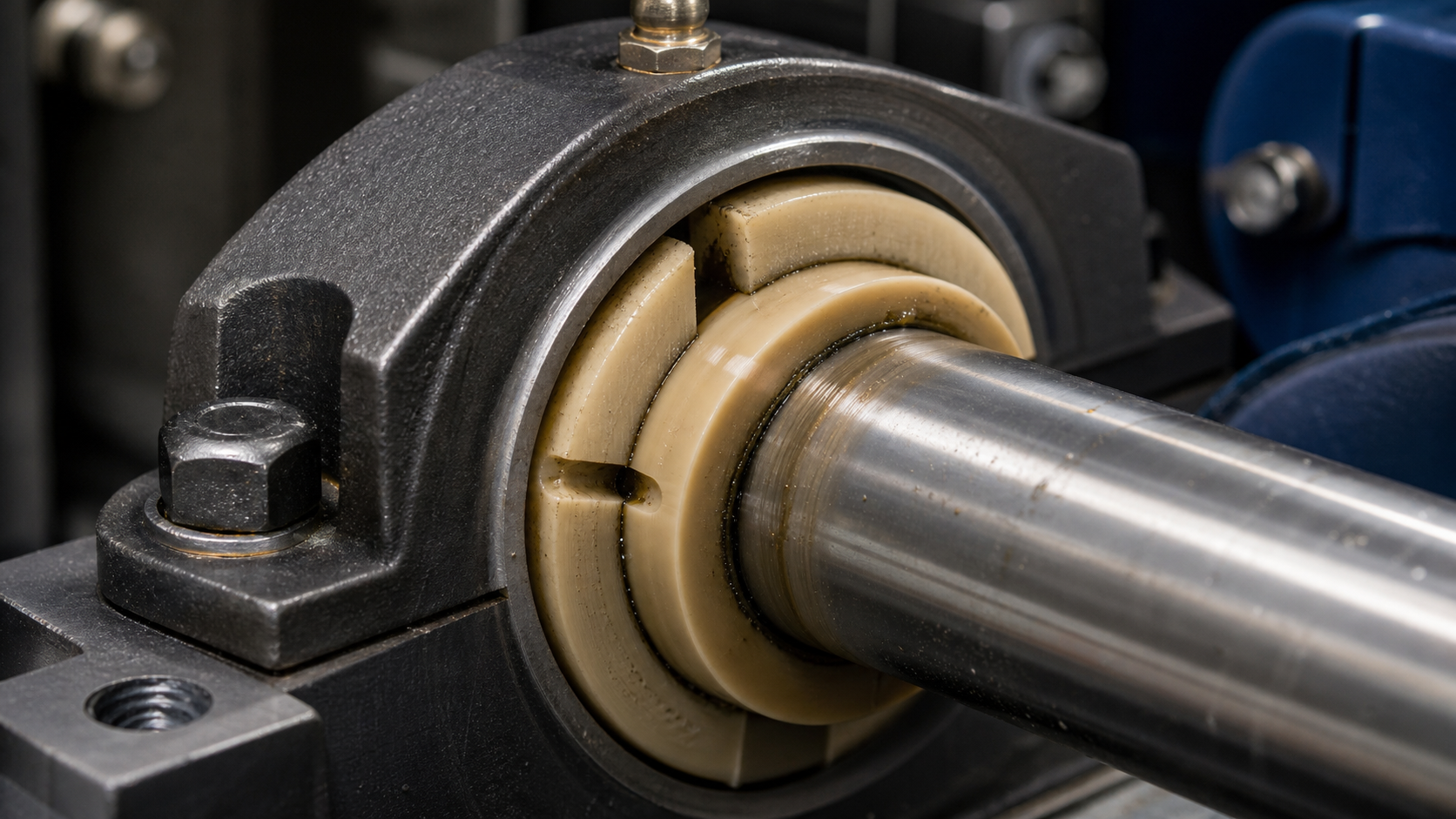
I often see engineers select a material based on a single impressive number on a datasheet. They might see a high PV (Pressure-Velocity) rating for a PAI (polyamide-imide) grade and assume it’s a perfect fit for their demanding bearing application. But when the part fails prematurely, they are left wondering what went wrong. The truth is, that single number tells only a fraction of the story. It was generated under very specific, controlled laboratory conditions that likely look nothing like your machine's environment. To avoid costly surprises, we have to look past the polymer name and the rating itself. We need to dig deeper into what the test means, how heat is managed in our own assembly, how the contact surfaces compare, and why real-world testing is the only way to confirm a design limit. Making design decisions based on evidence is always better than relying on a number alone.
Interpreting the Pressure and Velocity Behind the Rating?
Confused by how a single PV number represents both pressure and velocity? It's a common point of confusion that can lead to misapplication and unexpected wear in PAI components.
The PV rating shows a material's limit for combined pressure (P) and velocity (V) under test conditions. A high number does not mean the material handles high pressure at high velocity simultaneously. It is usually a trade-off between the two values.
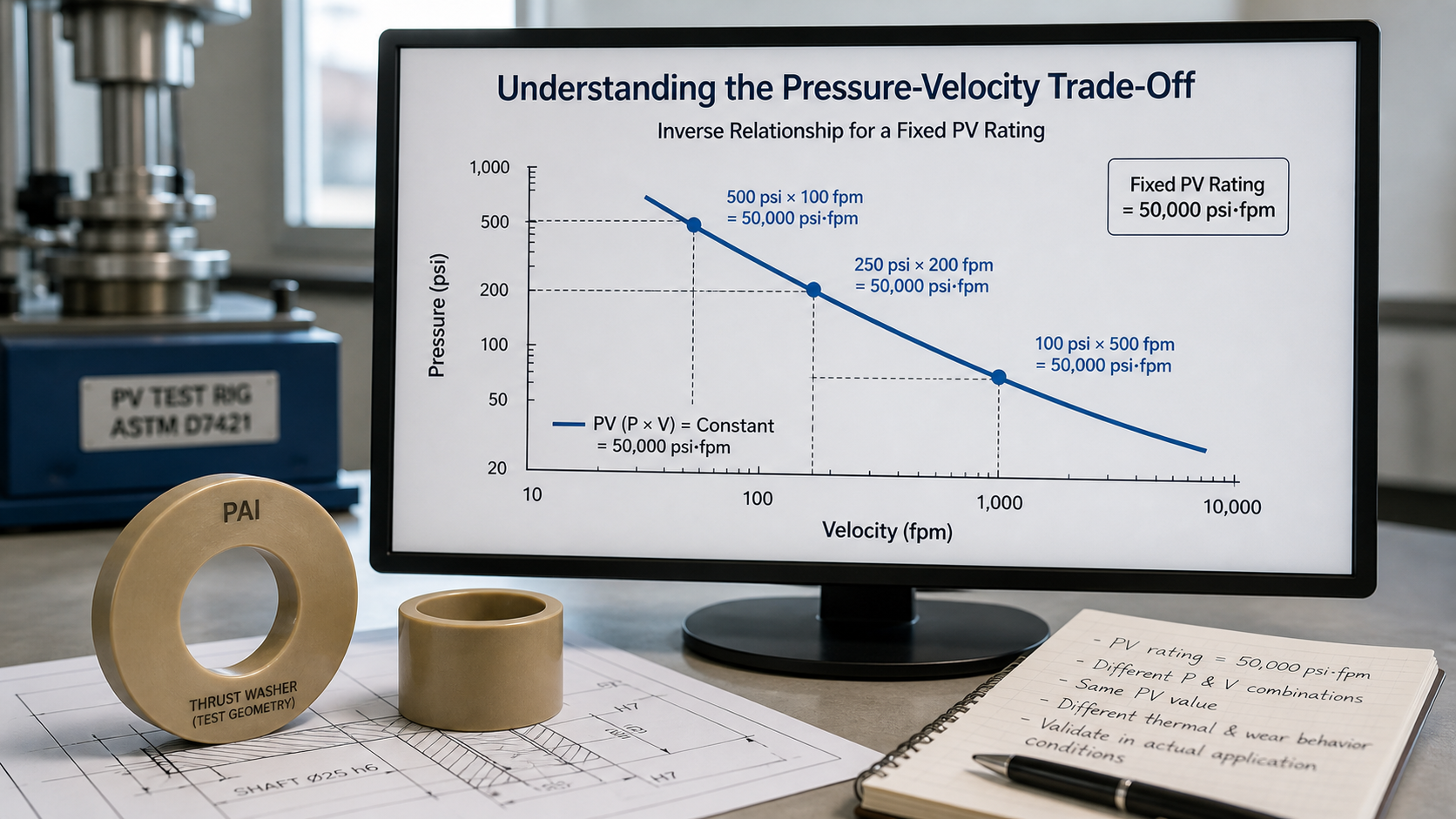
A PV rating is simply the product of pressure and sliding velocity. For example, a PV limit of 50,000 psi-fpm could represent many different operating conditions. An application could be high-pressure and low-speed, or it could be low-pressure and high-speed. The material's response to these two scenarios is very different. Many bearing-grade polymers, including PAI, can handle one extreme better than the other. A grade might perform well under immense static or slow-moving pressure but fail quickly from heat generated at high speeds. Conversely, it might excel in a high-speed, low-load application but deform under high pressure. The datasheet doesn't always show this relationship clearly. We always refer back to the original manufacturer's test data to understand the conditions used to establish the rating. We do not present this as our own testing; we simply use it to inform our analysis of the application.
Pressure vs. Velocity Trade-Off
The table below illustrates how different P and V combinations can result in the same PV value.
| Pressure (P) | Velocity (V) | Resulting PV (P x V) | Potential Application Type |
|---|---|---|---|
| 500 psi | 100 fpm | 50,000 psi-fpm | High Load, Slow Movement |
| 250 psi | 200 fpm | 50,000 psi-fpm | Balanced Load and Speed |
| 100 psi | 500 fpm | 50,000 psi-fpm | Low Load, High Speed |
This shows why simply matching your application's calculated PV to the datasheet value is not enough. You must consider if your specific combination of pressure and velocity falls within the material's practical working limits.
Checking Heat Removal in the Actual Assembly?
Have you ever seen a PAI bearing fail from overheating, even when operating below its rated PV limit? This happens because frictional heat is the silent killer of polymer bearings.
Effective heat removal is critical because PAI's mechanical properties degrade with temperature. The standard PV test uses a specific heat-dissipating setup. If your assembly traps more heat, the bearing will fail at a much lower PV value.
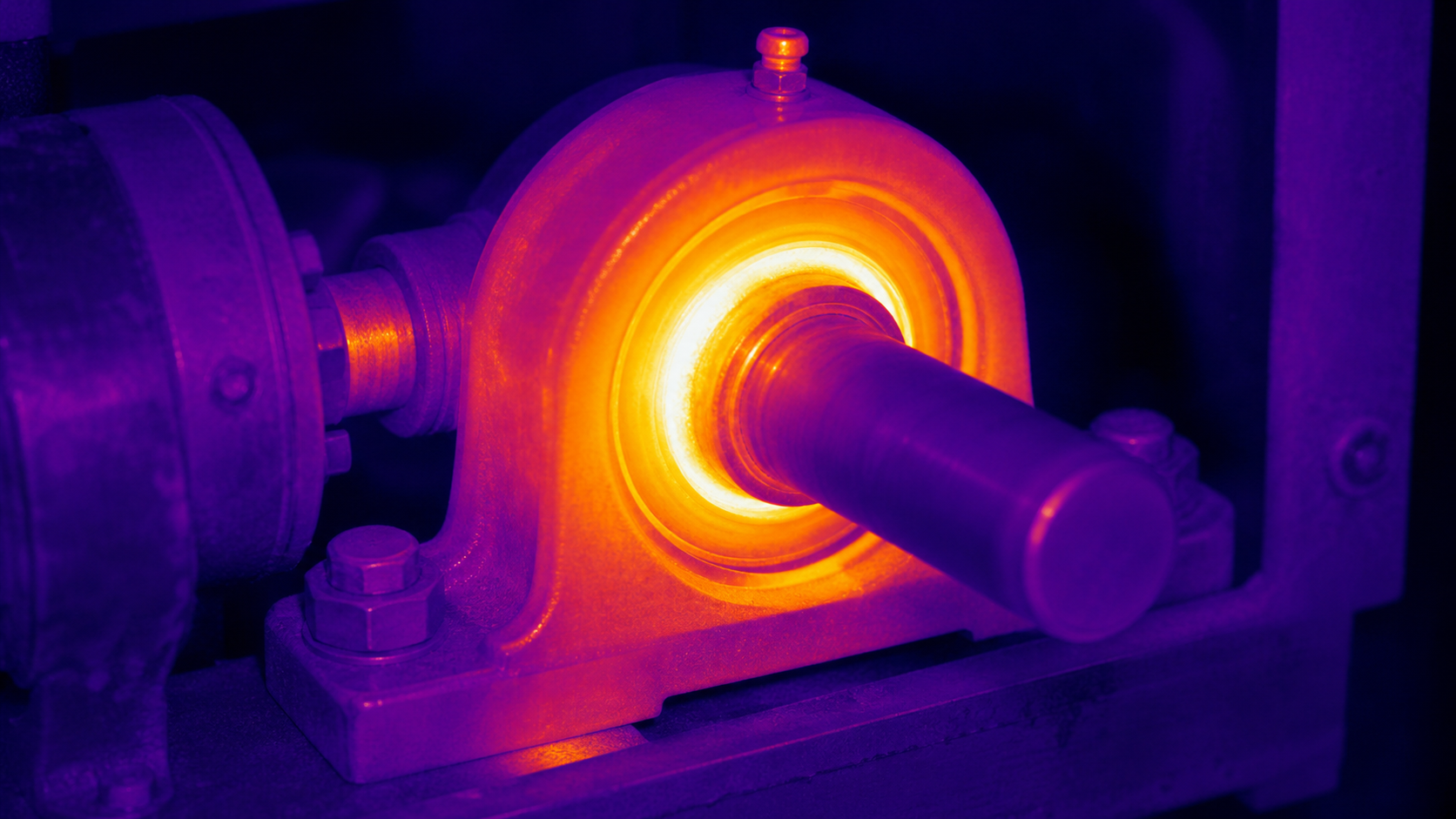
Friction between the bearing and the moving surface generates heat. The PV rating is essentially a measure of how much frictional energy a material can withstand before its temperature rises to a point where it softens, deforms, or wears away rapidly. The key factor here is not just heat generation, but the balance between heat generation and heat dissipation. The standard test that produces the PV rating has its own thermal characteristics. It might use a large metal housing that acts as an efficient heat sink. Your application might have a plastic housing, limited airflow, or be located near another heat source. In these cases, heat gets trapped, the bearing's temperature climbs, and its real-world PV limit drops far below the published value. I've seen applications where the duty cycle was the deciding factor. A part that works perfectly in an intermittent-use device may fail in a continuous-duty machine operating at the same load and speed, simply because heat builds up over time without a chance to cool down.
Comparing the Rated Test With the Intended Contact?
Does your PAI component wear out much faster than you expected? The problem could be a mismatch between the standard test geometry and your actual application's contact conditions.
A standard PV test often uses a simple geometry, like a flat thrust washer against a steel ring. If your application involves a different contact area, surface finish, or mating material, the friction and wear behavior will change, making the rated value less predictive.
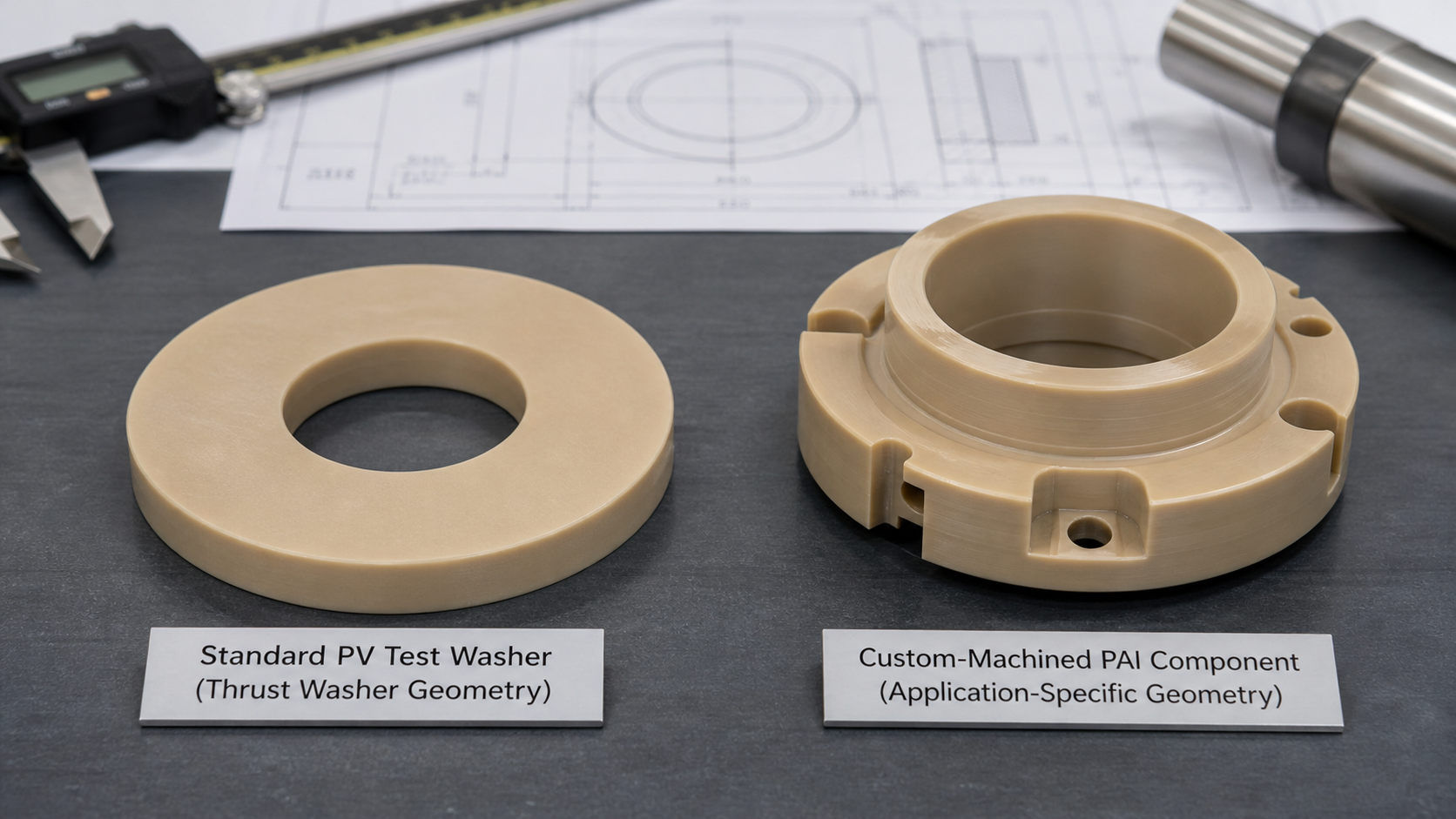
When a material supplier determines a PV rating, they use a highly controlled test. This often involves a specific setup, such as an ASTM standard test using a thrust washer. The results are consistent and comparable between materials, but they represent only that one scenario. Your application is different. You might have a shaft rotating in a sleeve bearing (line contact) instead of a flat washer (area contact). The surface finish of your mating component is also critical. A rougher surface will act like a file, accelerating wear on the PAI part. The material of the mating surface also matters; a hard, polished steel shaft will behave differently than a softer or less smooth one. Furthermore, when we machine a component from a semi-finished PAI shape, we may remove a resin-rich, molded "skin" that has different wear properties than the bulk material. In some cases, we might consider a final machining pass to restore a uniform, wear-resistant surface, but this must be evaluated carefully.
Validating Limits Under Application-Specific Conditions?
Are you tired of relying on datasheets and just hoping for the best? Guesswork in engineering can lead to expensive field failures and redesigns. The only way to be certain is to validate.
You must validate the performance limits under your specific application conditions. This means building a prototype and testing it in its real operating environment. This evidence-based approach is the best way to avoid costly failures and confirm your material choice.
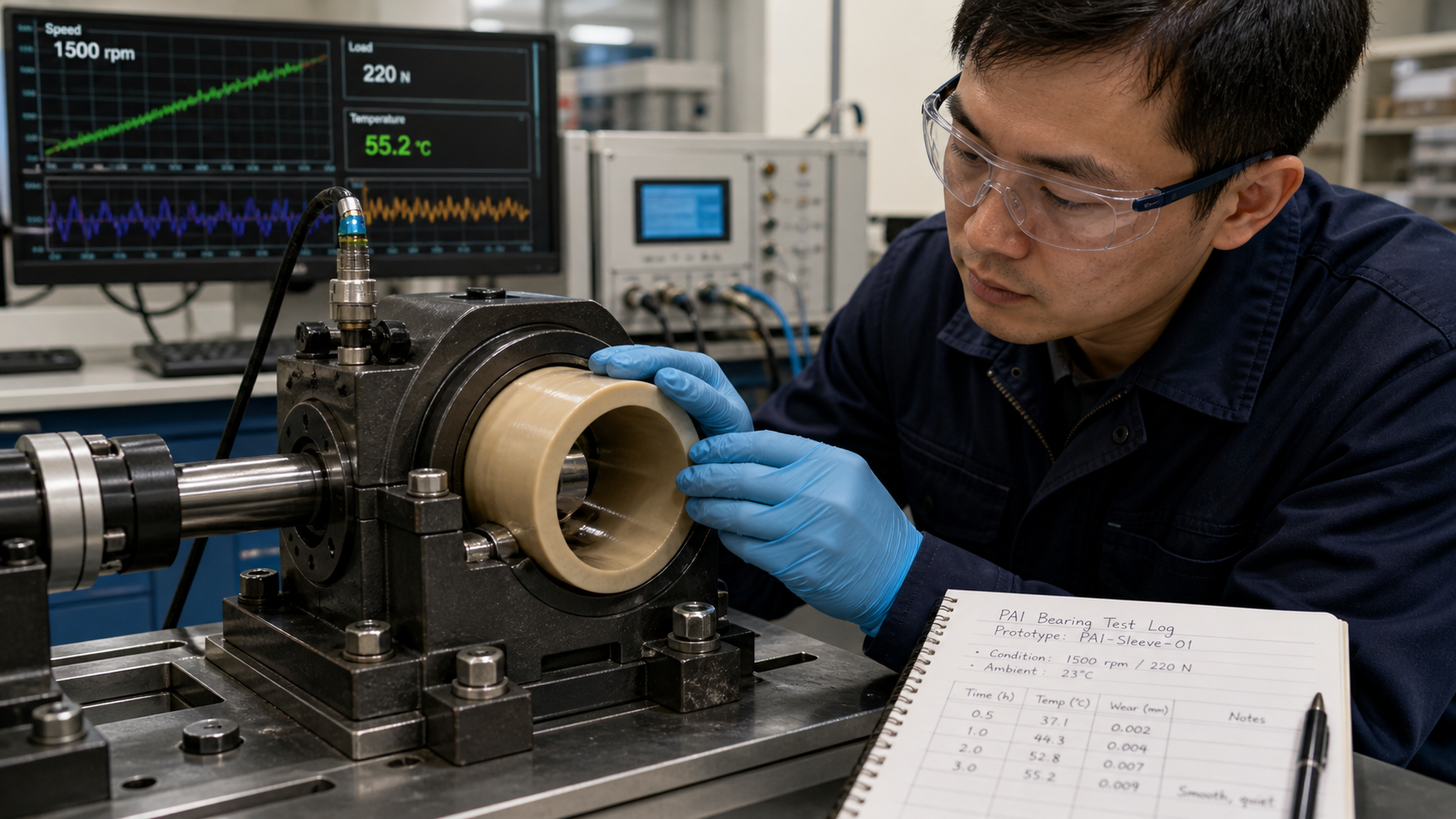
The ultimate proof of a material's suitability is its performance in the actual device. I always advise my clients to move beyond datasheets and create a testing plan that mimics the real world. This doesn't have to be complicated. You can start by building a prototype using the PAI grade you've selected and installing it in your assembly or a dedicated test rig. Begin operating it at conditions well below your calculated P and V values. Then, you can gradually increase the load, speed, or operating temperature while carefully monitoring key indicators. Look for changes in temperature at the bearing surface, measure physical wear over time, and listen for any changes in noise or vibration. This process allows you to find the true operational limits of the component in its unique environment. It transforms the design limit from a theoretical number on a page into an evidence-based decision, giving you confidence that the part will perform reliably for its intended service life.
Conclusion
A PAI PV rating is a useful guide for initial material screening, but it is not a performance guarantee. Always validate performance through application-specific testing for reliable, long-term component operation.