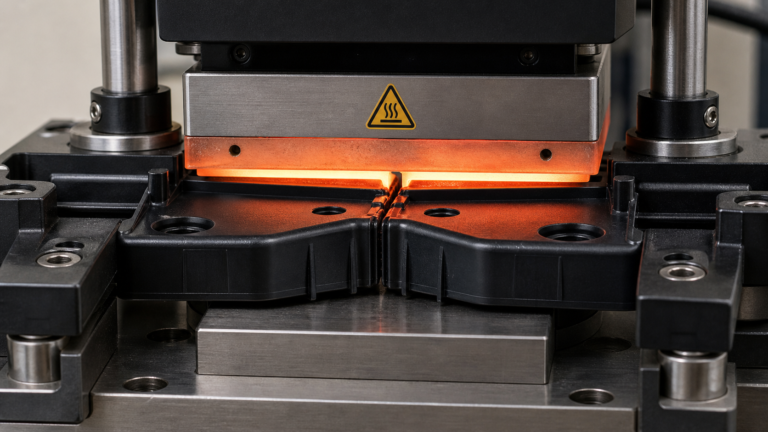
Why Should PPSU Sterilization Tests Include Mechanical Stress?
Your PPSU medical device passes all material checks but cracks after a few sterilization cycles. This unexpected failure can halt production and force costly redesigns, leaving you wondering what went wrong.
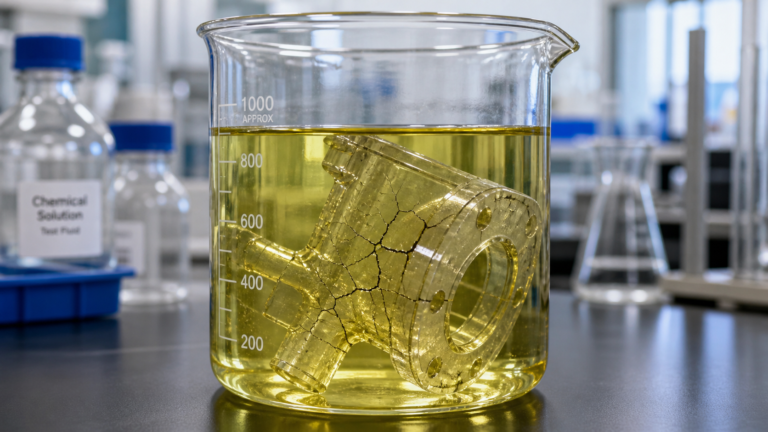
PPSU sterilization tests must include mechanical stress because real-world parts are almost always under load from assembly, fixtures, or internal molding stresses. Steam sterilization can accelerate stress cracking, leading to failures that temperature-only tests would completely miss.
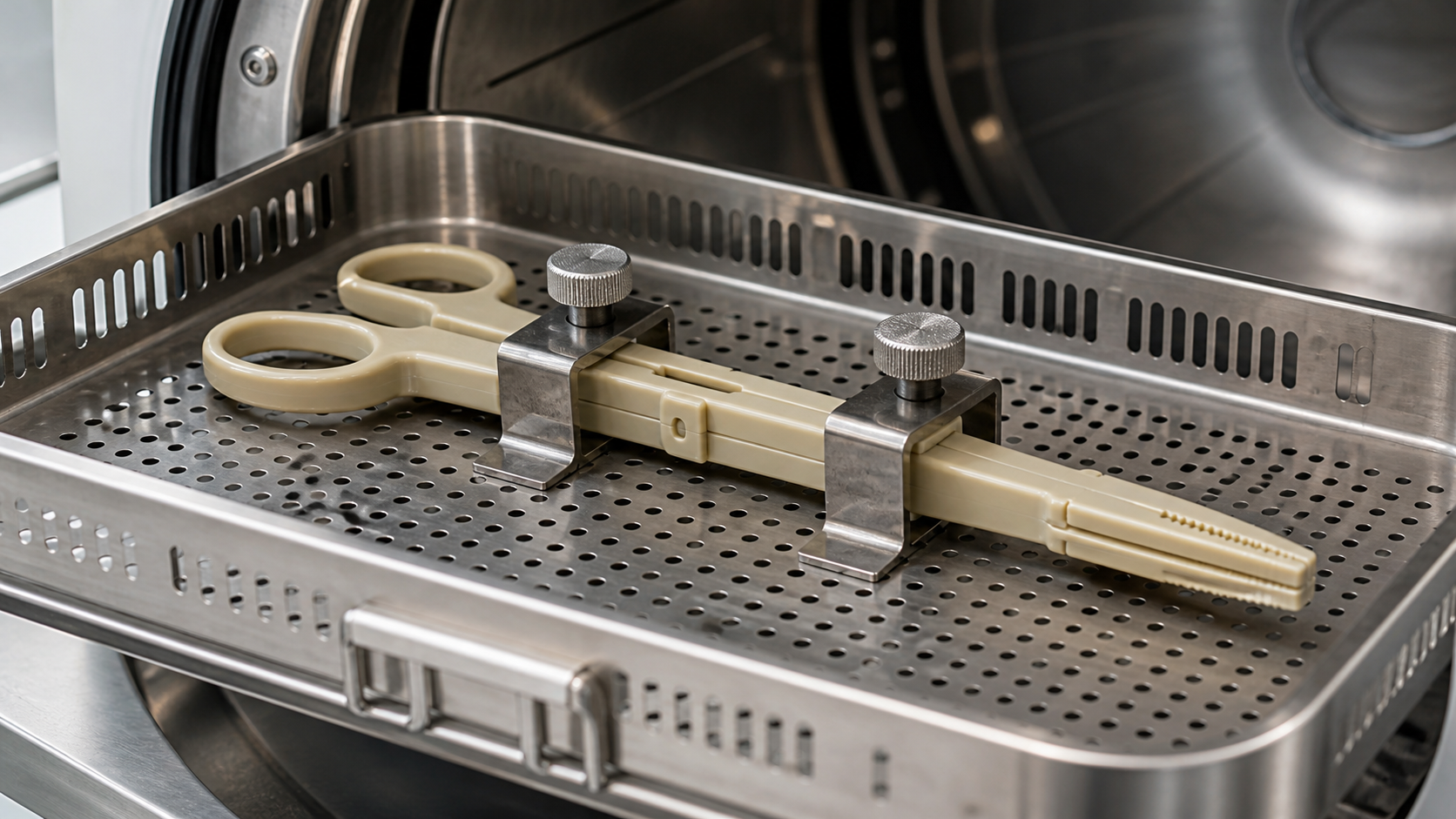
When we look at a material's data sheet, it gives us a great starting point. It tells us about the polymer's ability to handle high temperatures. But that's only half the story. In my experience, parts rarely exist in a perfect, stress-free state. They are bolted, clamped, or snapped into assemblies. This is why we advocate for a more realistic testing approach. We believe in assessing repeated steam exposure while the material is under stress, rather than just inferring its strength from temperature resistance alone. This combined-exposure testing gives us a much clearer picture of how a component will perform over its entire life cycle. Let’s explore why this level of detail is so critical for making evidence-based decisions.
Identifying Stresses Introduced by Fixtures and Assembly?
You’ve designed a durable PPSU component, yet it fails inside the autoclave. You might blame the material, but the problem could be the sterilization tray itself, creating unseen stress.
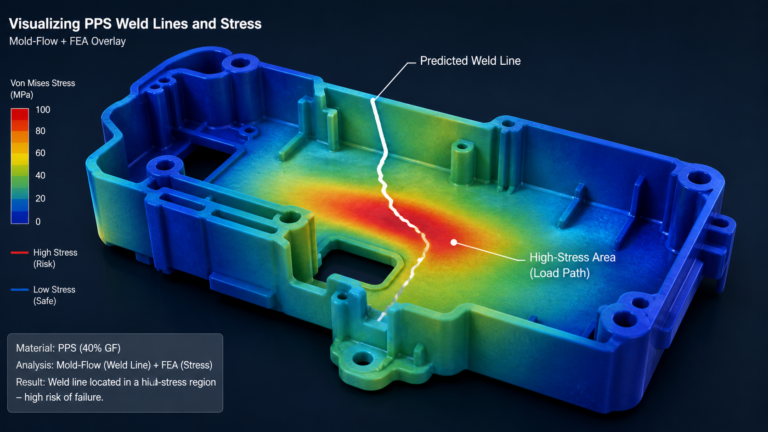
Identifying stresses from fixtures and assembly is critical because these external loads concentrate stress in specific areas. Clamps, screws, or snap-fits create pressure points that become weak spots during high-temperature steam exposure, leading to premature cracking.
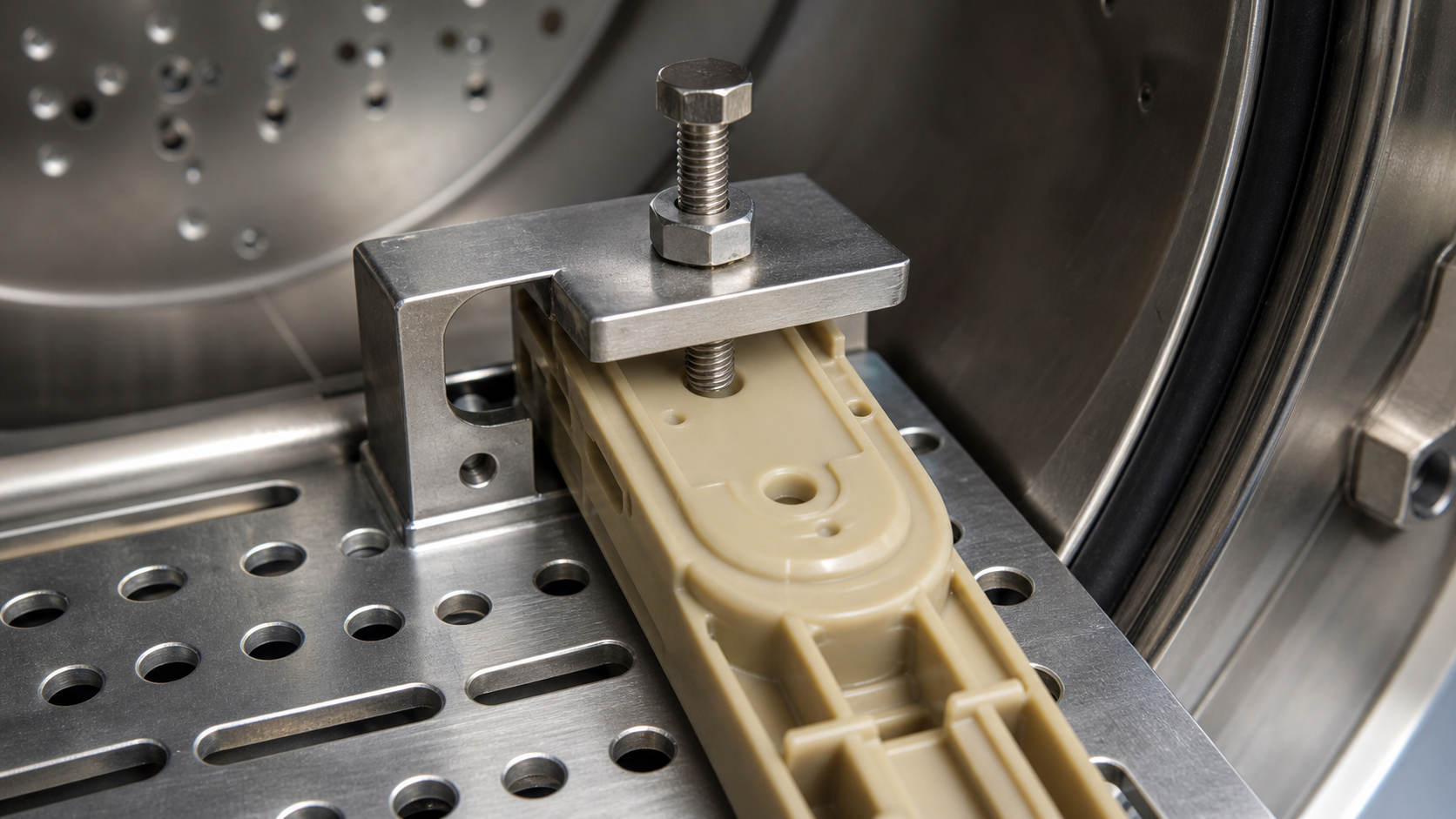
When a PPSU part is placed in an autoclave, it's not just sitting there freely. It's often held in place by metal fixtures, trays, or clamps. These holding devices are necessary for organization and proper steam penetration, but they also apply mechanical loads. I've seen cases where a simple clamp created enough localized stress to cause a failure. The combination of this constant pressure with the high heat and moisture of the autoclave creates a perfect storm for environmental stress cracking. The material itself is fine, but the application introduces a weakness. That's why the first step in any failure analysis I conduct is to look at how the part is handled and constrained during its entire use cycle, including sterilization.
Common Sources of Assembly Stress
Understanding where these forces come from is key. An over-tightened screw or a poorly designed snap-fit can doom a part from the start. We look for these common culprits.
| Stress Type | Common Source | Potential Failure Mode |
|---|---|---|
| Compressive Stress | Clamps, mounting brackets, press-fits | Crazing, cracking at the pressure point |
| Tensile Stress | Over-tightened screws, snap-fit features | Cracking that radiates from the hole or feature |
| Torsional Stress | Mismatched assembly components, twisting forces | Shear fractures or cracks along the stress line |
Accounting for Residual Stress From Molding?
You have a perfectly designed PPSU part that fails for no apparent reason. These invisible stresses, locked in during manufacturing, are a hidden but significant risk for premature failure.
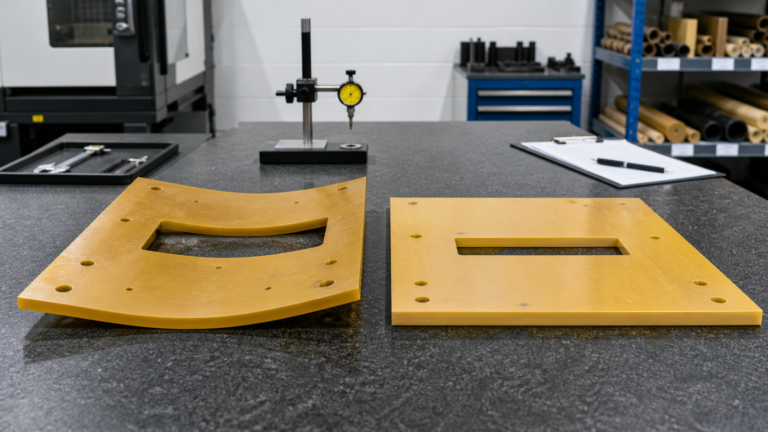
Accounting for residual stress from molding is essential because this internal stress is locked into the part before it ever sees service. High-temperature steam relaxes these stresses, causing warpage or cracking, even without any external load.
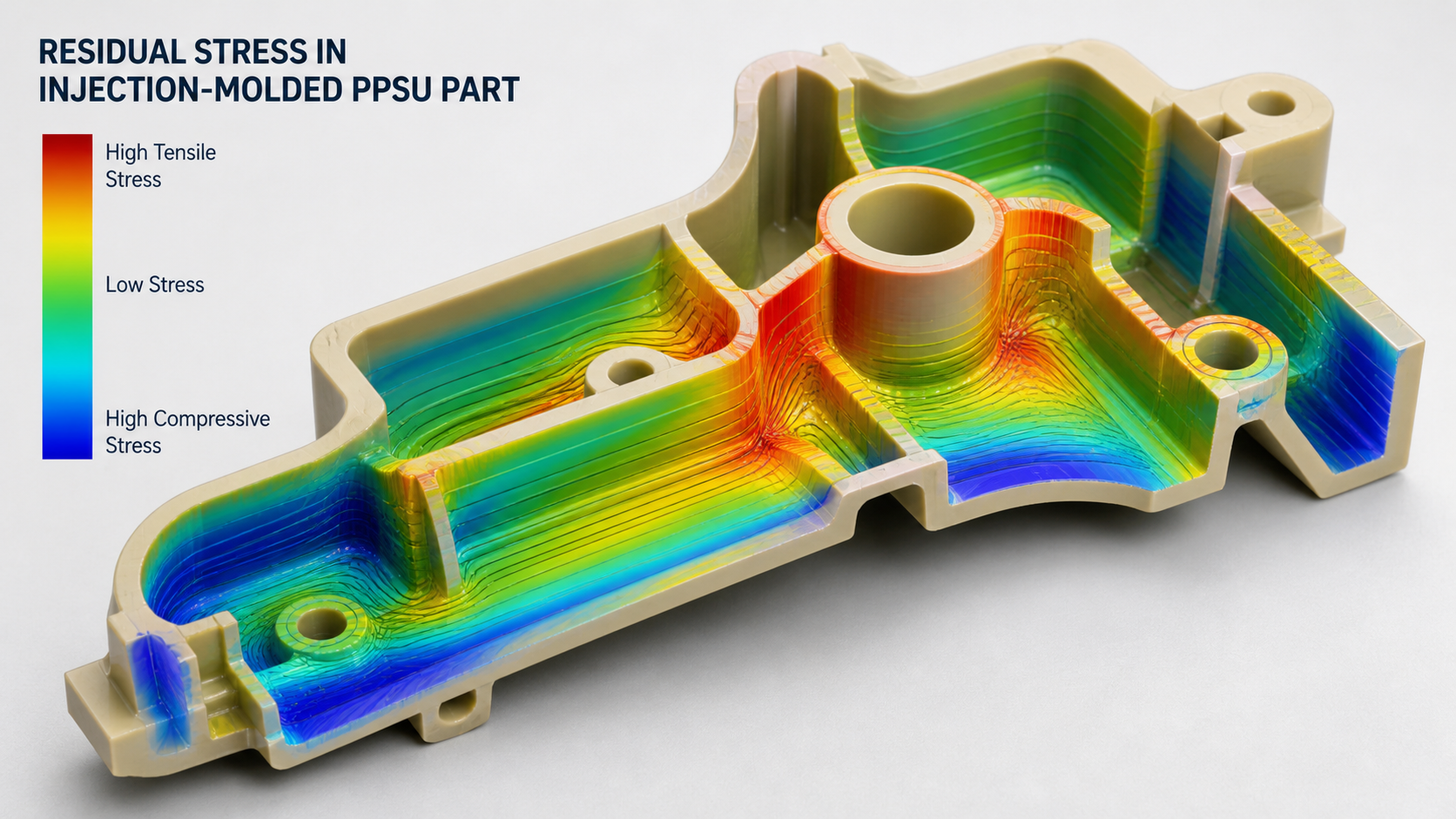
Even before a part is assembled or clamped, it can hold significant internal stress. This is known as residual stress, and it’s a byproduct of the manufacturing process, especially injection molding. As the molten polymer is injected into a cool mold, the outer surface cools and solidifies much faster than the core. This difference in cooling rates creates internal tension. When that part is later exposed to the heat of an autoclave, the polymer begins to relax and move, trying to relieve that locked-in stress. This can result in warping, dimensional changes, or even spontaneous cracking. I always emphasize the importance of proper molding protocols and, when necessary, post-molding annealing. Annealing is a controlled heating and cooling process that helps relieve these internal stresses, creating a more stable and reliable component for demanding applications.
Applying Steam Exposure While Relevant Stress Is Present?
Standard material tests on a data sheet don't always reflect real-world conditions. You might approve a material based on this data, only to have it fail in the field, causing costly recalls.
Applying steam while the part is stressed is the only way to simulate real-world autoclave conditions accurately. This combined-exposure testing reveals the material's susceptibility to environmental stress cracking, a failure mode that neither heat nor stress can trigger alone.
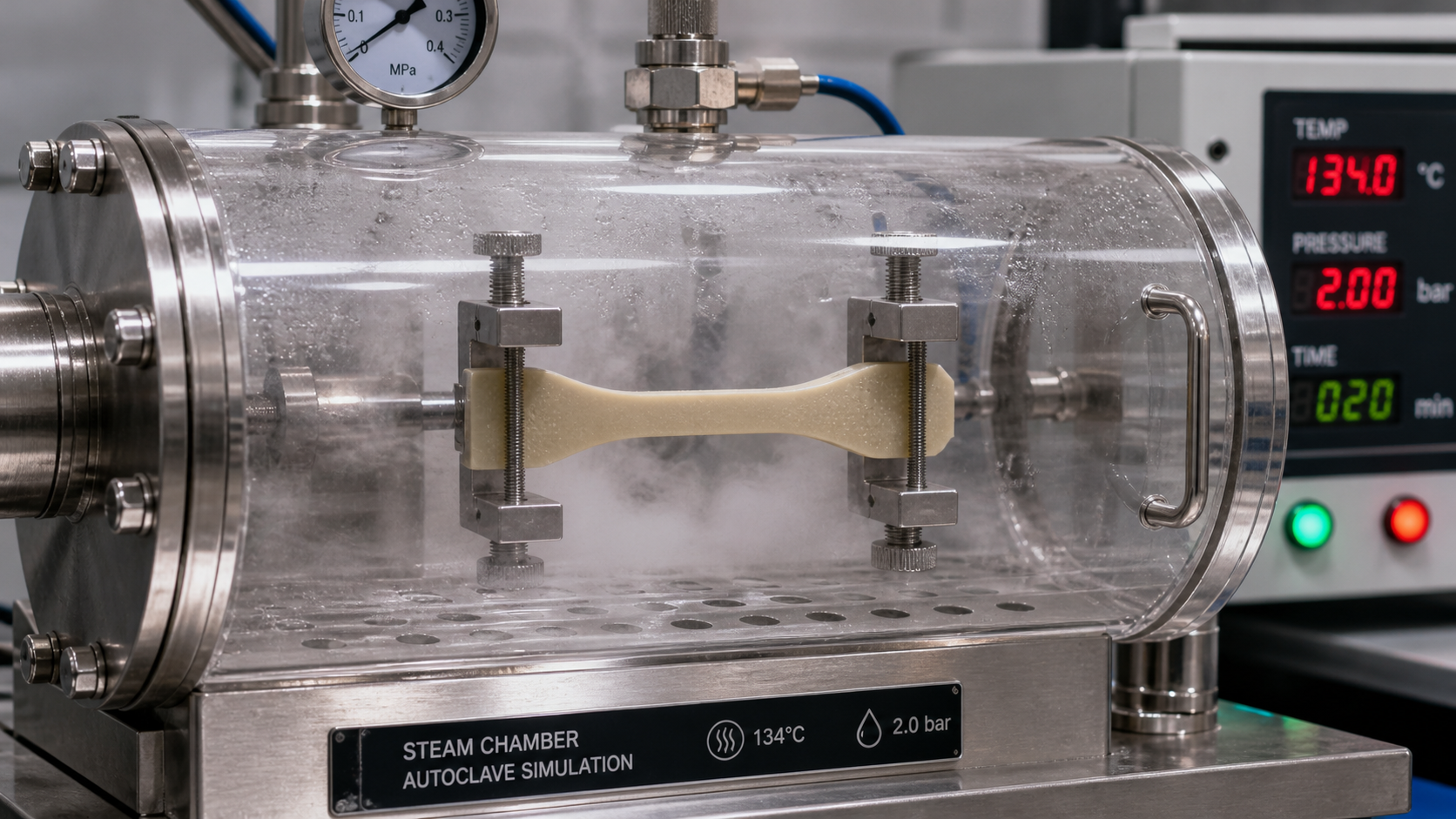
This is where everything comes together. A part can resist high temperatures. It can resist a certain amount of mechanical load. But when you combine heat, moisture, and stress all at once, the material’s behavior can change dramatically. This is the essence of environmental stress cracking (ESC). The steam doesn't chemically attack the PPSU, but it acts as a plasticizing agent, making it easier for cracks to initiate and grow at points of stress. This is why we insist on reviewing test data that combines these factors. A simple test involves taking a sample strip of the material, bending it in a fixture to apply a known amount of stress, and then placing it in an autoclave. This method directly shows us how the material will hold up under the exact conditions it will face in its application. It turns material selection from a guess based on a data sheet into an evidence-based decision.
Comparing Results With Unloaded Controls?
You see cracking in your stressed PPSU part after testing, but how can you be certain the stress was the cause? Without a baseline, your results are just an observation, not evidence.
Comparing results with unloaded controls is crucial to prove that mechanical stress is the failure accelerator. If the stressed part cracks while the identical unstressed part survives the same steam cycles, you have clear evidence that the combination of factors caused the failure.
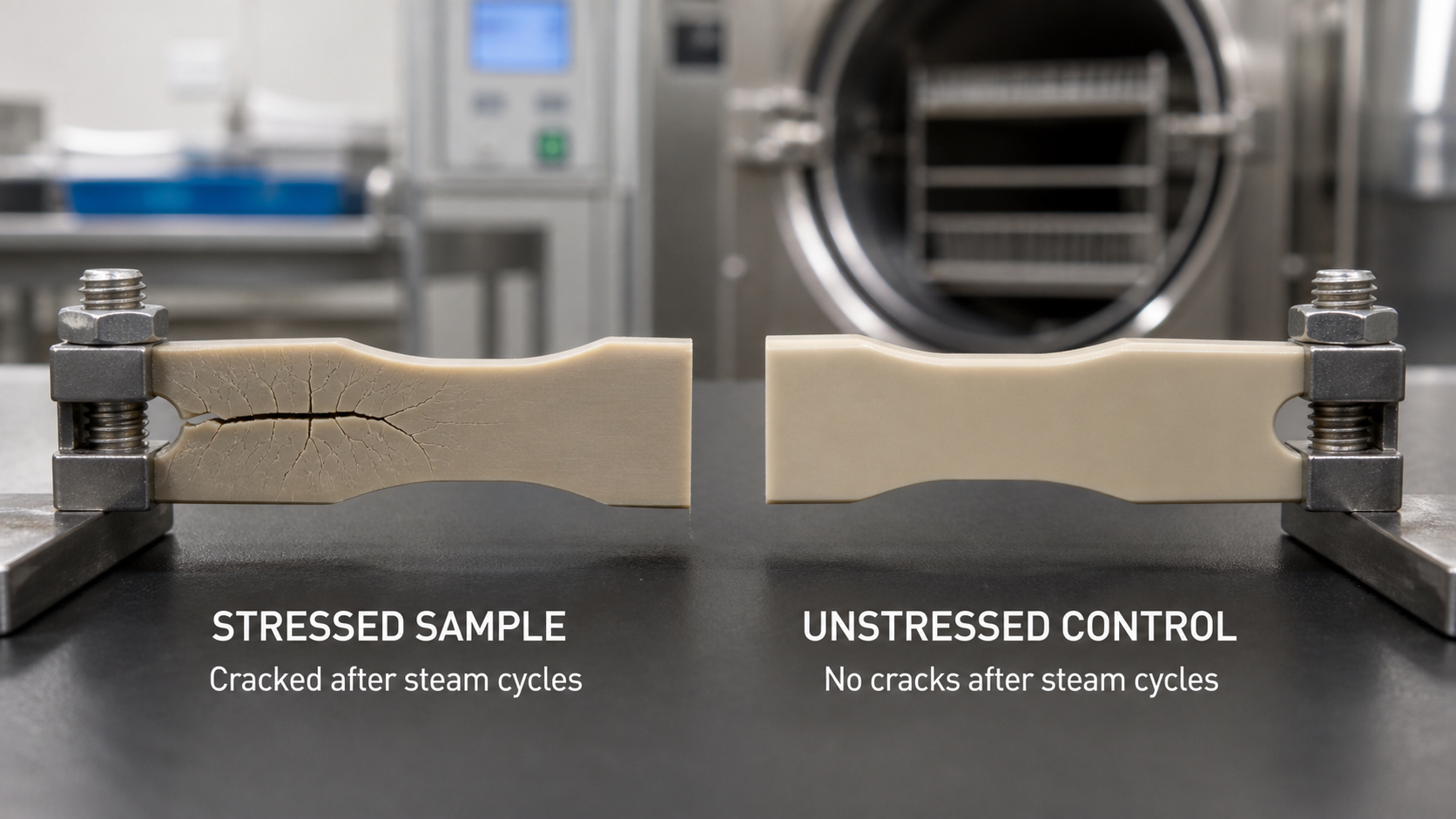
Running a single test on a stressed part isn't enough. To truly understand what’s happening, we need a control. In every valid test I’ve seen, an identical but unloaded (unstressed) part is placed in the same autoclave cycle right next to the stressed part. This is fundamental to good science. The control part is exposed to the exact same temperature, pressure, and steam. If, at the end of the test cycles, the stressed part shows cracking or crazing while the control part looks perfectly fine, we have our answer. The failure was not caused by the material simply degrading from the heat. It was caused by the synergistic effect of stress and the steam environment. This direct comparison removes all doubt and confirms that the mechanical load is the critical variable. It allows us to set safe application limits and design parts and fixtures that avoid concentrating stress in critical areas.
Conclusion
To ensure PPSU parts survive sterilization, you must test them under realistic mechanical stress. This evidence-based approach prevents unexpected failures and builds confidence in your material selection and design.