
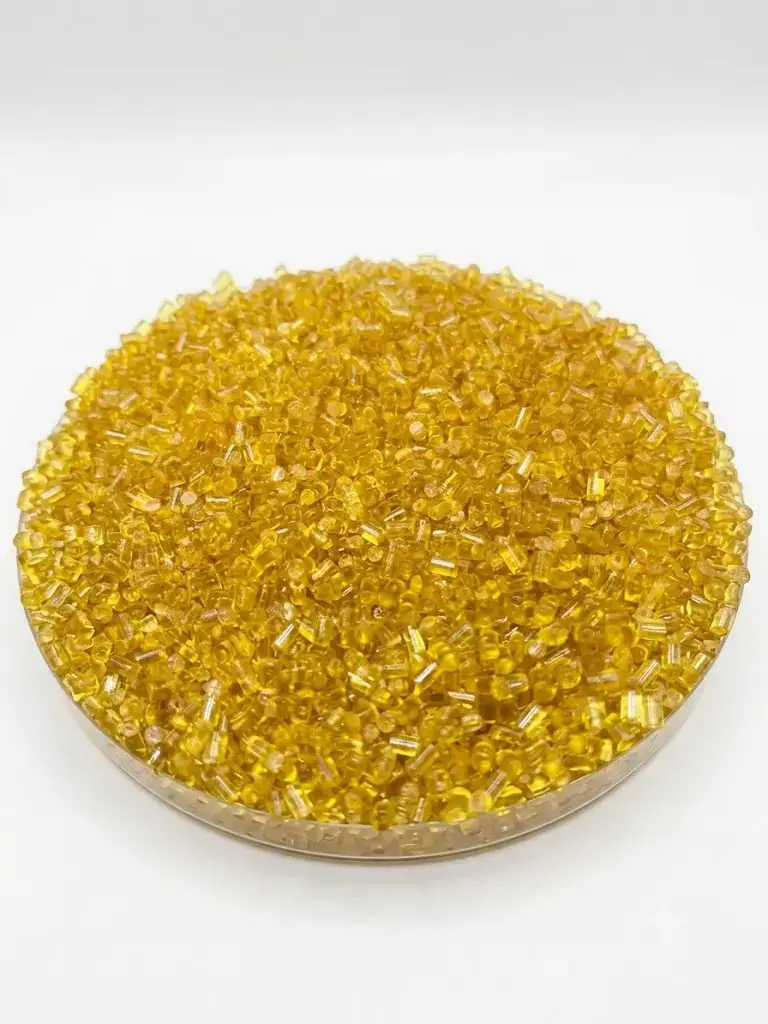
Amber PEI Resin | Ultem® 1000 Equivalent
High-Heat Transparency. 217°C Tg. Seamless Drop-in Replacement.
Our Virgin Amber PEI resin is engineered for high-precision injection molding and extrusion. A direct technical equivalent to Ultem™ 1000, it offers unmatched thermal and mechanical stability for mission-critical parts.
-
Performance: Inherent UL 94 V-0; Low smoke and toxicity (FST rated).
-
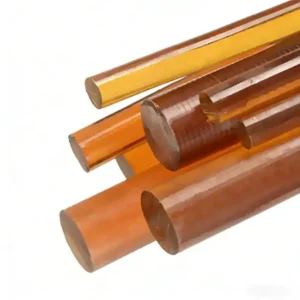
Capability: Pellets, Fine Powder, Stress-Relieved Rods/Sheets & CNC Parts.
-
Compliance: FDA & ISO 10993 (Medical) compliant; BPA-Free.
-
Security: Technical quote in 24 hrs | 100% NDA Protected.
Product information
Published information supports preliminary product selection. Confirm the exact grade, dimensions, tolerances, documentation and application suitability with the quotation for your order.
Description
When your project demands a balance of high-temperature resistance and optical clarity, Amber PEI is the gold standard.
-
Thermal Excellence: Glass Transition Temperature (Tg 217°C) and HDT of 200°C. Maintains mechanical integrity in continuous-use environments where other polymers fail.
-
Hydrolytic Stability: Exceptional resistance to repeated autoclave sterilization and boiling water—essential for medical instruments and food-service hardware.
-
Inherent Flame Retardancy: Achieves UL 94 V-0 and VTM-0 without additives; exhibits extremely low smoke evolution and toxicity (FST), meeting stringent aerospace requirements.
Melt Flow Consistency & Processing Ease
-
Drop-in Replacement: Our resin is technically aligned to branded PEI, ensuring consistent Melt Flow Rates (MFR). This allows for material substitution without costly mold re-design or drastic parameter changes.
-
High Purity: Specialized filtration process ensures zero contamination, preventing black specks or streaks in high-transparency molded parts.
-
Processing Versatility: Optimized for thin-walled precision injection molding and complex profile extrusion.
Vertical Supply Chain: From Granules to Finished Parts
Stop dealing with fragmented vendors. We manage the entire material lifecycle:
-
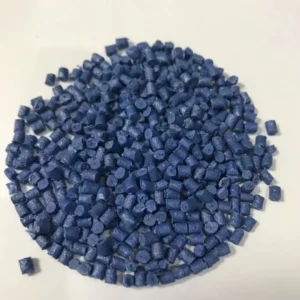
Raw Resins: High-flow Pellets for molding and Fine Powder for advanced coatings or compression molding.
-
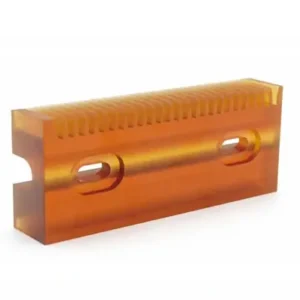
Machining Stock: Precision-annealed (stress-relieved) Rods and Sheets to ensure zero-warpage during high-speed CNC machining.
-
Finished Components: In-house fabrication center delivering complex parts with micron-level tolerances and guaranteed zero porosity.
IV. Strategic Industry Integration
-
Aerospace: Jet engine components, interior sheeting, and EMI shielding housings.
-
Medical & Bio-Tech: Autoclavable surgical handles, monitor probe housings, and labware.
-
Electrical & Electronics: High-density connectors, PCB components, and fiber optic telecommunications hardware.
V. Engineering Trust & Data Integrity
-
Confidentiality: Strict adherence to NDA protocols to safeguard your proprietary drawings.
-
Full Traceability: Every shipment is accompanied by a Certificate of Analysis (COA) and Technical Data Sheet (TDS).
-
Budget Advantage: Direct factory supply provides a significant budgetary and lead-time advantage over major branded resins.
Material overview
Understanding PEI (Polyetherimide)
Why engineers use it
- Good heat resistance and stiffness for structural and electrical parts.
- Stable dimensions and predictable processing in suitable equipment.
- Inherent flame, smoke and electrical performance for many technical applications.
- Available in natural amber and opaque or reinforced grades.
- Can be molded, machined or printed where the appropriate material form is available.
Limits to consider
- Some chemicals and stress-cracking agents require careful compatibility review.
- Moisture control before high-temperature processing is important.
- Continuous chemical or wear duty may favor PEEK or PPS.
- Reinforced grades change impact, surface and directional properties.
- Regulated uses require the correct documented grade, not a generic PEI designation.
Grades and product forms
Unfilled PEI emphasizes the base material’s thermal, electrical and dimensional balance. Glass-fiber grades improve stiffness and movement control but change toughness and surface finish. Medical, aerospace or food-contact projects must identify the exact documentation requirement before grade selection.
Performance points to review
| Evaluation area | Why it matters | Information to provide |
|---|---|---|
| Temperature behavior | Useful performance under elevated or changing temperature | Continuous and peak temperature, cycle length and time at load |
| Mechanical response | Strength and stiffness must match the real part geometry | Load direction, stress level, impact and fatigue expectations |
| Environmental resistance | Fluids, cleaning agents and atmosphere can change service life | Chemical name, concentration, temperature and exposure time |
| Dimensional control | Tight-tolerance parts depend on both material and processing | Finished dimensions, tolerances and assembly conditions |
| Electrical or insulation needs | Electrical requirements may influence grade and thickness | Voltage, dielectric, conductivity or insulation target |
These are engineering discussion points, not guaranteed property values. Final acceptance criteria should be agreed for the selected grade, process and order.
Typical application directions
These examples show where the material may be evaluated. They do not replace a suitability review for the finished component.
Preparing a pellet or granule project
State whether the resin will be injection molded, compression molded, extruded, compounded or used in process development. Include machine capability, part thickness, mold concept, drying and handling plan, color, filler or additive needs, and the property the finished part must retain. For an unfamiliar resin, a controlled trial lot is more useful than moving directly to production volume.
Where the application is critical, define what a successful trial looks like before material is ordered: dimensions after processing, visual condition, mechanical response, assembly fit or another measurable result.
When another material may be better
PEEK may provide a larger performance margin in more severe heat or chemical service, while lower-cost engineering plastics may be sufficient for moderate conditions. PEI is often chosen when its specific balance of thermal, electrical and structural properties fits the part.
We recommend sharing the current material and the reason it is being reconsidered. Cost, processability, supply form and inspection burden belong in the decision alongside technical performance.
Information needed for an accurate quotation
A useful RFQ reduces follow-up questions and helps us distinguish between a material request and a finished-part requirement.
| Product form | Pellets or granules; natural, black or another required color |
|---|---|
| Grade direction | Unfilled, reinforced, modified or application-specific requirement |
| Quantity | Trial quantity, first order and estimated annual demand |
| Application | Part function and current material, if any |
| Operating temperature | Continuous range, peak temperature and cycle duration |
| Environment | Chemicals, gases, moisture, pressure, vacuum or outdoor exposure |
| Mechanical duty | Load, speed, impact, wear and mating components |
| Documentation | Drawing revision, inspection, traceability or compliance needs |
| Conversion process | Molding, extrusion, compounding, sintering or development work |
| Packaging | Trial pack, production packaging and moisture-control expectations |
Frequently asked questions
Can I request a sample or trial quantity?
Trial quantities can be discussed according to product form and availability. Tell us what you need to prove during the trial, the intended process and the expected production quantity if the test succeeds.
Do you provide a data sheet or material documentation?
Available documentation depends on the selected material and supply route. List the documents required by engineering, purchasing or quality when you inquire so they can be checked before quotation.
Can the grade be selected from a product name alone?
No. Similar product names can cover different grades, colors, fillers and processes. Selection should be based on the finished application, environment and required property balance.
Can you supply custom dimensions or finished parts?
Custom sizes, blanks or finished parts can be reviewed where appropriate. A drawing with tolerances, quantity and material requirement is the best basis for quotation.
How should we evaluate an alternative to our current material?
Share the current grade, the part’s service conditions and the reason for changing it. A useful comparison looks at failure mode, processing, life, inspection and total project cost—not only a single property value.
What determines lead time?
Lead time depends on product form, grade, size, quantity, documentation, machining and current availability. Confirm the required delivery date and destination with the RFQ rather than assuming a standard schedule.
Send the drawing, application and quantity. We will use the project details to prepare a practical material and supply discussion.
Reviews
There are no reviews yet.