Semiconductor Polymer RFQs: Specifying the Contamination That Matters?
Relying on a polymer name for semiconductor parts is risky. This can cause contamination and yield loss. We must specify the contamination that actually matters to the process.
To specify contamination in an RFQ, you must name critical ionic species, define particle limits with sampling conditions, and agree on compliance measurement methods. This makes purchase requirements an evidence-based decision, not a guess based only on a polymer name.
When we work with customers in the semiconductor industry, the conversation often starts with a material name, like PEEK or PEI. But the name alone doesn't guarantee performance. Two parts made from the same named polymer can behave very differently if their contamination levels are not controlled. Contamination is a silent killer of yield, and we believe the best way to fight it is to be very specific about what we're looking for. It’s not about finding a "clean" polymer; it's about defining what "clean" means for your exact application and then building a supply chain that can prove it. This requires moving beyond simple material data sheets and into a more detailed, evidence-based discussion.
Naming the Ionic Species That Matter to the Process?
You see "low ionics" on a data sheet, but what does that mean? This vagueness can lead to process failures from contaminants you never knew were there.
Name the specific ionic species that disrupt your process, like chloride, sodium, and sulfate. We help you specify these in the RFQ and use agreed test methods to measure them, making your purchasing requirements clear and enforceable for every supplier.
In my experience, a generic requirement for "high purity" is not enough. We need to get specific. We regard contamination control throughout the manufacturing chain as essential. This means we must look closely at ionic contamination. Certain ions can alter chemical processes on the wafer surface, leading to defects. The key is to identify which ions are the problem for your specific process. For one customer, chloride might be the biggest enemy, while for another, it could be mobile ions like sodium or potassium. We work to put these specific requirements into the purchasing documents.
Common Ionic Contaminants and Their Impact
We do not present this as our own test evidence. Instead, we use the raw material supplier's data or agreed-upon third-party testing to confirm compliance. This approach ensures the requirements are based on solid evidence. Here is a simple breakdown of ions we often discuss:
| Ionic Species | Potential Process Impact | Common Source |
|---|---|---|
| Chloride (Cl-) | Can cause corrosion of metal features on the chip. | Manufacturing process, cleaning agents. |
| Sodium (Na+) | A mobile ion that can affect transistor performance. | Human handling, processing environment. |
| Sulfate (SO4 2-) | Can leave residues that interfere with subsequent process steps. | Chemical precursors, environmental exposure. |
By specifying the exact ions and their maximum allowable limits in parts per billion (ppb), the RFQ becomes a powerful tool. It forces suppliers to provide evidence for their claims.
Defining Particle Limits and Sampling Conditions?
The word "clean" is subjective and unhelpful in an RFQ. Unspecified particle limits lead directly to killer defects on wafers, hurting your yield and your bottom line.
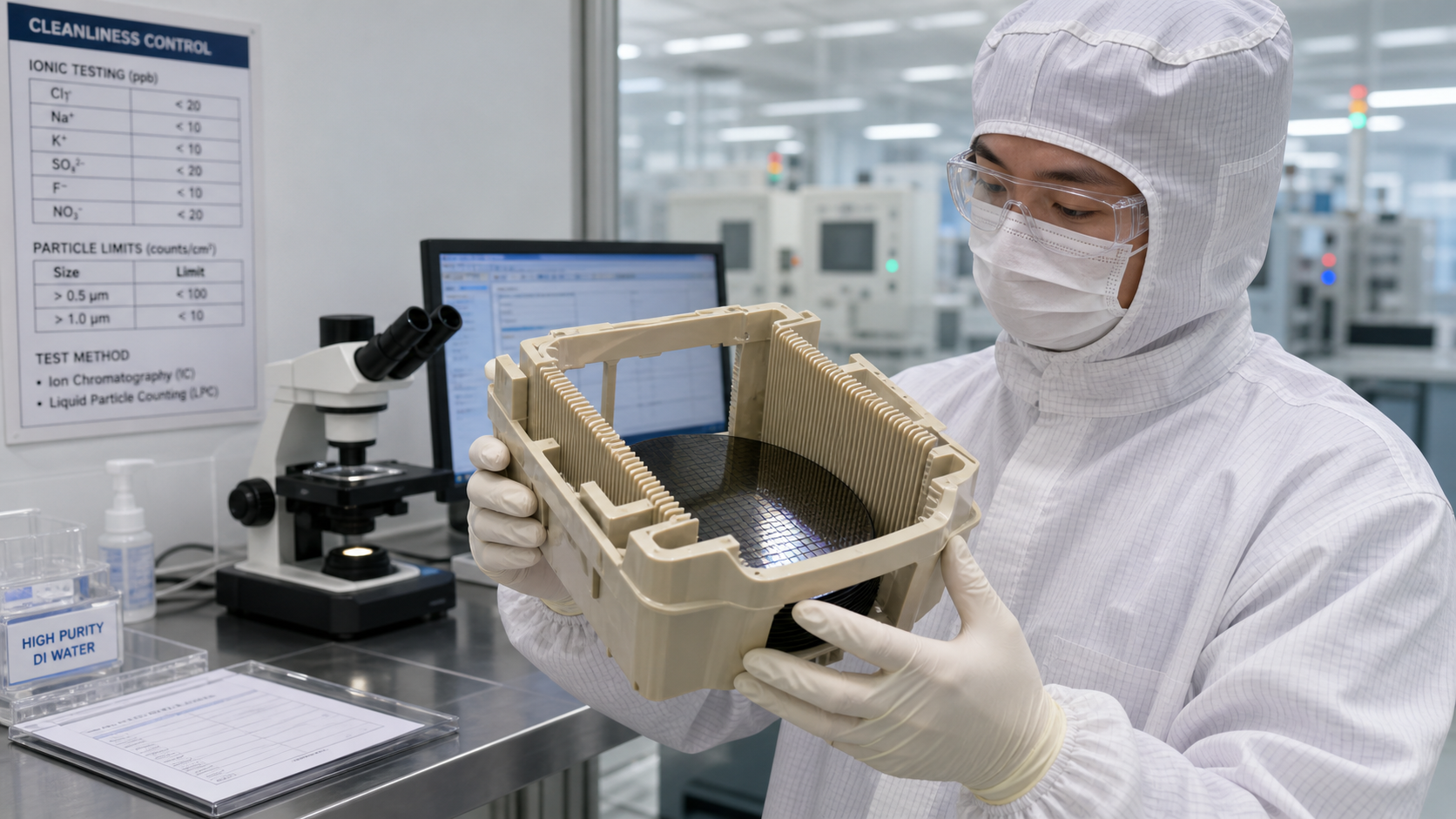
Define particle limits by specifying maximum allowable counts for different size ranges, such as >0.5 µm. Also, detail the sampling conditions, including the surface area and test fluid, to ensure repeatable and meaningful results from any supplier.
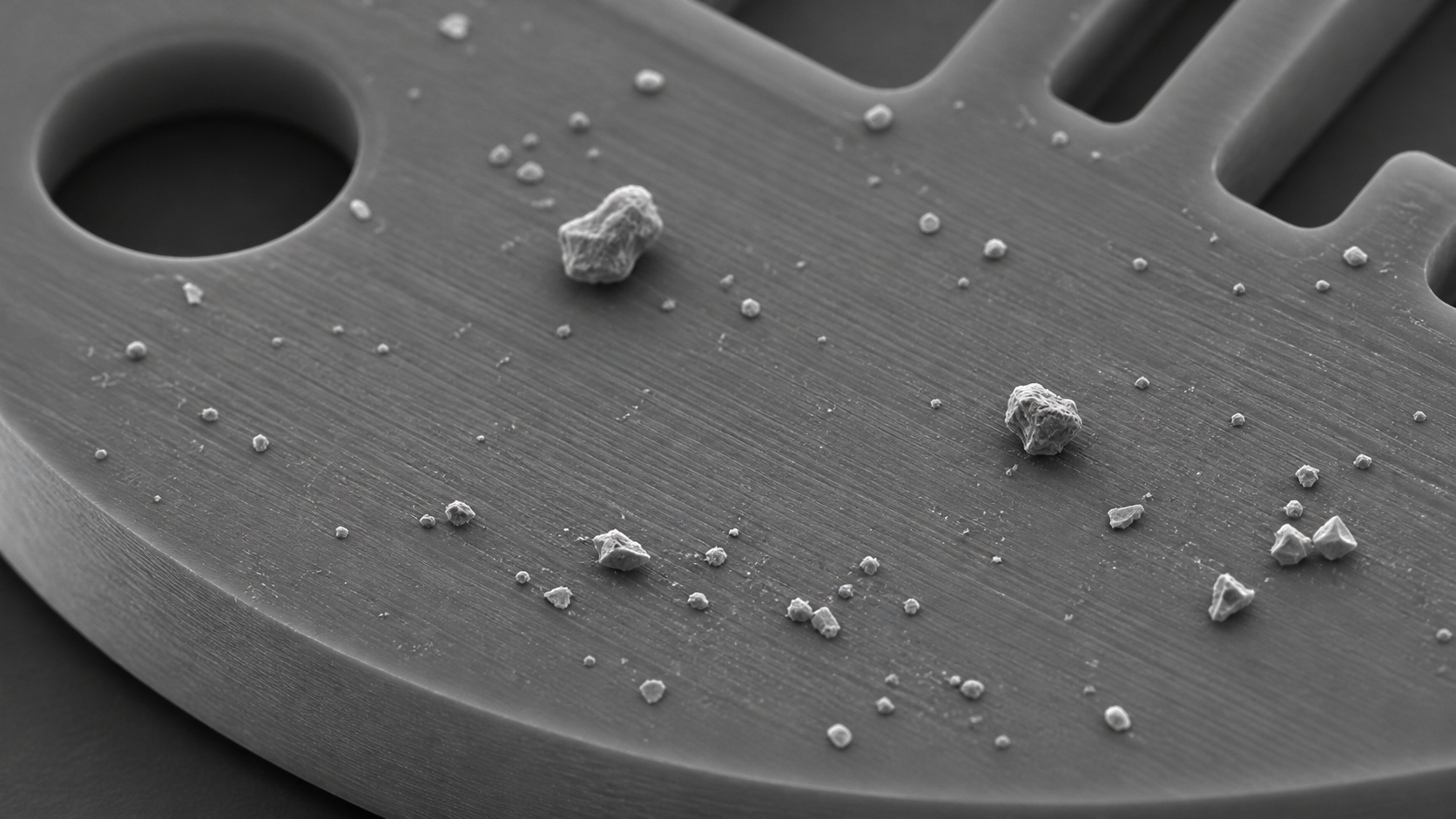
After ions, particles are the next big concern. A single particle in the wrong place can ruin a microchip. Simply asking for a "particle-free" component isn't practical. Instead, we must define acceptable limits. This involves a two-part specification. First, we define the particle sizes that matter. For example, we might specify the maximum number of particles allowed that are larger than 0.5 microns and 1.0 micron. Second, we must define how the sample is tested. This is critical for getting results that can be compared between different batches or suppliers. The sampling conditions should detail the test method, such as rinsing the component with a specific volume of high-purity deionized (DI) water. We would also specify the surface area of the component being tested. Without these details, one supplier could use a gentle rinse while another uses a high-pressure spray, giving completely different results. By defining these conditions, we make the requirement objective and measurable.
Agreeing How Compliance Will Be Measured?
You have specs for ions and particles, but how do you prove them? Disputes with suppliers over test results can delay projects and create tension.
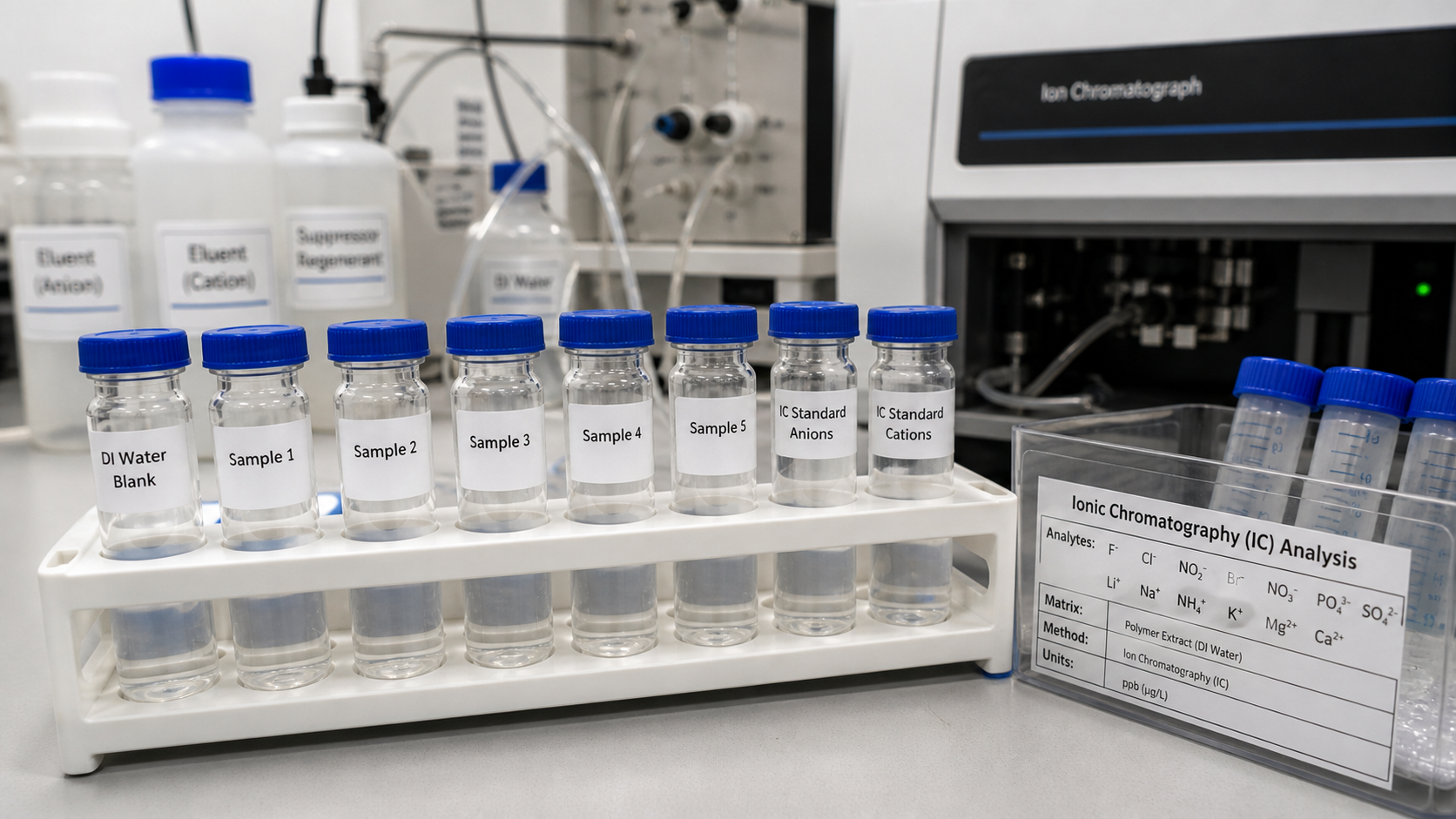
Agree on standard test methods like Ion Chromatography (IC) for ionics or Liquid Particle Counting (LPC) for particles before issuing a purchase order. We retain and reference the original test conditions and limits, ensuring an evidence-based approach to verifying compliance.
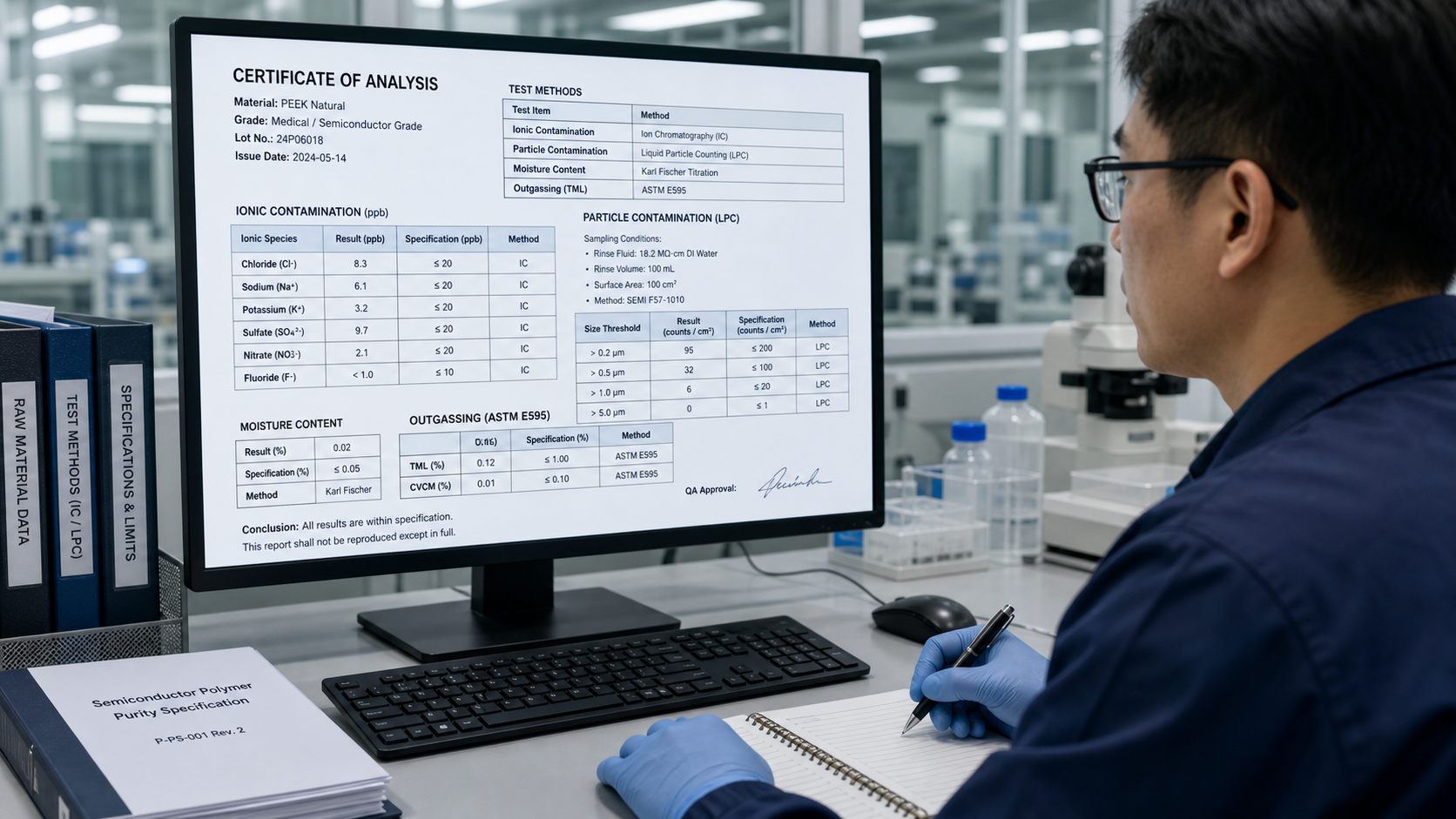
Once we have defined what to measure, we must agree on how to measure it. This step is about creating a common language for quality. For ionic contamination, the standard method is often Ion Chromatography (IC). For particles, Liquid Particle Counting (LPC) is common. The important thing is to name the specific test method in the RFQ. This prevents a supplier from using a less sensitive method to get a passing result. At VantPoly, we don't create our own test evidence for this. Our role is to facilitate the agreement. We work with the raw material supplier's technical data sheets, which often list the test methods used to generate their purity data. We then help the customer understand these methods and put them into their specification. This creates transparency. The goal is to make the purchase requirement an evidence-based decision. We retain the original grade information, test conditions, and application limits to ensure everyone is working from the same set of facts.
Putting Those Methods Into the RFQ?
Verbal agreements about testing are easily forgotten or misinterpreted. When the parts arrive, they might not meet the unspoken requirements, causing production to halt.
To make your RFQ effective, you must embed the specifics. List the target ionic species and their limits (in ppb), the particle size classes and counts, and reference the exact test methods. This makes the requirements contractually binding.
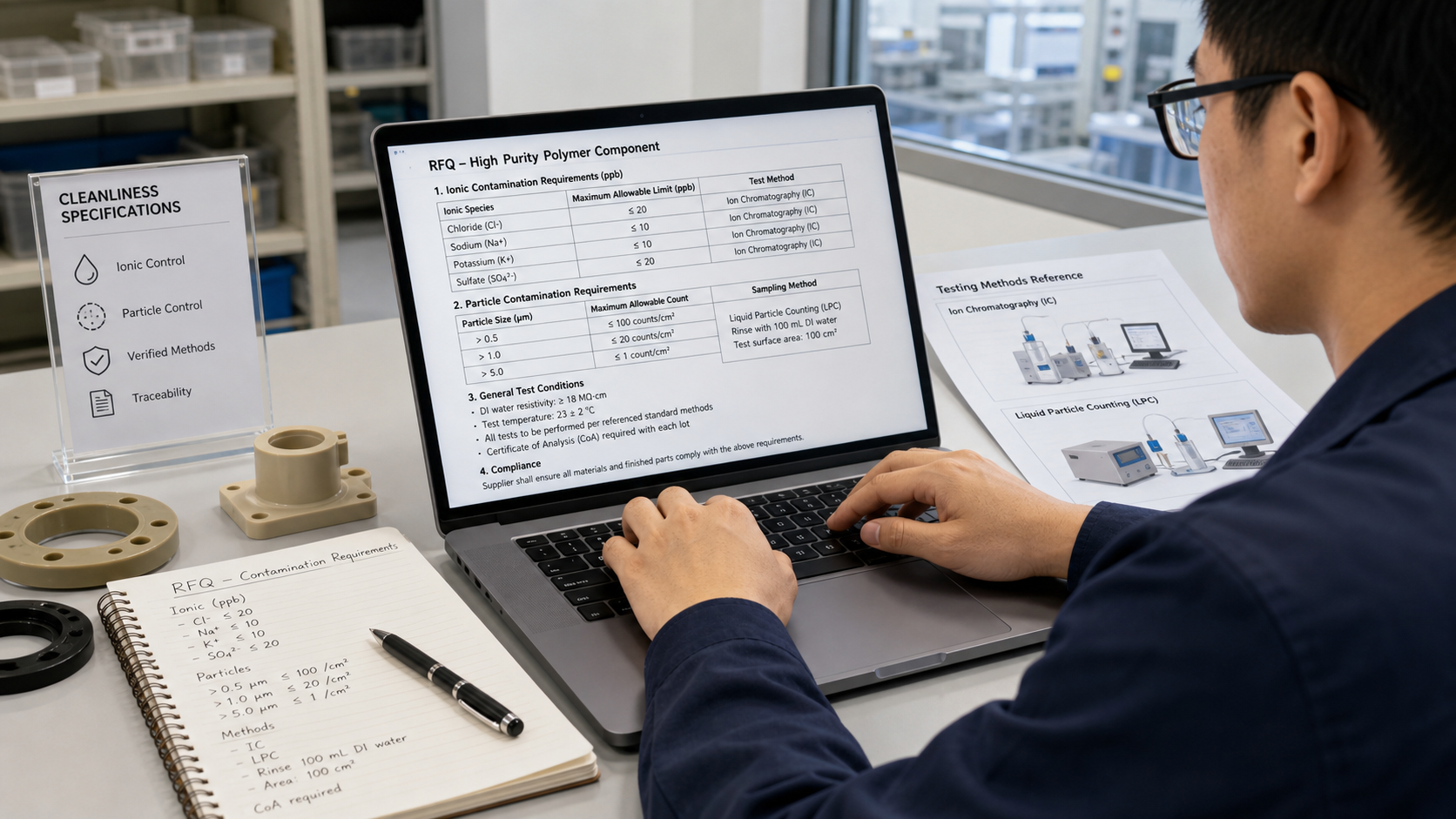
This is the final and most important step. All the details we've discussed must be written down clearly in the Request for Quotation (RFQ). This document is the foundation of the commercial agreement. A well-written RFQ leaves no room for ambiguity. It should contain a dedicated section on cleanliness and contamination. In this section, you would list the ionic species of concern with their maximum concentration limits (e.g., Chloride (Cl-): < 20 ppb). You would also specify the test method (e.g., Ion Chromatography). Similarly, for particles, you would define the limits for each size class (e.g., Particles > 0.5 µm: < 100 counts/cm²) and describe the sampling method. By putting these details in the RFQ, you are setting a clear, non-negotiable standard. It allows you to evaluate suppliers on an equal footing. More importantly, it gives you a clear basis for rejecting parts that do not meet your critical cleanliness requirements. It turns a conversation into a commitment.
Conclusion
A detailed, evidence-based RFQ specifying ions, particles, and test methods is essential for sourcing reliable semiconductor polymer components and protecting your process from contamination.