Can Extra Spring Passes Solve PEEK Dimensional Drift?
Struggling with PEEK parts that won't hold tolerance? You keep re-cutting the same surface, but the dimension never lands where you want it. This can be incredibly frustrating.
Yes, extra spring passes can solve dimensional drift, but only when the root cause is elastic deflection. They are not effective against thermal expansion or internal material stress, making it critical to diagnose the problem before simply adding more cuts to your program.
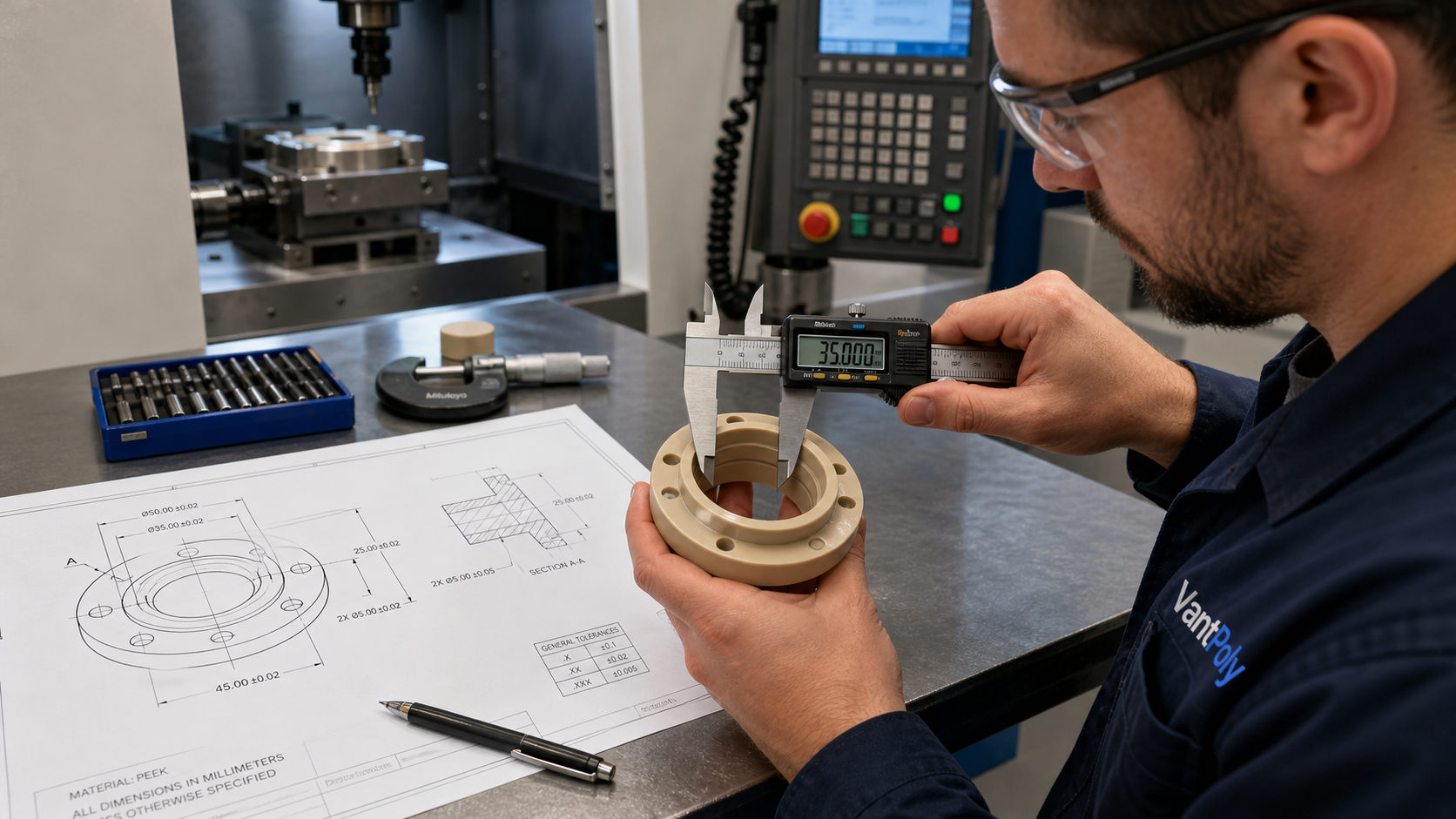
When we machine high-performance polymers like PEEK, we often face challenges that don't exist with metals. The material's tendency to move, bend, or grow during cutting can make hitting tight tolerances feel like a guessing game. A common trick is to add "spring passes"—extra tool passes at the same programmed depth to clean up any material that "sprang back" from the initial cut. But I've found that this is often a band-aid, not a cure. If you don't know why the dimension is drifting, you could be wasting time or even making the problem worse. The key is to use a systematic approach to find the real source of the error.
Distinguishing Elastic Deflection From Material Movement?
Your PEEK part comes out of the machine oversized. Is the part bending away from the tool during the cut, or is something else causing it to change shape?
Elastic deflection is the temporary bending of the workpiece under cutting pressure, which a spring pass can remove. In contrast, material movement is a permanent or semi-permanent change caused by heat or internal stress, which extra passes will not fix and can even worsen.
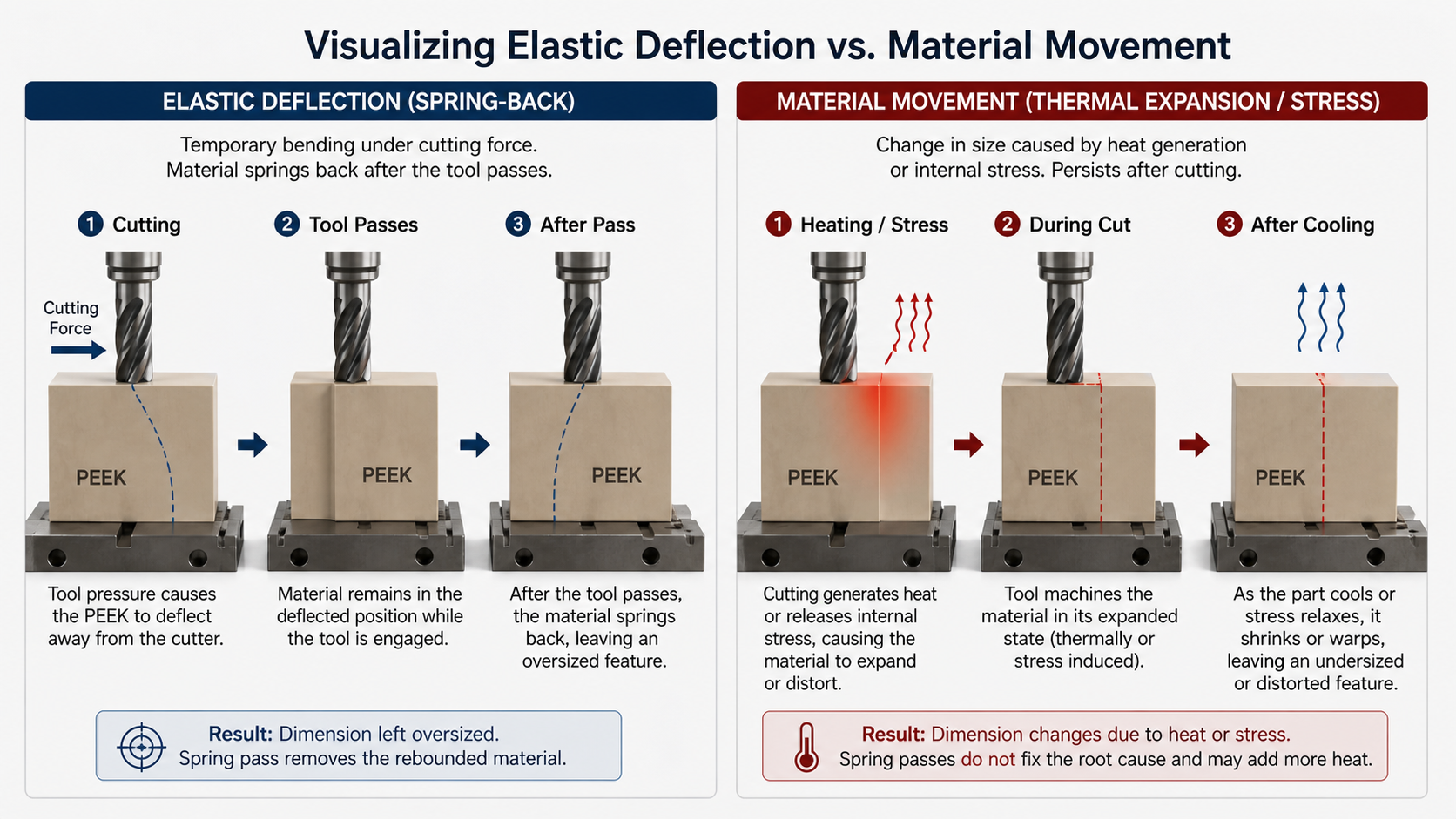
When we talk about dimensional instability in PEEK, we're usually dealing with one of two culprits. The first is elastic deflection. PEEK has a much lower modulus of elasticity than steel or aluminum, meaning it's more flexible. When the cutting tool presses against the part, especially a thin-walled feature, the material can bend away slightly. After the tool passes, the material springs back, leaving it slightly oversized. The second culprit is material movement, which is often due to thermal expansion or the release of internal stress. PEEK doesn't conduct heat well, so cutting can create localized hot spots that cause the material to expand. If you machine it in this expanded state, it will be undersized once it cools. Internal stress, a remnant of the extrusion process, can also cause warping as material is removed.
Key Differences in Behavior
To solve the problem, you have to know which one you're fighting. We use a simple framework to tell them apart.
| Characteristic | Elastic Deflection | Material Movement (Thermal/Stress) |
|---|---|---|
| Primary Cause | Cutting pressure on a flexible part or tool. | Heat generation or release of internal stress. |
| Timing | Happens instantly during the cut and rebounds after. | Occurs during cutting (heat) or after (cooling/warping). |
| Effect of Spring Pass | Effective. Removes the small amount of rebounded material. | Ineffective. May add more heat, worsening the problem. |
| Primary Solution | Use sharp tools, reduce cutting forces, improve workholding. | Manage heat with coolant, optimize toolpaths, use properly annealed material. |
Measuring What Each Spring Pass Actually Removes?
You're running spring passes, but are they just polishing the surface or are they actually removing material? Without measuring, you are simply guessing and hoping for a different result.
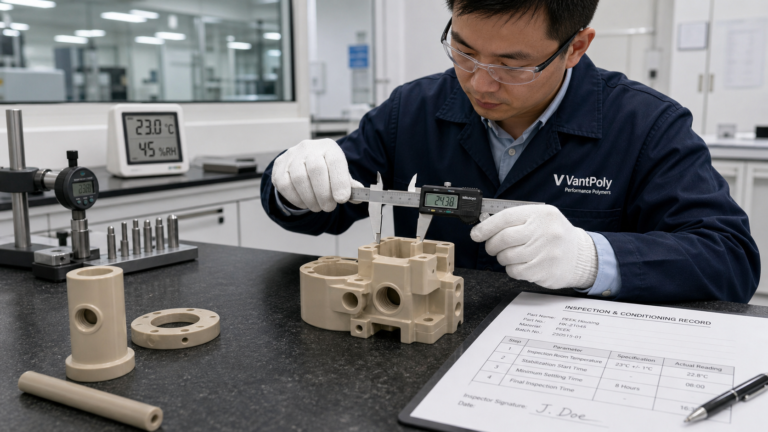
To measure what a spring pass removes, first run your finishing pass and precisely measure the feature. Then, run a single spring pass and measure again in the exact same spot. A change in dimension confirms you are removing material that sprang back from deflection.
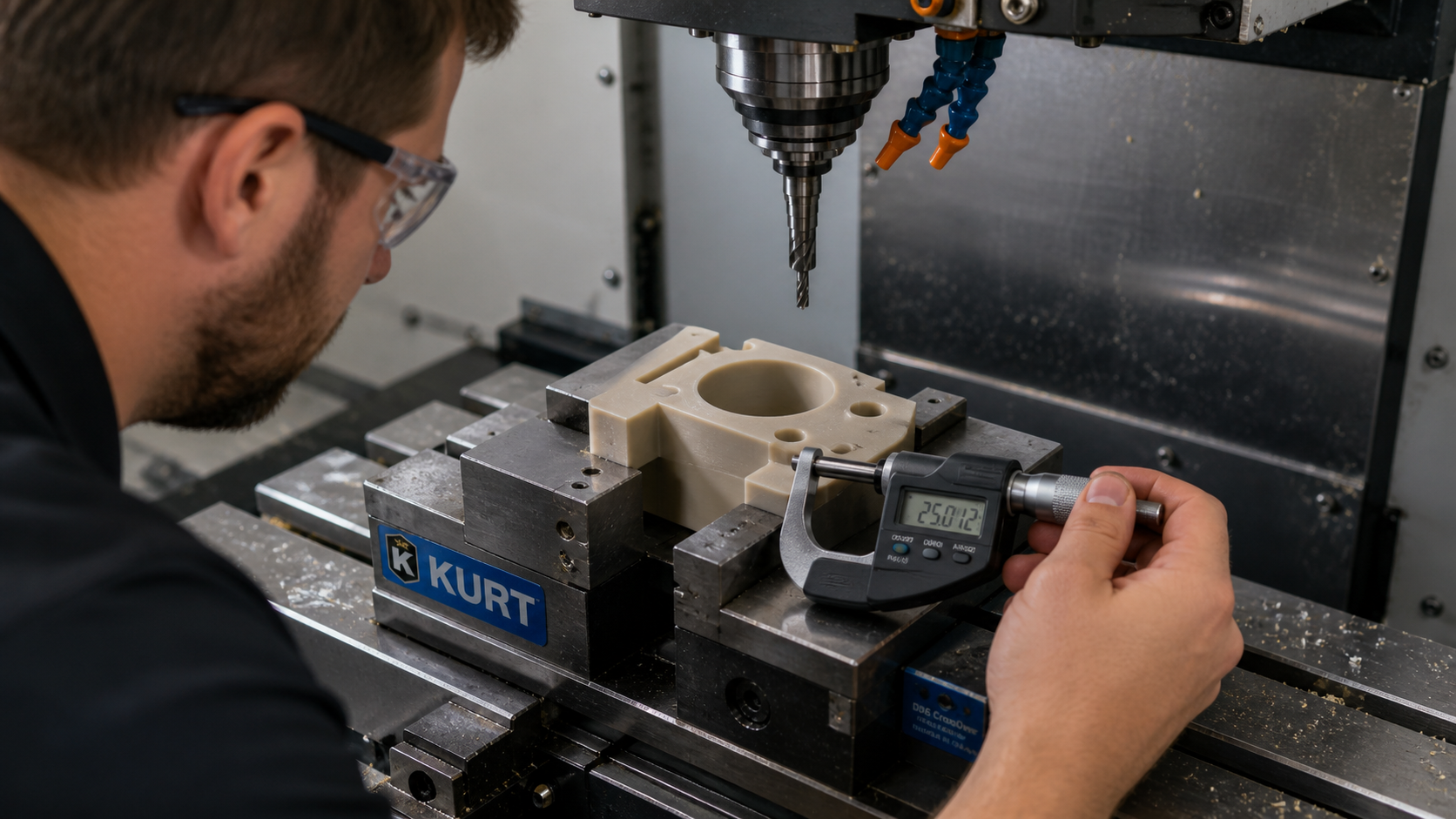
Relying on assumptions is a fast way to scrap expensive material. I always advocate for an evidence-based approach. The best way to see if a spring pass is working is to turn it into a simple experiment. First, run your standard finishing toolpath. Without removing the part, clean any chips away and measure the critical dimension with the best tool you have, like a bore gage or micrometer. Record that number. Next, run one spring pass—the same toolpath with the same feeds and speeds, but with a depth of cut set to zero. After this pass is complete, measure the exact same feature again.
If the dimension has changed (for example, a bore got slightly larger or a boss got slightly smaller), then you know the spring pass removed material. This confirms that elastic deflection was present. You can even repeat the process with a second and third spring pass. Typically, you'll see a diminishing return. The first spring pass might remove 0.02 mm, the second might remove 0.005 mm, and the third might remove nothing at all. Once a pass removes no material, any further passes are pointless. They are just rubbing on the part, creating heat, and wasting machine time.
Checking Temperature Through Repeated Passes?
You're running multiple spring passes, but now the part dimensions are getting even less predictable. Each extra pass seems to be adding a new, unknown error into the process.
Use a non-contact infrared thermometer to measure the workpiece before and after each spring pass. If the temperature consistently rises, the friction from each pass is generating heat, causing thermal expansion that will make your final part dimensionally inaccurate once it cools.
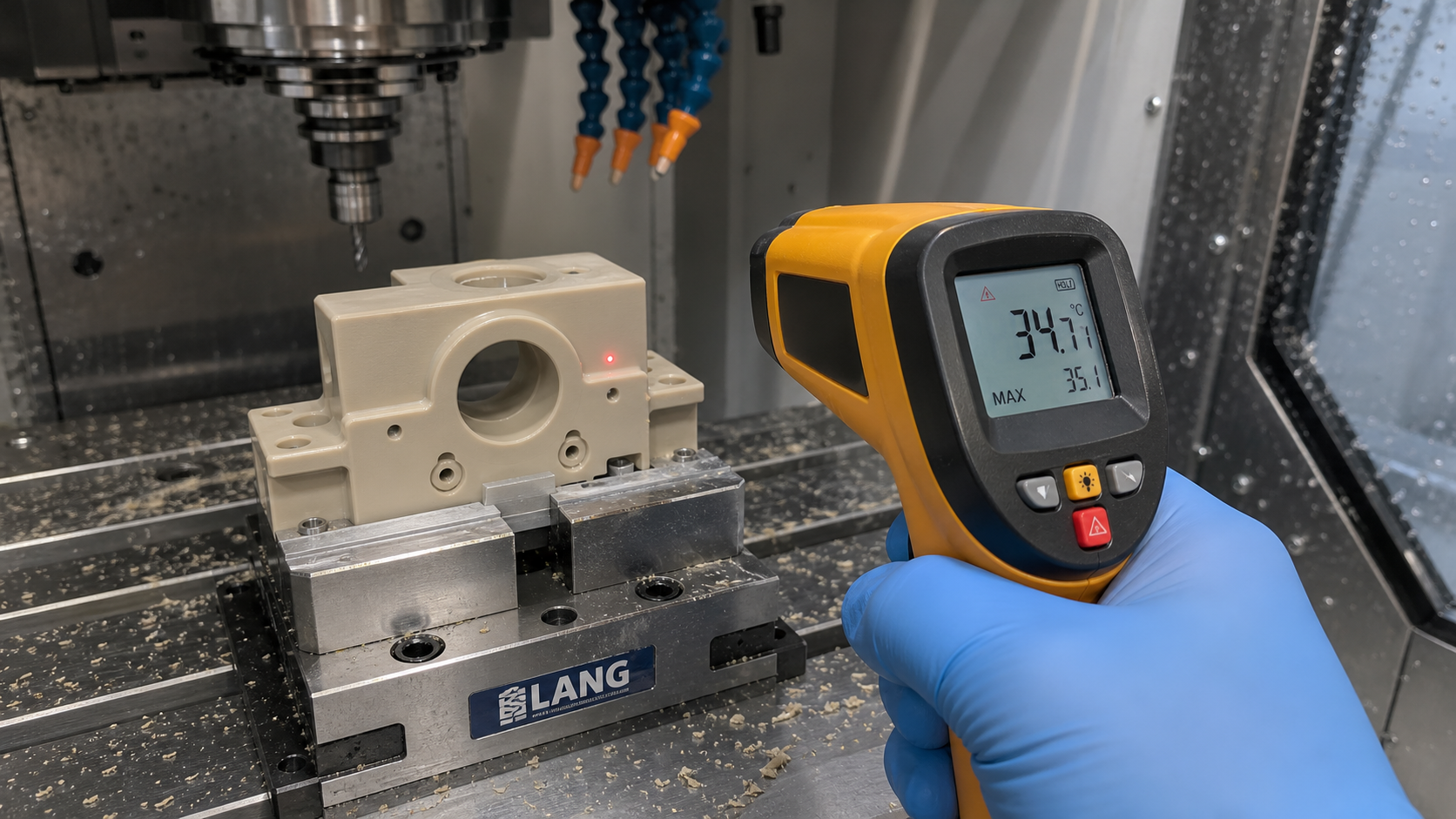
This is a trap I've seen many people fall into. They see that the first spring pass helps, so they assume three or four must be even better. But with a poor thermal conductor like PEEK, this can backfire. Even a "zero cut" spring pass isn't friction-free. The flank of the cutting tool still rubs against the newly machined surface, and this friction generates heat. Because PEEK holds onto that heat, each subsequent pass can raise the part's temperature a little more. The part expands, and your next pass machines an expanded surface. When the part finally cools down to room temperature, that feature will be undersized.
You can easily test for this. Get an IR temperature gun and measure a spot on your part right after the main finishing pass. Then, run one spring pass and immediately measure the temperature in the same spot. You will likely see a temperature increase. If you continue running passes, you may see the temperature climb with each one. If this is happening, more spring passes are not the answer. The root cause has shifted from deflection to thermal instability. The solution is to manage the heat, perhaps by using high-pressure coolant, allowing for cooling time between passes, or using sharper, coated tooling to reduce friction.
Stopping Extra Cuts When the Root Cause Lies Elsewhere?
Your spring passes have stopped working, and the dimensional drift is still there. You are wasting valuable machine time and chasing a ghost in the machine with the wrong solution.
You should stop adding extra cuts when measurements confirm they are removing no material or when the part's temperature is steadily rising. At this point, the root cause is not simple deflection but likely internal material stress, thermal instability, or a problem with machine rigidity.
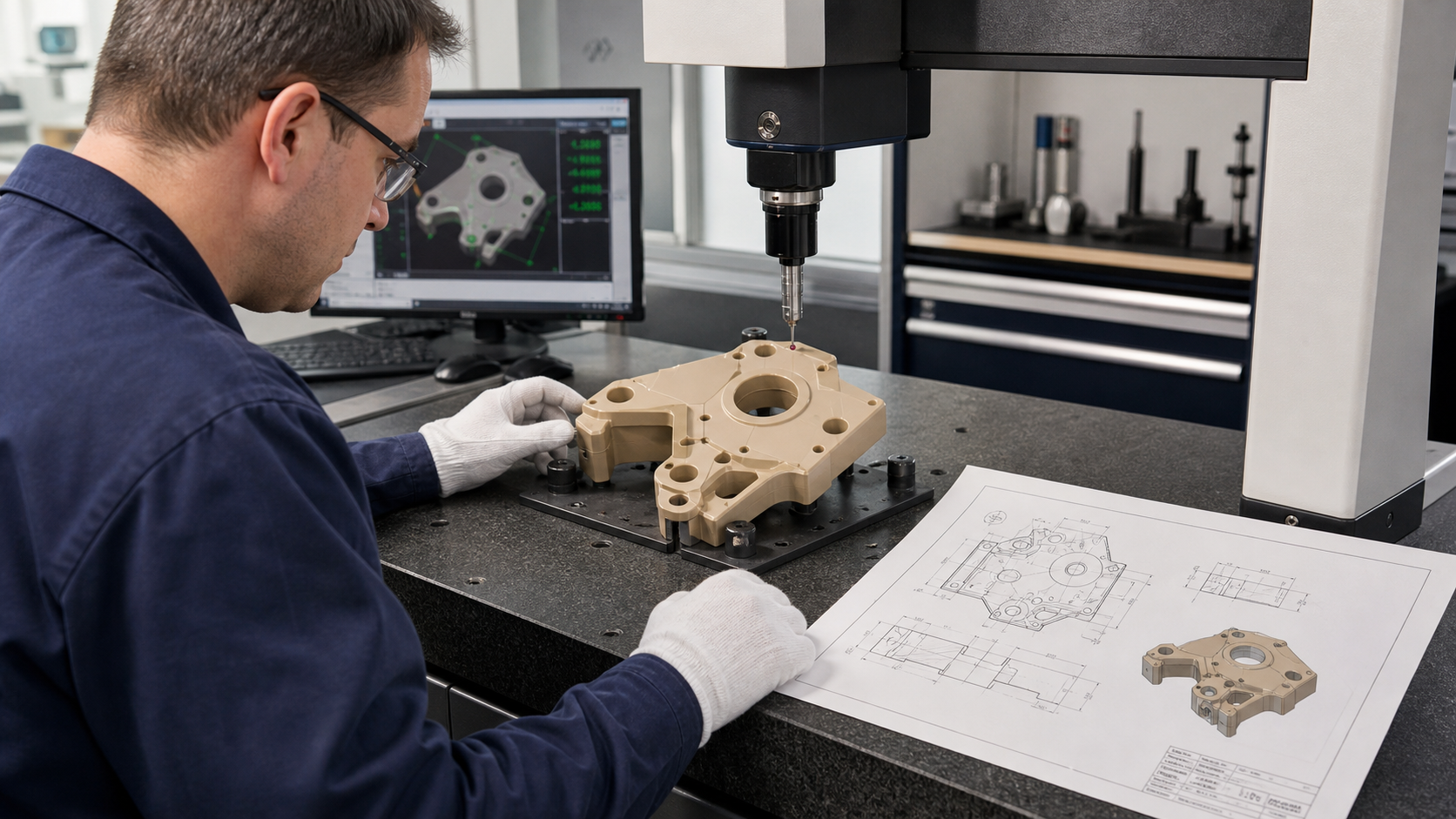
Knowing when to stop is just as important as knowing what to try. If your systematic measurements show that a second or third spring pass is removing zero material, but the part is still out of tolerance, then the problem is not elastic deflection. Continuing to run spring passes is pointless. Similarly, if you see the part's temperature climbing with each pass, you are actively making the problem worse by introducing thermal error. These are the two clear signals to stop and look for a different root cause.
So, where do you look next? First, consider internal stress. Was the PEEK material properly annealed by the supplier? Incompletely relieved stress in a stock rod or plate can cause it to warp as you machine material away. No amount of spring passes will fix a part that is twisting itself into a new shape. Second, look at your setup. Is the tool itself deflecting due to a long overhang? Is your workholding secure enough to prevent the part from shifting or vibrating under load? Finally, consider the machine itself. Worn bearings or backlash in the ball screws can introduce positioning errors that a spring pass cannot correct. The spring pass is a great diagnostic tool, but once it tells you the problem lies elsewhere, you have to believe it and move on.
Conclusion
Spring passes are a useful tool, not a universal fix. Use them to diagnose and correct elastic deflection, but look to thermal control and material quality for more complex PEEK machining issues.