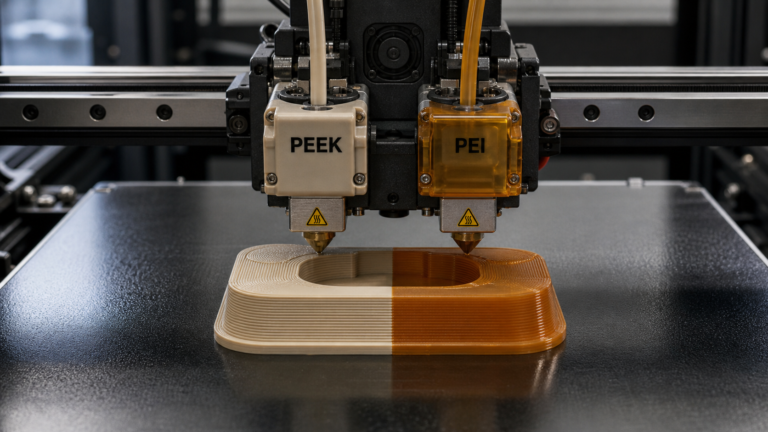
Can a Cheap Resin Trial Predict PEEK Mold Performance?
Using a cheaper material for an initial mold trial sounds like a smart way to save money. But can it really tell you what will happen when you switch to expensive PEEK?
No, a cheap resin trial cannot reliably predict PEEK mold performance. While a surrogate material can confirm basic tooling functions like filling and ejection, it fails to replicate PEEK's unique high-temperature processing, shrinkage, and crystallization behavior, which are critical for final part quality and production yield.
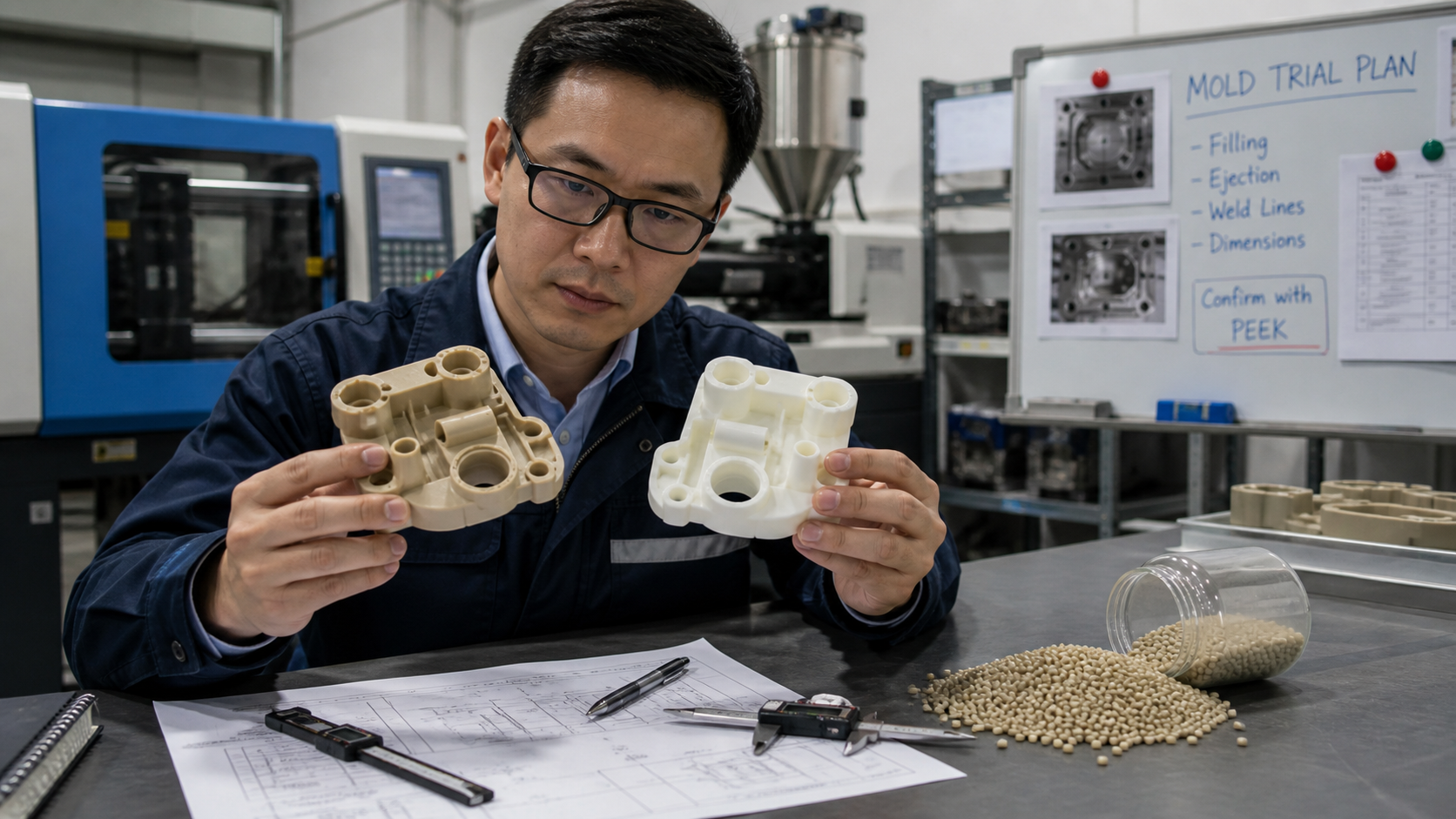
I've seen teams run trials with materials like polypropylene or ABS to "prove out" a mold before committing to a PEEK run. The idea is to catch major tooling errors early. This approach has some merit, but it's crucial to understand its limits. We see this as a way to get partial answers, not the full story. The real challenge comes from thinking that a successful trial with a low-temperature resin means you're ready for PEEK production. The physical realities are just too different. We believe in an evidence-based approach, which means using surrogate materials for what they are good for and relying on PEEK itself for the final word.
Which Tooling Questions a Surrogate Resin Can Answer?
You have a new, complex tool, and the first run uses a high-cost material like PEEK. You're worried about a catastrophic failure. A surrogate can help reduce that initial risk.
A surrogate resin can answer basic mechanical questions about the mold. It can confirm if the plastic will fill the entire cavity, where weld lines might form, how the part ejects, and if there are obvious dimensional or tooling-mismatch issues. It's a tool-functionality check, not a process prediction.
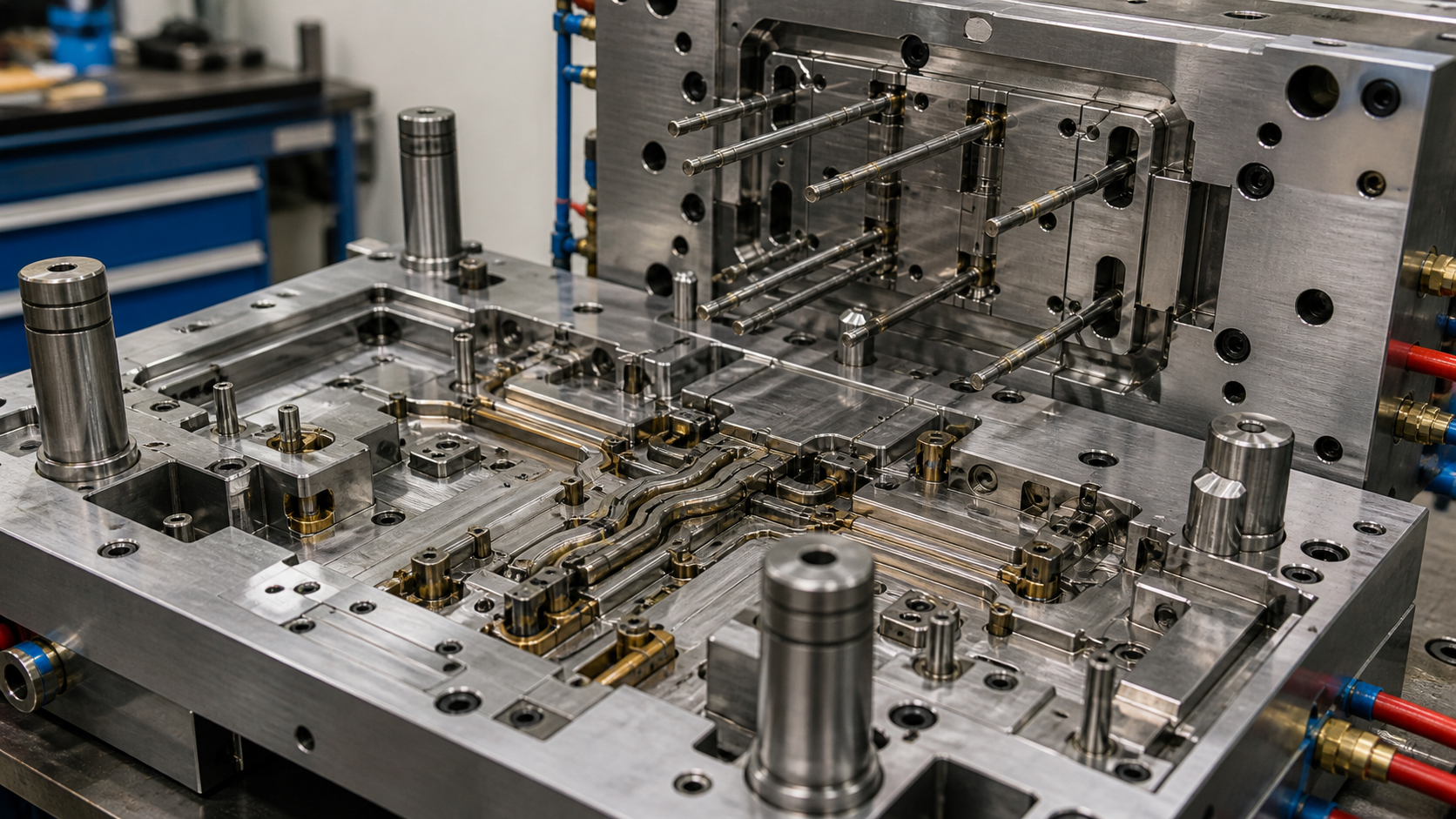
Using a cheap, easy-flowing resin helps us test the fundamental steel-related aspects of the mold. Think of it as making sure the plumbing works before you turn on the hot water. We can see the fill pattern and get a rough idea of where the gates should be. We can also check for major design flaws in the tool itself, like if one half doesn't align correctly with the other. This initial run helps answer the most basic question: does the mold, as a physical object, work? It can highlight problems that would be very expensive to fix later. However, the information it provides is limited. It gives you a starting point, but it's a mistake to think this first step gets you close to the finish line.
What You Can and Cannot Learn
The table below breaks down what a surrogate trial can realistically tell you versus what requires the actual PEEK material.
| Tooling Aspect | What a Surrogate Resin Can Tell You | What Only PEEK Can Tell You |
|---|---|---|
| Filling & Gating | Confirms the cavity fills and shows the basic flow path. Highlights potential “last-to-fill” areas. | Accurate weld line strength, required injection pressure, and potential for jetting or flow marks. |
| Ejection | Shows if ejector pins are located correctly and if the part releases without major damage. | Whether the part will stick due to PEEK’s high shrinkage or require special surface finishes for release. |
| Dimensions | Provides a very rough first look at part dimensions and identifies any major tooling errors. | Final part dimensions, which are heavily influenced by PEEK’s specific shrinkage and warpage behavior. |
| Venting | Indicates if there are obvious trapped-air spots that cause short shots. | The exact venting needed to prevent gas burns, which are common with PEEK’s high processing temperatures. |
Thermal Differences That Undermine the Comparison?
You got a perfect part using a cheap resin. Now you load PEEK, use the same settings, and get a warped, brittle mess. The huge difference in processing temperature is the problem.
The comparison is undermined by PEEK’s extremely high melt and mold temperatures. PEEK requires barrel temperatures over 350°C and mold temperatures of 150-200°C. A cheap resin's low-temperature behavior cannot simulate PEEK's flow, cooling rate, crystallinity, shrinkage, and resulting mechanical properties.
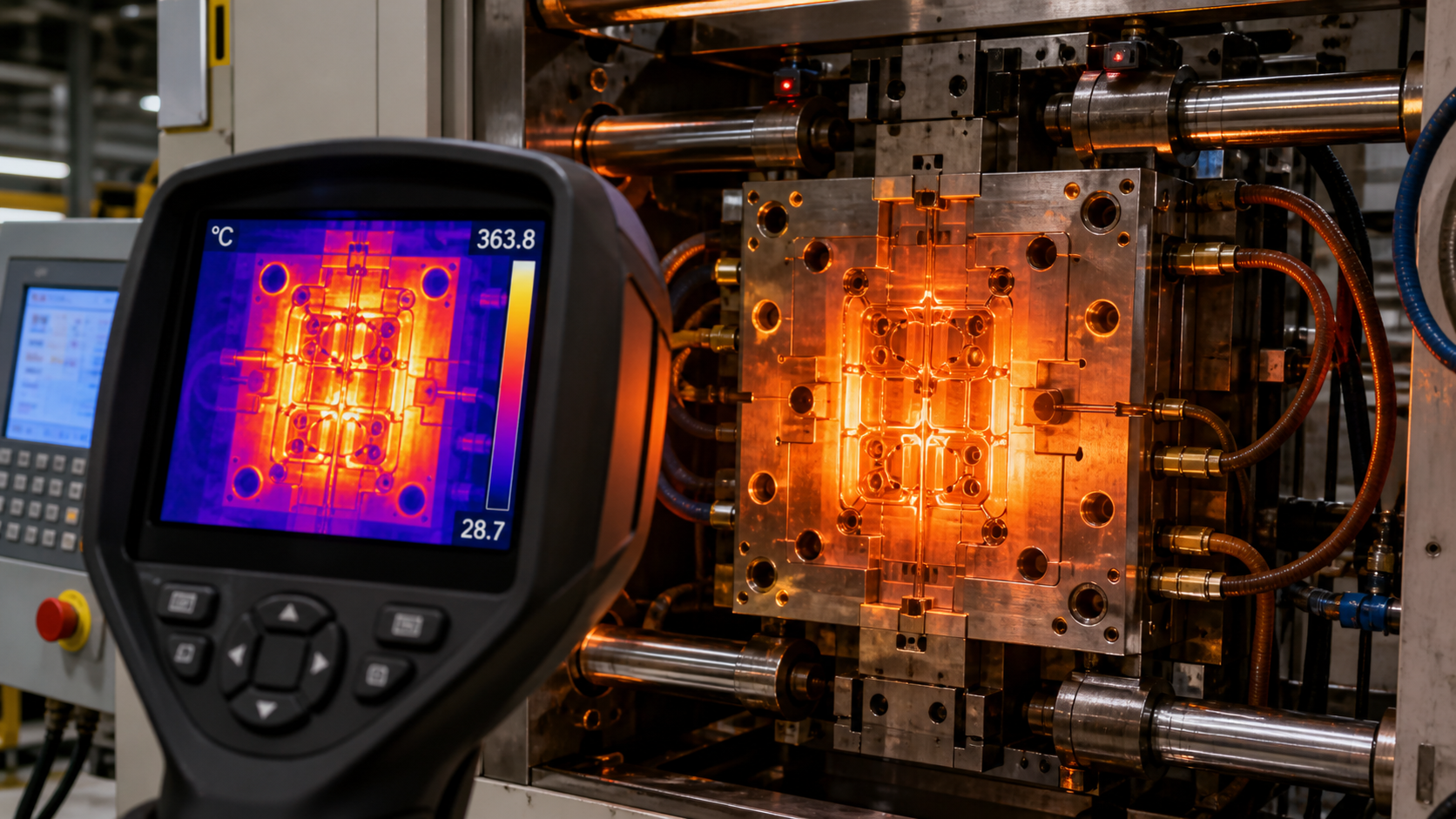
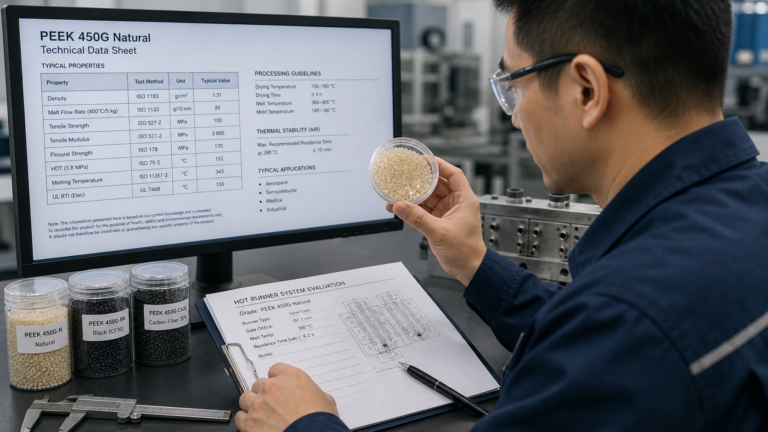
When we work with PEEK, we are in a completely different world of thermal management. The entire system, from the dryer to the nozzle to the mold itself, has to operate at temperatures that would destroy common plastics. For example, a polypropylene might be molded with a tool temperature of 40°C. PEEK requires a mold temperature closer to 200°C. This isn't a small difference; it changes everything. The way the material crystallizes as it cools determines its final strength, chemical resistance, and dimensional stability. A cold mold will cause PEEK to cool too quickly, creating an amorphous, brittle part. A surrogate resin trial simply cannot replicate this critical thermal environment. This is why we always consider residence time and the risk of material degradation so seriously with PEEK.
Features That Need a Confirmation Run in PEEK?
Your surrogate part looks good, but the design has thin walls, sharp corners, and thick bosses. These are the exact features where a trial with the wrong material can mislead you.
Features like knit line strength, sink marks over thick sections, warpage in flat areas, and flash control on complex parting lines absolutely need a confirmation run in PEEK. These features are highly sensitive to PEEK's unique melt flow, shrinkage, and high-pressure processing requirements.
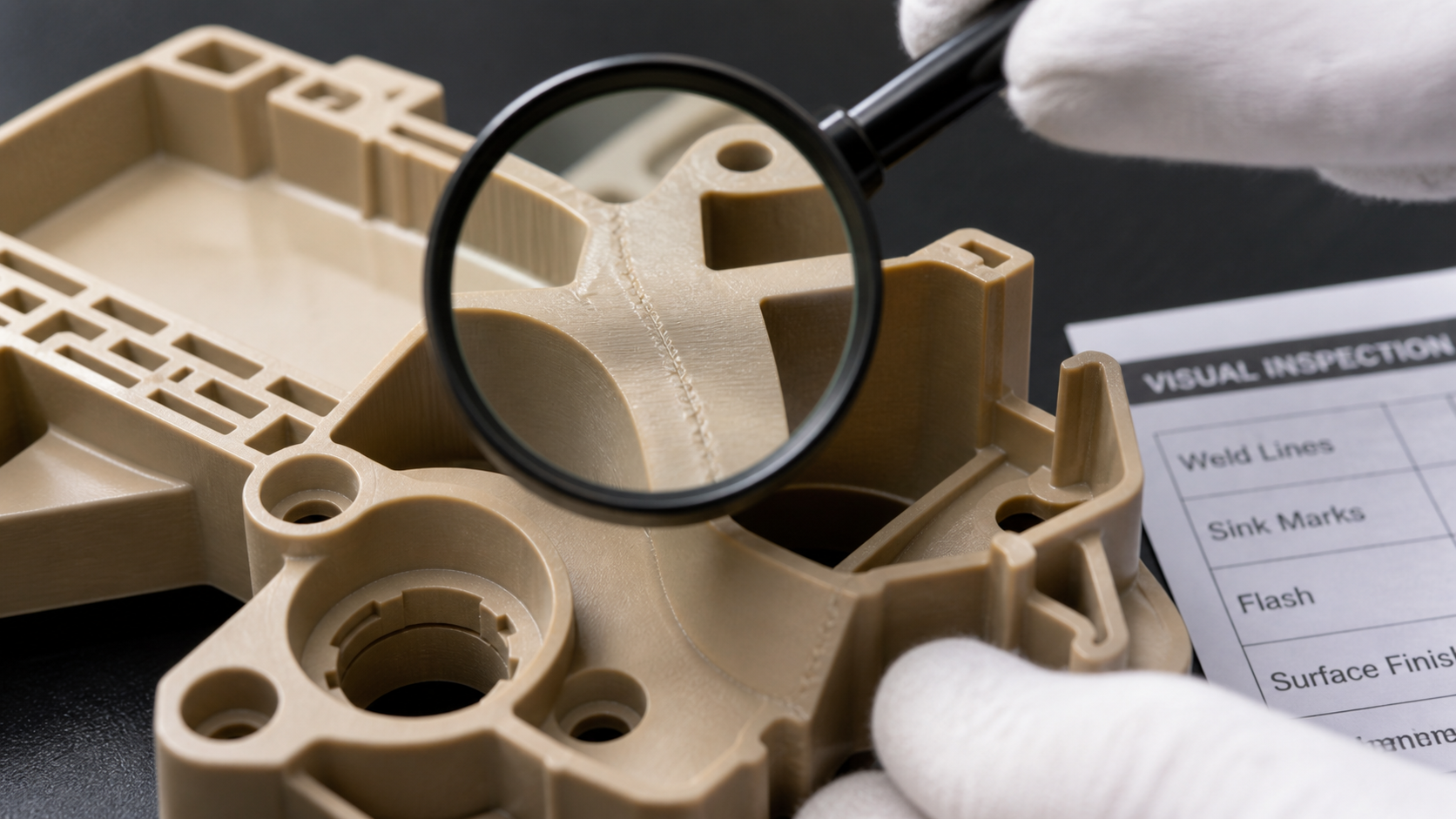
In my experience, certain part features are notorious for causing problems with high-performance polymers. A knit line, where two flow fronts meet, might look fine in a surrogate part but be unacceptably weak in PEEK if the melt temperature isn't perfect. Similarly, a thick section that looks solid in a low-shrinkage surrogate might show deep sink marks in PEEK. This is because PEEK shrinks significantly as it cools and crystallizes. You need the right combination of pack pressure and time to compensate for this, something you can only figure out with the actual material. Interrupted cycles, which are common during process development, can also affect PEEK much more than other resins due to its sensitivity to thermal history. These are risks we have to manage with an evidence-based PEEK trial.
Reporting Prototype Findings Without Predicting Production Yield?
You've completed the surrogate trial and need to report back to your team. How do you share the findings honestly without creating false expectations for the PEEK production run?
Report prototype findings by focusing on what was confirmed: tool functionality. State clearly that the trial validated part filling and ejection. Crucially, state that it did not validate the process for PEEK and cannot be used to predict cycle time, part properties, or production yield.
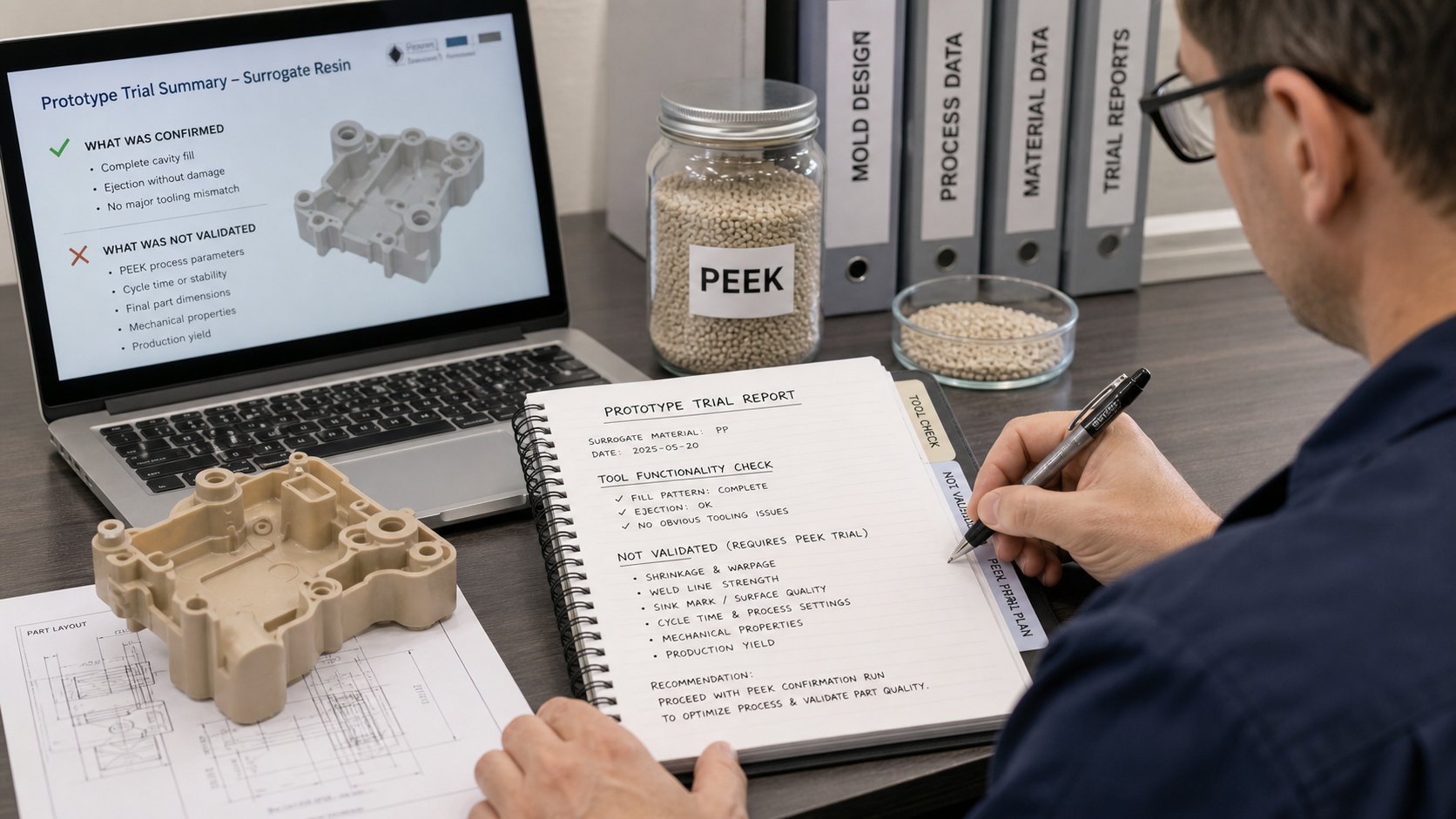
When I discuss results from a surrogate trial, I am very careful with my language. I treat the report as an anecdotal summary of the tool's mechanical health, not a prediction of manufacturing success. I would say something like, "The trial with material X confirmed the mold fills completely and the part ejects without damage. This clears the tool for a confirmation run with PEEK." I would explicitly list the things we did not learn, such as the final part dimensions, surface finish, and potential for warpage. The key is to manage expectations. The surrogate run is a risk-reduction step for the tool, not a shortcut for process development. We use the PEEK confirmation trial as the true evidence-based decision point before committing to production. This avoids relying on just a polymer name and instead focuses on real-world processing behavior.
Conclusion
A cheap resin trial checks basic mold functions. But only a PEEK confirmation run can validate process performance, part quality, and help you make evidence-based decisions about production yield.