
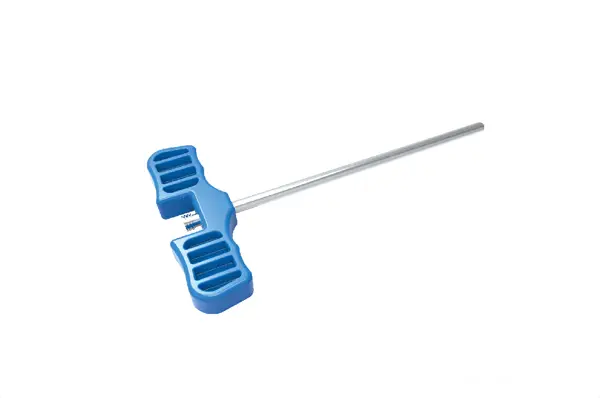
PPSU Puncture Handle
Designed for surgical puncture and minimally invasive orthopedic procedures, this PPSU handle combines lightweight construction, high mechanical strength, and excellent heat and chemical resistance. Manufactured from medical-grade PPSU, it is suitable for demanding sterilization environments and precision surgical instrument applications.
Product information
Published information supports preliminary product selection. Confirm the exact grade, dimensions, tolerances, documentation and application suitability with the quotation for your order.
Description
PPSU (Polyphenylsulfone) is an amorphous, high-performance thermoplastic polymer. Compared with PSU and PEI, PPSU offers superior impact resistance and chemical resistance. Testing under repeated high-pressure steam sterilization conditions has demonstrated its excellent hydrolytic stability, outperforming other amorphous thermoplastics in resistance to hydrolysis.
PPSU can withstand repeated exposure to steam sterilization environments without significant degradation. Since high-pressure steam sterilization (autoclaving) is widely used for sterilizing medical components and surgical instruments, PPSU is an excellent material choice for demanding medical applications.
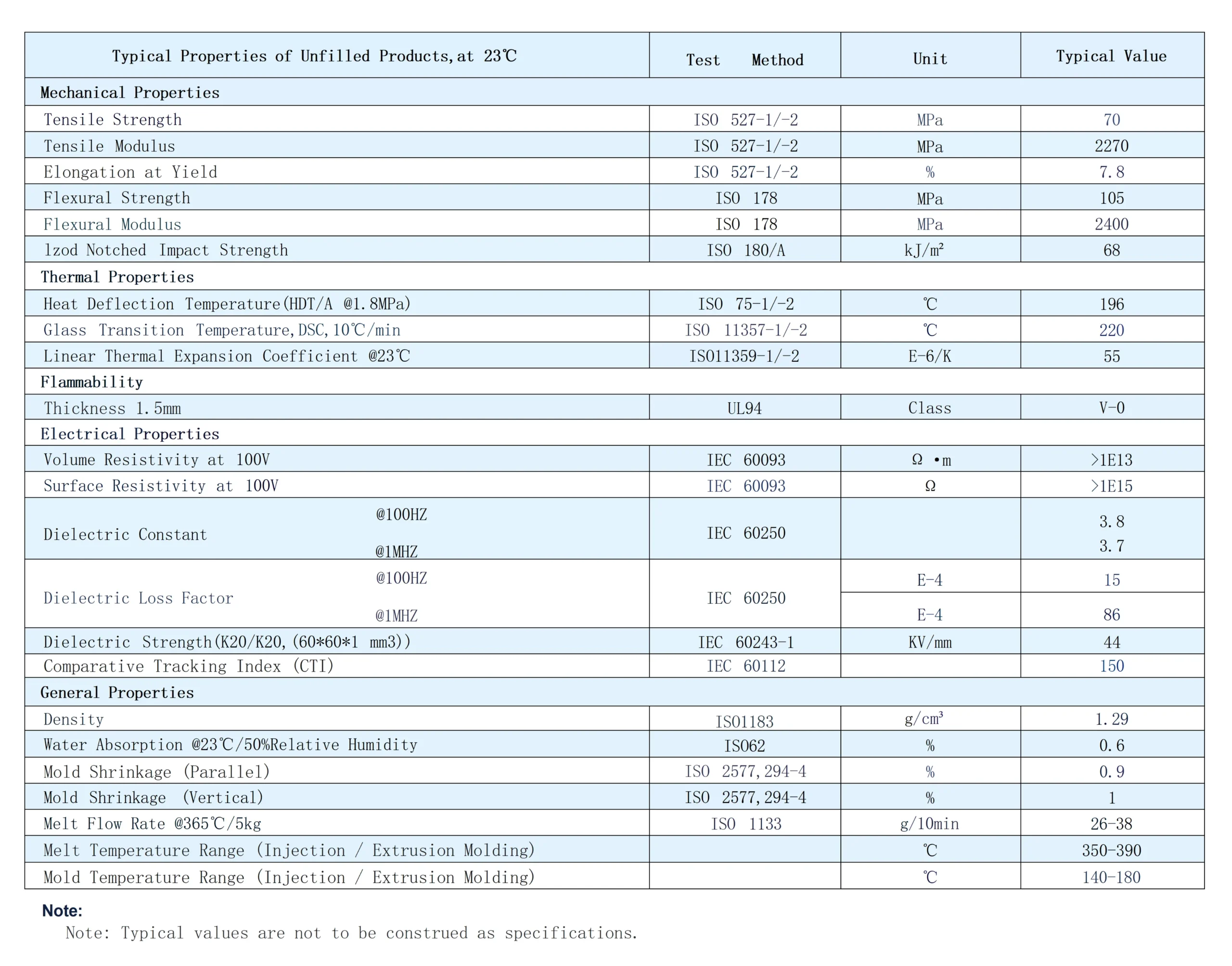
PPSU is synthesized using a process similar to that of PSU, with 4,4′-biphenol as one of the key monomers. Its molecular structure contains a high proportion of biphenyl groups, which contributes to its superior thermal performance compared with PSU. PPSU has a glass transition temperature (Tg) of approximately 220°C and can be used continuously at temperatures of up to 180°C.
Key Advantages of PPSU
◆ High Temperature Resistance — up to 180°C
◆ High Hardness
◆ High Impact Strength
◆ Excellent Dimensional Stability
◆ Good Electrical Insulation Properties
◆ Excellent Dielectric Properties
◆ Excellent Hydrolytic Stability — suitable for repeated steam sterilization
◆ Good Chemical Compatibility
◆ Excellent Resistance to High-Energy Radiation — including Gamma and X-ray radiation
PPSU Properties
PPSU Performance Data
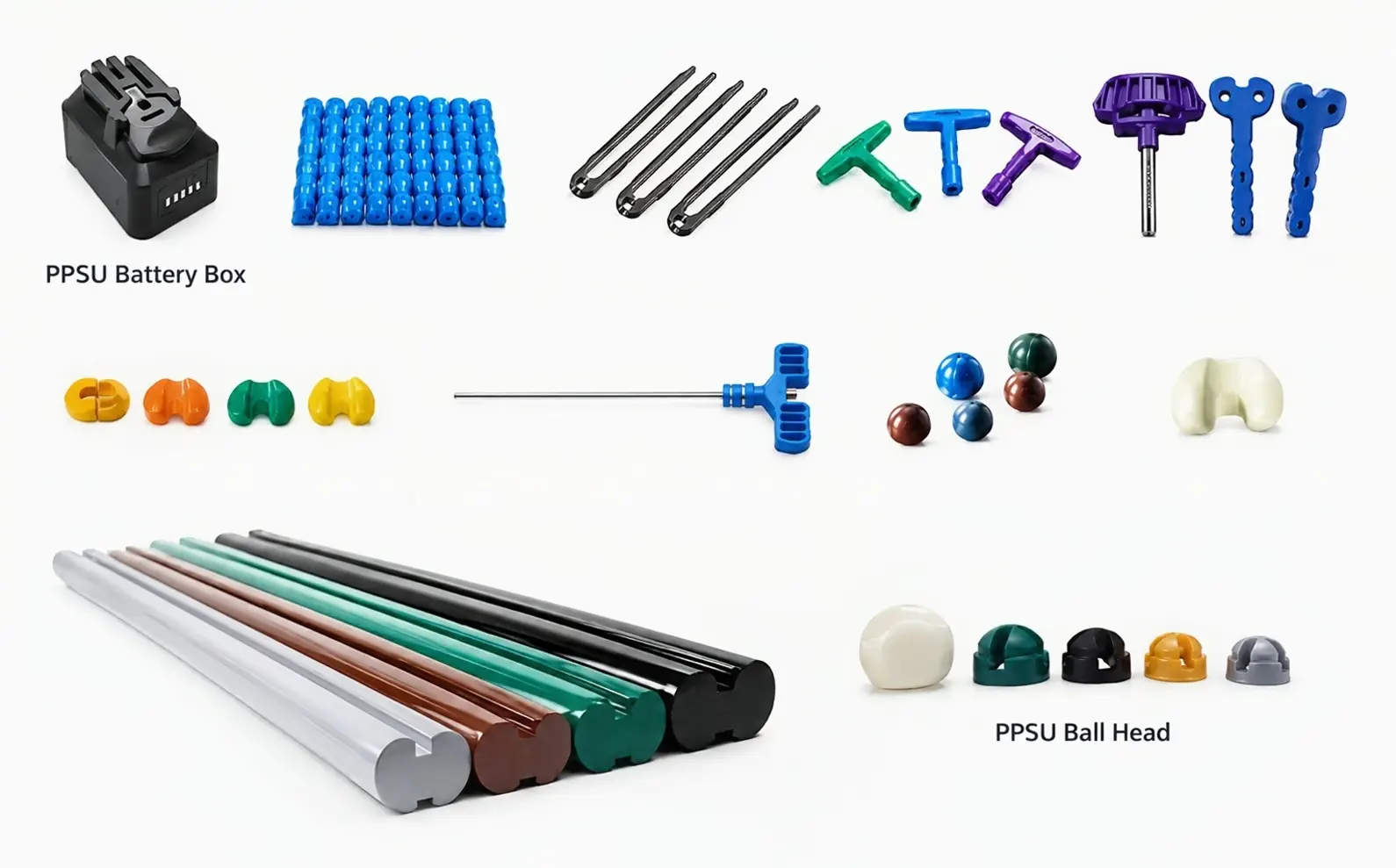
Typical PPSU Products:
Featuring high transparency, high temperature resistance, repeated steam autoclaving capability, and food-grade hygiene and safety, PPSU is mainly used to manufacture critical components for food contact and medical devices.
Typical applications include: PPSU food trays, PPSU medical sterilization trays, PPSU medical instrument handles, PPSU joint trial inserts, PPSU extractors, PPSU tibial inserts, PPSU femoral heads, PPSU baby bottles, etc.
It is lightweight and drop-resistant, delivering excellent performance in safety, thermal resistance, hydrolytic stability, and impact resistance.
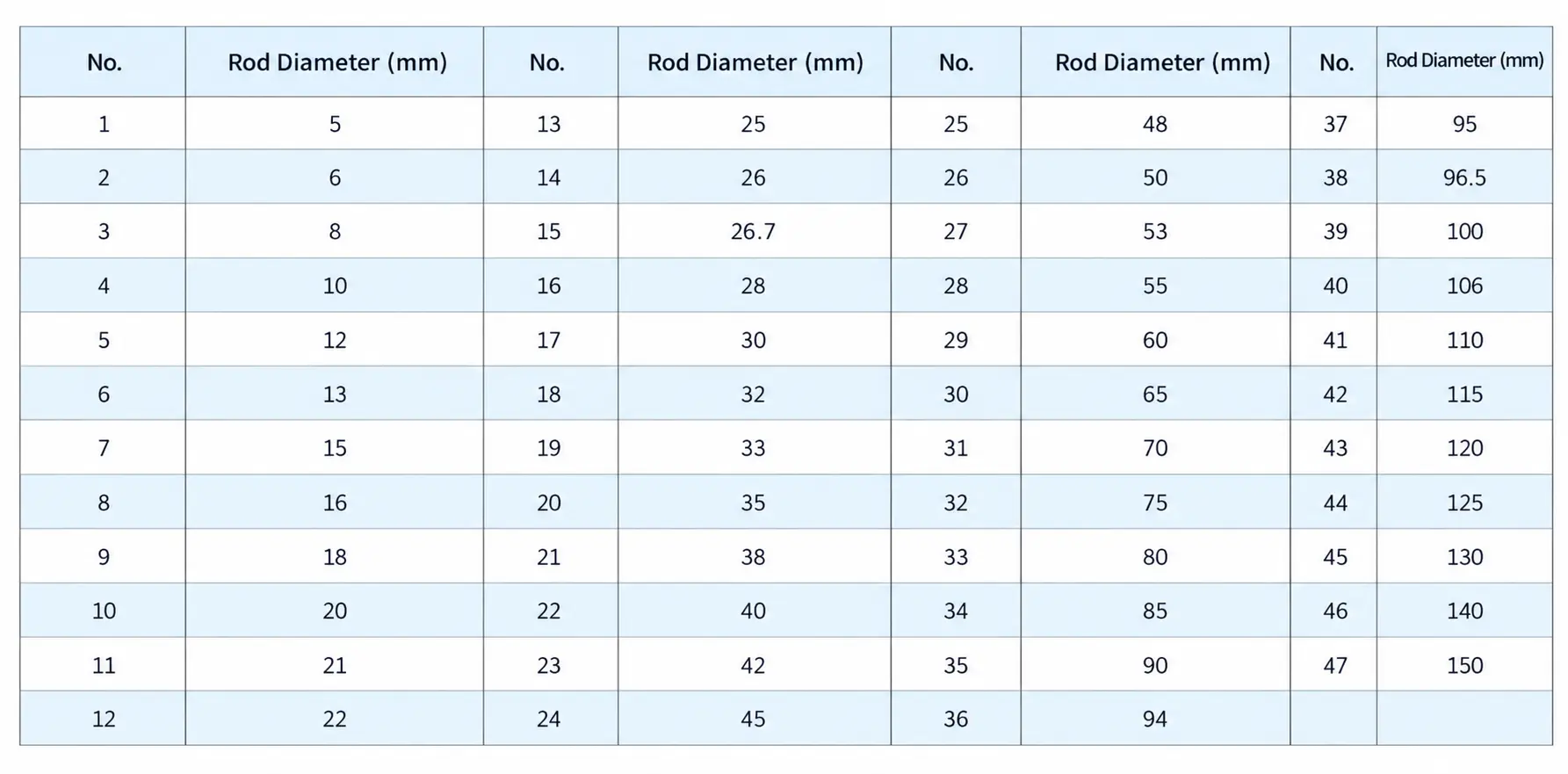
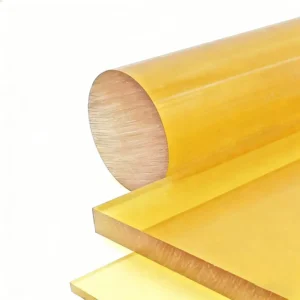
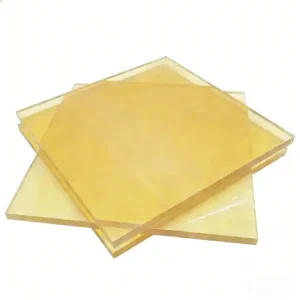
PPSU Sheets & Rods Specifications
Material overview
Understanding PPS (Polyphenylene Sulfide)
Why engineers use it
- Broad chemical resistance for many industrial fluids and process environments.
- Low moisture uptake and good dimensional stability.
- Useful electrical insulation and inherent flame-resistance characteristics.
- Reinforced grades can provide high stiffness and repeatable molded dimensions.
- Often offers a practical cost/performance position below PEEK.
Limits to consider
- Unfilled PPS can be relatively brittle and design details strongly affect impact performance.
- Glass or mineral reinforcement changes shrinkage, anisotropy and machining behavior.
- Oxidizing media and actual high-temperature chemicals still require compatibility review.
- Weld lines, sharp corners and molding orientation can become structural weak points.
- It should not be selected from chemical-resistance charts alone.
Grades and product forms
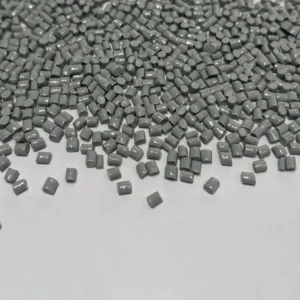
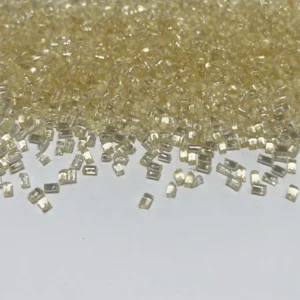
PPS is commonly supplied unfilled or reinforced with glass fiber, mineral filler, carbon fiber or combined systems. The filler package changes stiffness, movement, surface finish, conductivity and wear. Pellets suit volume molding, while sheet, rod or finished parts may be preferable for prototypes and lower-volume production.
Performance points to review
| Evaluation area | Why it matters | Information to provide |
|---|---|---|
| Temperature behavior | Useful performance under elevated or changing temperature | Continuous and peak temperature, cycle length and time at load |
| Mechanical response | Strength and stiffness must match the real part geometry | Load direction, stress level, impact and fatigue expectations |
| Environmental resistance | Fluids, cleaning agents and atmosphere can change service life | Chemical name, concentration, temperature and exposure time |
| Dimensional control | Tight-tolerance parts depend on both material and processing | Finished dimensions, tolerances and assembly conditions |
| Electrical or insulation needs | Electrical requirements may influence grade and thickness | Voltage, dielectric, conductivity or insulation target |
These are engineering discussion points, not guaranteed property values. Final acceptance criteria should be agreed for the selected grade, process and order.
Typical application directions
These examples show where the material may be evaluated. They do not replace a suitability review for the finished component.
Fabrication and processing preparation
Confirm the intended manufacturing route, finished dimensions, critical tolerances and annual volume. A drawing allows the starting material and processing sequence to be discussed with fewer assumptions.
Where the application is critical, define what a successful trial looks like before material is ordered: dimensions after processing, visual condition, mechanical response, assembly fit or another measurable result.
When another material may be better
PEEK may be preferred when toughness or a broader high-temperature performance margin is required. PPS can be the more practical solution when chemical resistance, stiffness, repeatable molding and cost control are the central requirements.
We recommend sharing the current material and the reason it is being reconsidered. Cost, processability, supply form and inspection burden belong in the decision alongside technical performance.
Information needed for an accurate quotation
A useful RFQ reduces follow-up questions and helps us distinguish between a material request and a finished-part requirement.
| Product form | Raw material, stock shape, semi-finished blank or completed part |
|---|---|
| Dimensions | Nominal size, finished size and tolerances |
| Quantity | Trial quantity, first order and estimated annual demand |
| Application | Part function and current material, if any |
| Operating temperature | Continuous range, peak temperature and cycle duration |
| Environment | Chemicals, gases, moisture, pressure, vacuum or outdoor exposure |
| Mechanical duty | Load, speed, impact, wear and mating components |
| Documentation | Drawing revision, inspection, traceability or compliance needs |
Frequently asked questions
Can I request a sample or trial quantity?
Trial quantities can be discussed according to product form and availability. Tell us what you need to prove during the trial, the intended process and the expected production quantity if the test succeeds.
Do you provide a data sheet or material documentation?
Available documentation depends on the selected material and supply route. List the documents required by engineering, purchasing or quality when you inquire so they can be checked before quotation.
Can the grade be selected from a product name alone?
No. Similar product names can cover different grades, colors, fillers and processes. Selection should be based on the finished application, environment and required property balance.
Can you supply custom dimensions or finished parts?
Custom sizes, blanks or finished parts can be reviewed where appropriate. A drawing with tolerances, quantity and material requirement is the best basis for quotation.
How should we evaluate an alternative to our current material?
Share the current grade, the part’s service conditions and the reason for changing it. A useful comparison looks at failure mode, processing, life, inspection and total project cost—not only a single property value.
What determines lead time?
Lead time depends on product form, grade, size, quantity, documentation, machining and current availability. Confirm the required delivery date and destination with the RFQ rather than assuming a standard schedule.
Send the drawing, application and quantity. We will use the project details to prepare a practical material and supply discussion.
Reviews
There are no reviews yet.