
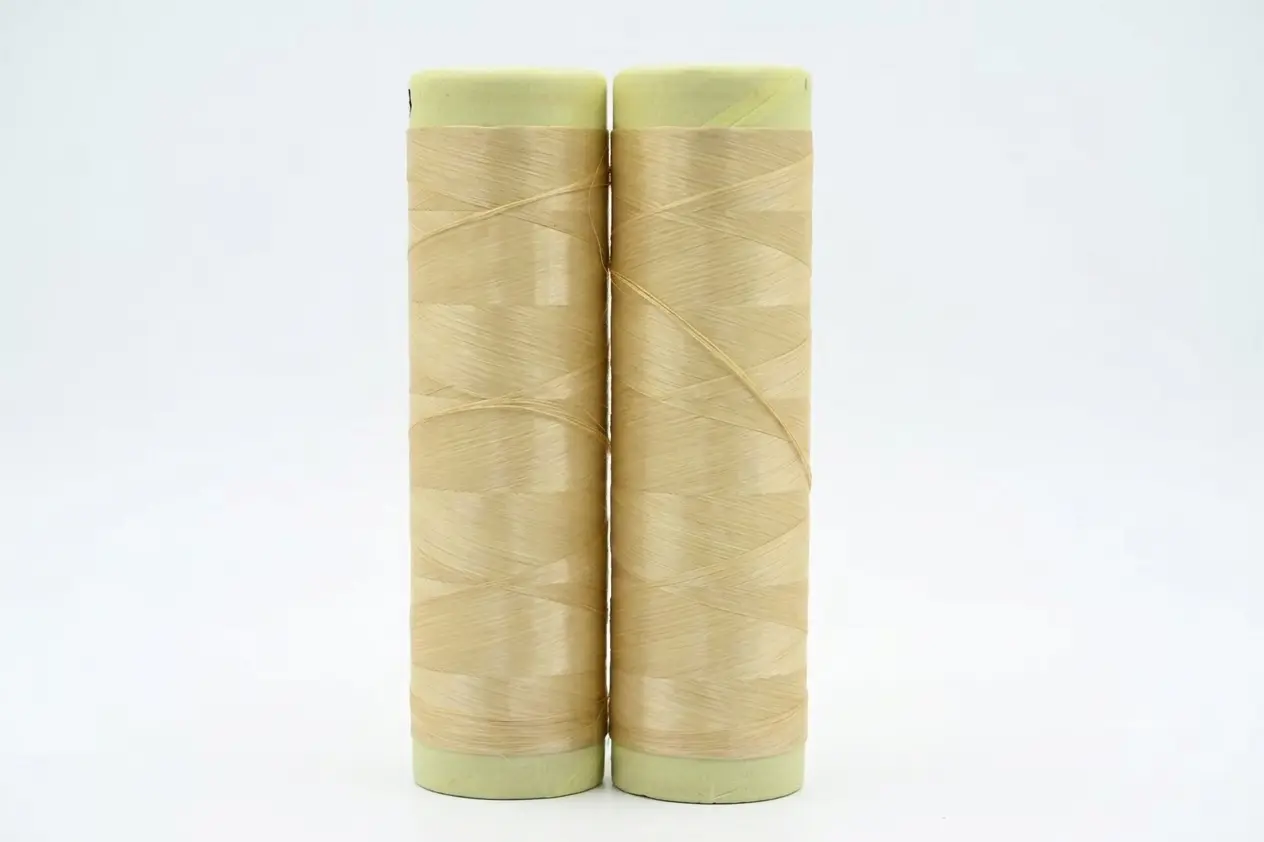
Flame Resistant PBI Fiber for Protective Apparel
We supply high-performance PBI Fibers (filament yarn, staple fiber, and nanofibers) spun via dry, wet, or electrostatic methods. Featuring an extraordinary decomposition temperature of 620°C, non-melting/non-dripping fireproof performance, high moisture regain (15% for exceptional wearing comfort), and strong acid/alkali/radiation resistance, it is the ultimate protective armor for firefighting gear, defense, and high-temp filtration. Share your target application and required specs for a fast quote.
Product information
Published information supports preliminary product selection. Confirm the exact grade, dimensions, tolerances, documentation and application suitability with the quotation for your order.
Description
PBI Fiber represents the pinnacle of high-performance flame-retardant and thermal protective organic fibers. Spun via dry, wet, or electrostatic processes, Vantpoly® PBI is supplied as continuous filament, staple fiber, and nanofibers, combining extreme thermal armor with outstanding wearing comfort.
With a decomposition temperature of 620°C, Vantpoly® PBI does not melt, shrink, or drip when exposed to direct flames, instantly self-extinguishing upon flame removal without toxic smoke or odor. Featuring a low density (1.30 g/cm³),high moisture regain (15%), and 20% elongation at break, it produces lightweight, breathable, and flexible protective fabrics. Insoluble in hydrochloric acid, sulfuric acid, or sodium hydroxide, it also exhibits superior radiation shielding for aerospace, military defense, and chemical filtration applications.
Performance Comparison: PBI vs. Aramid vs. PBO vs. UHMWPE
| Fiber Type | Heat Resistance & Flame | Chemical & Acid Resistance | Moisture Regain (Comfort) | Primary Application |
| Repazole® PBI Fiber | 620°C (Non-melting/dripping) | Extreme (Insoluble in H₂SO₄/NaOH)) | 15% (Highest Comfort) | Firefighter Gear, Defense, High-Temp Filter |
| Aramid (Nomex/Kevlar) | Moderate (400-500℃) | Moderate | 4% – 7% | Ballistic Vests, Military Wear |
| PBO Fiber | Very High (650℃) | Moderate | 2% | Aerospace, Missile Components |
| UHMWPE Fiber | Low (Max 150℃) | Moderate | 0% (Poor Comfort) | Cut-Resistant Gloves, Body Armor |
How this product is normally specified
This product is supplied as raw technical fibers, yarns, or non-woven media for protective apparel weaving, technical needle-felt production, or advanced composite spinning.
-
Fiber Form & Process: Filament yarn, staple fiber, or electrospun nanofibers
-
Physical Specs: Denier / dtex, staple cut length, or nanofiber diameter
-
Performance Criteria: Flame resistance (620℃ decomposition), acid/alkali resistance, or radiation shielding
-
Target Textile Processing: Weaving/knitting yarns, non-woven felt, or technical filtration media
Where this material can fit
Typical applications for Vantpoly® PBI fibers include:
-
Firefighting & First Responder Gear: Structural turnout gear, outer shells, hoods, gloves, and flash-protection apparel
-
Defense & Military Protection: Flame-retardant flight suits, tactical gear, anti-ballistic cover fabrics, and radiation shielding garments
-
Industrial High-Temp Filtration: Hot-gas filter bags, chemical plant filtration felts, and acid/alkali protective workwear
-
Aerospace & High-Tech Textiles: Satellite thermal insulation blankets, aerospace felts, and extreme-environment technical fabrics
What to confirm before ordering
To recommend the right PBI fiber specification, please confirm:
-
Required fiber form (staple, filament, or nanofiber) and dtex/cut length
-
Target processing route (weaving, non-woven needle-felt, or blending with aramid)
-
Environmental exposure (direct flame, acid/alkali, radiation, or thermal load)
-
Required trial quantity and estimated repeat demand
Send us the information you have. We will review any technical details before confirming the quotation.
Material overview
Understanding PBI (Polybenzimidazole)
Why engineers use it
- Exceptional thermal capability for specialized continuous or cyclic high-temperature service.
- Inherent flame resistance without relying solely on added flame-retardant packages.
- Good compressive behavior and dimensional control for hot fixtures, insulators and precision parts.
- Useful wear and friction behavior in selected high-temperature moving components.
- Electrical insulation potential for parts exposed to heat and demanding process conditions.
Limits to consider
- PBI is a premium specialty polymer and is rarely justified for ordinary temperature service.
- Processing is demanding; resin handling, conversion equipment and process control must be considered before ordering pellets.
- Moisture and environmental conditioning can influence dimensions and properties, so storage and application exposure matter.
- A headline maximum-temperature value should not be used alone; time, load, atmosphere and thermal cycling determine suitability.
- Exact chemical compatibility, compliance and acceptance criteria must be confirmed for the selected grade.
Grades and product forms
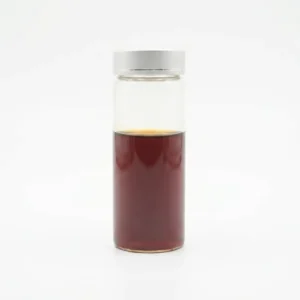
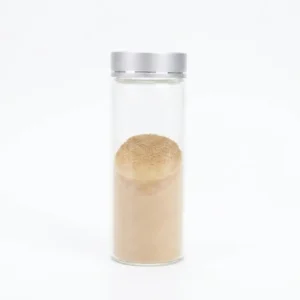
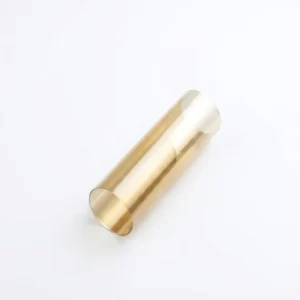
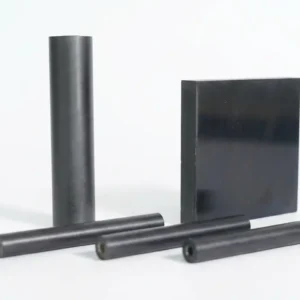
PBI may be supplied as resin, powder, pellets, stock shapes, film, fiber or finished parts depending on the project. Unfilled material emphasizes the base polymer’s thermal and insulation behavior; modified or compounded systems may target processing, wear, conductivity or another property. Product form is not interchangeable: pellets are intended for a controlled conversion route, while plate, rod or tube may be more practical for low-volume machined components.
Performance points to review
| Evaluation area | Why it matters | Information to provide |
|---|---|---|
| Thermal endurance | The material is evaluated for prolonged exposure where ordinary polymers lose stiffness or dimensional control. | Continuous temperature, short peaks, dwell time, thermal cycling and whether load is present while hot |
| Dimensional stability | Fixtures, insulators and precision parts must remain usable after heating and cooling cycles. | Critical dimensions, allowable movement, assembly clearance and cycle frequency |
| Flame and heat exposure | Inherent resistance to ignition and flame spread can matter in protective, electrical and process applications. | Applicable test method, part thickness, atmosphere and project-specific compliance need |
| Mechanical retention | The design may depend on compressive strength, stiffness or wear behavior at elevated temperature. | Static or dynamic load, contact pressure, speed, mating material and lubrication condition |
| Chemical and atmospheric exposure | High-temperature performance can be affected by process gases, oxidation, moisture or aggressive media. | Chemical or gas identity, concentration, pressure, temperature and duration of exposure |
These are engineering discussion points, not guaranteed property values. Final acceptance criteria should be agreed for the selected grade, process and order.
Typical application directions
These examples show where the material may be evaluated. They do not replace a suitability review for the finished component.
Fabrication and processing preparation
Confirm the intended manufacturing route, finished dimensions, critical tolerances and annual volume. A drawing allows the starting material and processing sequence to be discussed with fewer assumptions.
Where the application is critical, define what a successful trial looks like before material is ordered: dimensions after processing, visual condition, mechanical response, assembly fit or another measurable result.
When another material may be better
PBI is generally not the first choice for a routine plastic component. PEEK, PI, PAI, PPS or another engineering polymer may be more economical when the heat, load and flame requirements are less severe. PBI becomes relevant when the project has a clear performance gap that these alternatives cannot close. The selection should be justified by the actual duty cycle, not by a desire to specify the highest-temperature material available.
We recommend sharing the current material and the reason it is being reconsidered. Cost, processability, supply form and inspection burden belong in the decision alongside technical performance.
Information needed for an accurate quotation
A useful RFQ reduces follow-up questions and helps us distinguish between a material request and a finished-part requirement.
| Product form | Raw material, stock shape, semi-finished blank or completed part |
|---|---|
| Dimensions | Nominal size, finished size and tolerances |
| Quantity | Trial quantity, first order and estimated annual demand |
| Application | Part function and current material, if any |
| Operating temperature | Continuous range, peak temperature and cycle duration |
| Environment | Chemicals, gases, moisture, pressure, vacuum or outdoor exposure |
| Mechanical duty | Load, speed, impact, wear and mating components |
| Documentation | Drawing revision, inspection, traceability or compliance needs |
Frequently asked questions
Can I request a sample or trial quantity?
Trial quantities can be discussed according to product form and availability. Tell us what you need to prove during the trial, the intended process and the expected production quantity if the test succeeds.
Do you provide a data sheet or material documentation?
Available documentation depends on the selected material and supply route. List the documents required by engineering, purchasing or quality when you inquire so they can be checked before quotation.
Can the grade be selected from a product name alone?
No. Similar product names can cover different grades, colors, fillers and processes. Selection should be based on the finished application, environment and required property balance.
Can you supply custom dimensions or finished parts?
Custom sizes, blanks or finished parts can be reviewed where appropriate. A drawing with tolerances, quantity and material requirement is the best basis for quotation.
How should we evaluate an alternative to our current material?
Share the current grade, the part’s service conditions and the reason for changing it. A useful comparison looks at failure mode, processing, life, inspection and total project cost—not only a single property value.
What determines lead time?
Lead time depends on product form, grade, size, quantity, documentation, machining and current availability. Confirm the required delivery date and destination with the RFQ rather than assuming a standard schedule.
Send the drawing, application and quantity. We will use the project details to prepare a practical material and supply discussion.
Reviews
There are no reviews yet.