
Choosing between PEEK vs PEI vs PPS is rarely a matter of picking the polymer with the highest number on a data sheet. The correct material depends on what the part must survive: continuous load, short heat excursions, chemical exposure, moisture, electrical requirements, dimensional tolerances, and the selected manufacturing process. PEEK, PEI, and PPS are all high-performance thermoplastics, but their molecular structures lead to important differences in how they behave during processing and in service.
This guide is intended for material engineers, product designers, molders, machining companies, and industrial buyers comparing these three polymer families. It explains where each material tends to fit, where it can create avoidable cost or processing risk, and which data should be confirmed before a purchase specification is released.
PEEK vs PEI vs PPS at a Glance
The first distinction is polymer structure. PEEK and PPS are semicrystalline thermoplastics. PEI is amorphous. This difference affects melting behavior, shrinkage, chemical resistance, transparency, dimensional control, and the way properties change around the glass-transition temperature.
| Material | Structure | Strongest Selection Case | Issue to Check Early |
|---|---|---|---|
| PEEK | Semicrystalline | High mechanical demand combined with heat, wear, hydrolysis, or aggressive media | Material cost, high processing temperature, crystallinity, and whether the grade is filled or unfilled |
| PEI | Amorphous | High-temperature electrical or structural parts requiring predictable molding and good dimensional control | Chemical compatibility, moisture conditioning, residual stress, and solvent sensitivity |
| PPS | Semicrystalline | Chemically resistant, dimensionally stable components, especially when a reinforced grade is acceptable | Brittleness or weld-line performance, grade reinforcement, and molding control |
This table is a screening tool, not a final specification. A glass-fiber-reinforced PPS can behave very differently from an unfilled PPS, just as carbon-fiber PEEK differs substantially from an unfilled extrusion grade. The trade name alone does not define a part’s performance.
Representative Data: Useful, but Not Universal
The figures below come from manufacturer data for identified commercial grades. They show the scale of the differences, but they must not be treated as guaranteed values for every PEEK, PEI, or PPS product. Test specimen geometry, conditioning, color, reinforcement, flow direction, crystallinity, processing history, and test method can all change the result.
| Property | Unfilled PEEK Example: VICTREX 450G | Unfilled PEI Example: ULTEM 1000 | PPS Family Reference |
|---|---|---|---|
| Polymer structure | Semicrystalline | Amorphous | Semicrystalline |
| Glass-transition temperature | 143°C onset, ISO 11357-2 | 217°C, manufacturer data | Grade- and method-dependent; confirm on the selected grade data sheet |
| Melting temperature | 343°C, ISO 11357-3 | Not applicable as a crystalline melting point | About 285°C for the PPS family according to Syensqo |
| Tensile yield stress at 23°C | 98 MPa, ISO 527-2 | 110 MPa, ISO 527 | Highly grade-dependent; verify the exact resin or compound |
| Tensile modulus | 4,000 MPa, ISO 527-1 | 3,200 MPa, ISO 527 | Highly dependent on glass, mineral, or carbon-fiber content |
| Water absorption | 0.45% at saturation, 23°C, ISO 62 | 0.25% after 24 hours and 1.25% at saturation, 23°C, ISO 62-1 | Described by Celanese as very low; use grade-specific test data for design |
| HDT at 1.8 MPa | 152°C, unannealed, ISO 75-2/Af | 192°C, ISO 75/Af | Grade- and reinforcement-dependent; do not infer it from melting point |
The PEEK and PEI values are not a direct ranking of entire polymer families. For example, a higher heat-deflection temperature in one short-term test does not prove that a material will retain more strength during a multi-year loaded application. Creep data, stress level, exposure time, orientation, and environmental conditions are often more useful than a single room-temperature tensile result.
Start with the Part, Not the Polymer Name
A productive material comparison begins with a written service profile. Without it, a supplier can only offer a broad recommendation. At minimum, define the following:
- Normal operating temperature, peak temperature, and time at each condition
- Static, cyclic, impact, and assembly loads
- Contact chemicals, concentrations, temperatures, and exposure duration
- Water, steam, humidity, vacuum, radiation, or outdoor exposure
- Required tolerances, flatness, surface finish, and dimensional stability
- Electrical insulation, dielectric, tracking, or flame-performance requirements
- Manufacturing route: injection molding, extrusion, machining, film processing, or additive manufacturing
- Part geometry, wall thickness, weld lines, inserts, and stress concentrators
- Required regulatory documentation for the exact grade and color
These inputs quickly narrow the field. If a part sees hot water or steam under load, hydrolysis and creep become central. If it is a thin electrical component with complex geometry, flow, weld-line strength, dielectric behavior, and flame rating at the actual thickness may dominate. If the application involves aggressive chemicals but moderate loads, PPS may deserve attention before a more expensive PEEK grade is considered.
When PEEK Is the Better Starting Point
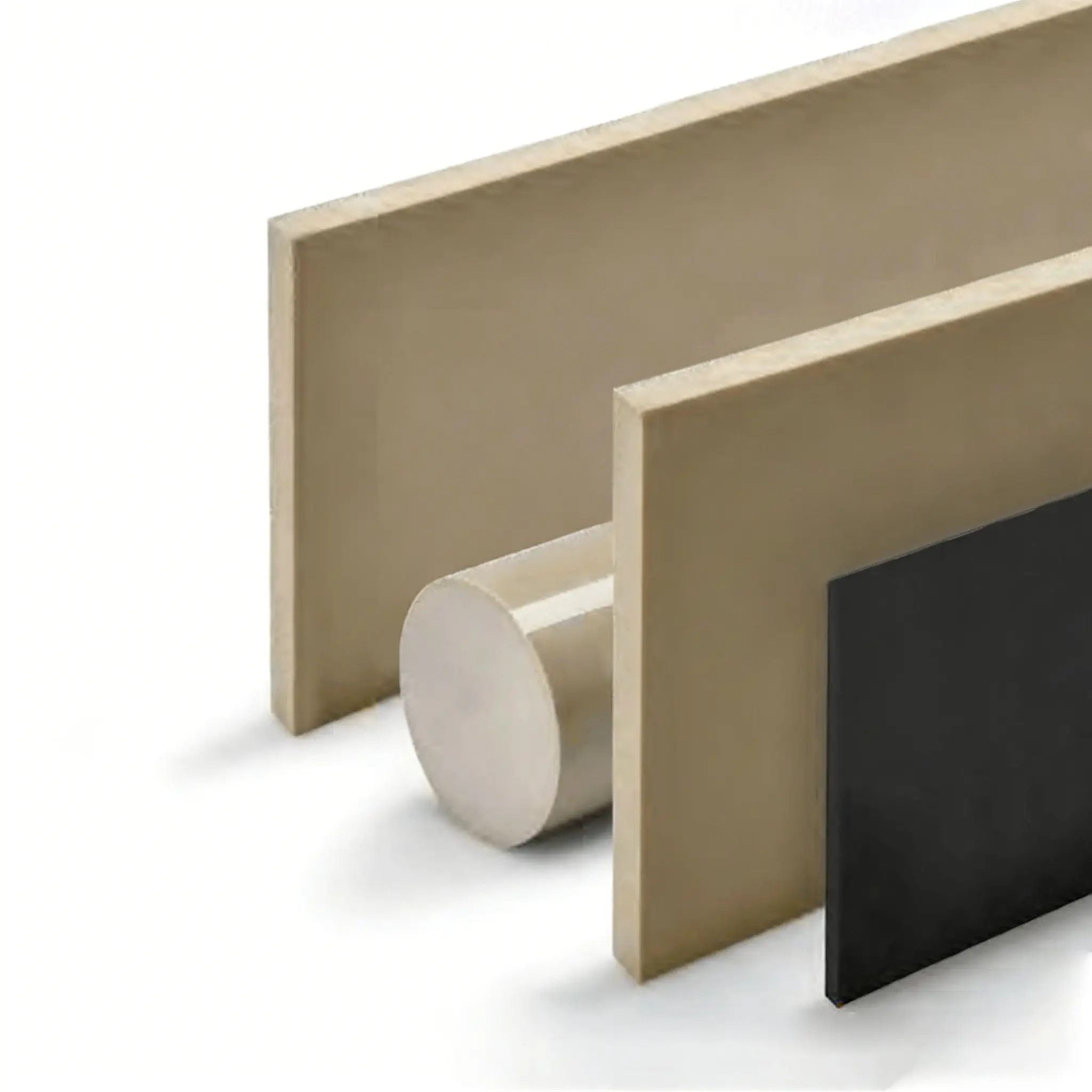
PEEK material options are often considered when the application combines several severe requirements rather than one isolated requirement. The polymer’s semicrystalline structure supports useful mechanical performance, wear behavior, chemical resistance, and hydrolysis resistance across demanding service conditions. That combination is why PEEK is evaluated for bearings, seals, compressor parts, pump components, electrical insulation, precision mechanical parts, and metal-replacement projects.
Mechanical Performance and Creep
Room-temperature tensile strength is only the beginning of a PEEK evaluation. For a loaded component, the more important questions are how much stiffness remains at the service temperature, how the material creeps under constant stress, and how repeated loading affects life. Reinforced PEEK grades can increase stiffness and reduce thermal expansion, but they may also introduce directional properties, surface changes, and greater tool wear.
Unfilled PEEK may be preferred when toughness, purity, electrical behavior, or lower abrasiveness matters. Glass-fiber grades are commonly considered for stiffness and dimensional control. Carbon-fiber grades may be evaluated when higher modulus, lower expansion, or wear performance is required. These are broad compound categories, not interchangeable specifications.
Heat and Crystallinity
PEEK has a distinct crystalline melting region. The VICTREX 450G data sheet reports a melting temperature of 343°C and a glass-transition onset of 143°C. Processing therefore requires equipment, tooling, heaters, and handling procedures suitable for high melt temperatures.
Cooling rate and mold temperature affect crystallinity. Crystallinity can influence shrinkage, dimensions, stiffness, chemical resistance, and appearance. A molding trial that produces a visually acceptable part is not enough if the production process does not establish a repeatable thermal history. Machined PEEK stock shapes also need appropriate stress control when tight tolerances or significant material removal are involved.
Chemical and Hydrolysis Exposure
PEEK is frequently shortlisted for hot water, steam, fuels, lubricants, and many industrial chemicals. Compatibility still has to be checked against the actual reagent, concentration, temperature, stress, and exposure time. A material can resist an unstressed immersion test yet crack or creep when the same environment acts on a loaded part.
Use a manufacturer chemical-resistance guide as an initial screen, then confirm the selected grade in representative service conditions. For critical components, a prototype or coupon test under combined heat, stress, and chemical exposure is more useful than a generic compatibility label.
Where PEEK May Be More Than the Part Needs
PEEK should not be selected simply because it is regarded as a premium polymer. If the component does not require its combined mechanical, thermal, wear, and chemical capability, PEI or PPS may provide a more appropriate technical and commercial balance. PEEK’s high processing temperature and raw-material cost can also increase project risk when the molding or extrusion setup is not prepared for it.
When PEI Is the Better Starting Point
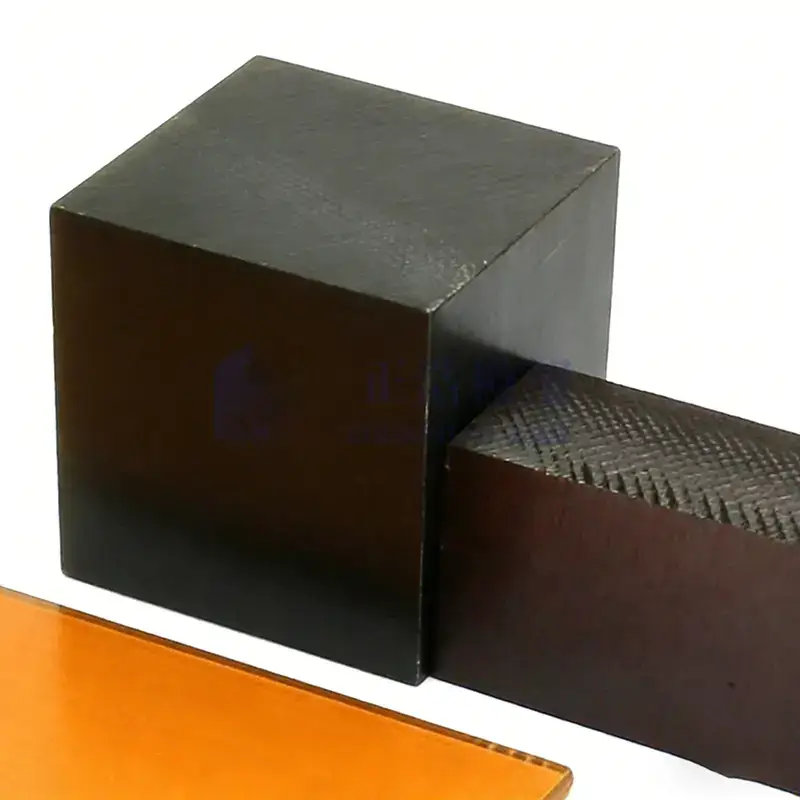
PEI material options are based on an amorphous high-heat thermoplastic. SABIC’s ULTEM resin family is the best-known commercial reference. Because PEI is amorphous, it does not have the crystalline melting transition seen in PEEK or PPS. This can support predictable molding shrinkage and useful dimensional control, especially for complex electrical and structural parts.
High Glass-Transition Temperature
The unfilled ULTEM 1000 reference grade lists a glass-transition temperature of 217°C and an HDT of 192°C at 1.8 MPa under the stated ISO test. Those values help explain why PEI is considered for high-heat electrical housings, connectors, structural components, lighting parts, and reusable equipment. They do not establish a universal continuous-use limit.
For a loaded part, compare modulus-versus-temperature and creep data rather than relying only on Tg or HDT. The actual limit can be controlled by stress, geometry, time, moisture, chemical contact, flame requirements, or the chosen safety factor.
Electrical and Flame Requirements
PEI is widely evaluated for electrical components because high-temperature performance can be combined with useful dielectric properties and inherently flame-resistant formulations. For the specific unfilled ULTEM 1000 grade, SABIC reports UL 94 V-0 at thicknesses of 0.75 mm and above. That statement belongs to that grade, color listing, and thickness range; it should not be copied to every PEI material.
Electrical design requires the exact grade’s tested values and applicable certification record. Volume resistivity, dielectric strength, dissipation factor, comparative tracking index, and UL classification answer different questions. The finished part’s thickness, electrodes, moisture conditioning, frequency, temperature, and molding quality may also affect performance.
Moisture and Chemical Limitations
The ULTEM 1000 data sheet reports 0.25% water absorption after 24 hours and 1.25% at saturation at 23°C. This is a useful reminder that a short immersion result is not the same as equilibrium moisture uptake. If a PEI part has tight dimensions or electrical requirements, conditioning state should be included in the validation plan.
PEI also requires a careful chemical review. Its resistance can be suitable for many service environments, but certain solvents and chemicals may cause swelling, stress cracking, or property loss. Molded-in stress, snap fits, press fits, sharp corners, and assembly loads can make a part more vulnerable than an unstressed test coupon.
Processing Considerations
PEI must be dried and handled according to the selected grade’s processing guide. Moisture can contribute to cosmetic defects and material degradation during melt processing. High melt temperature, adequate venting, controlled residence time, and a suitable mold-temperature strategy are important.
Because PEI is amorphous, it can offer lower and more uniform molding shrinkage than many semicrystalline alternatives. That advantage does not eliminate the need to assess flow orientation, gate location, weld lines, residual stress, and post-molding dimensional change.
When PPS Is the Better Starting Point
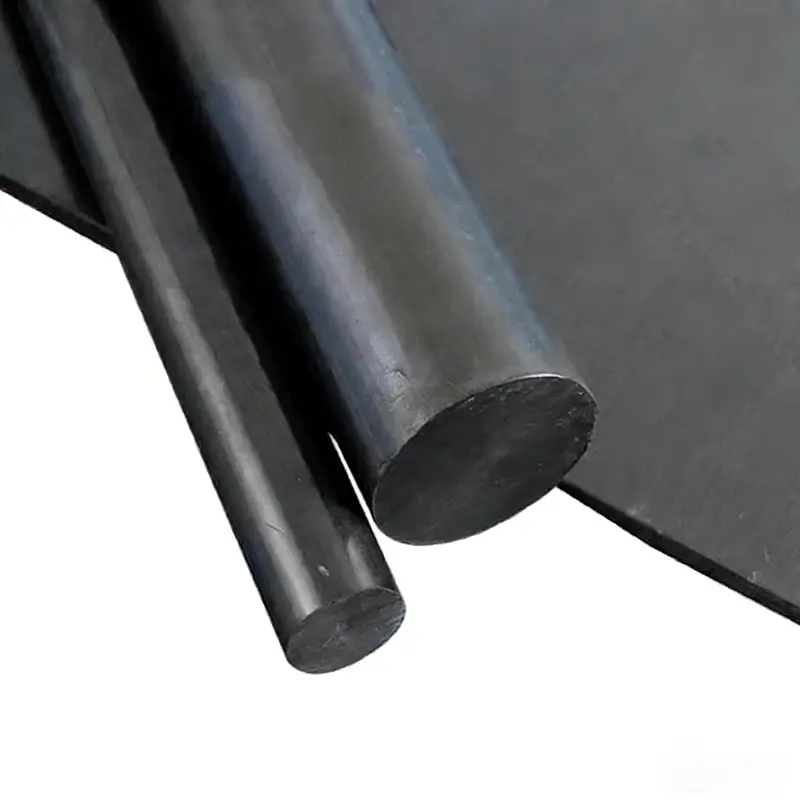
PPS material options are based on a semicrystalline high-temperature thermoplastic valued for chemical resistance, low moisture uptake, dimensional stability, and inherent flame resistance. Syensqo describes PPS as having a crystalline melting point of about 285°C. Celanese describes Fortron PPS as resistant to a broad range of chemicals and solvents, with very low moisture absorption and service temperatures up to 240°C across the relevant product range.
Those family-level statements make PPS a strong screening candidate for fluid-handling components, electrical parts, appliance components, automotive under-hood parts, pump components, and industrial equipment. Final selection must still use the data sheet for the exact compound.
Why Reinforcement Matters So Much
Many commercial PPS components use glass-fiber, mineral-filled, glass/mineral, or other reinforced compounds. Reinforcement can substantially raise stiffness, improve dimensional stability, reduce creep, and change mold shrinkage. It also increases anisotropy: properties parallel to flow may differ from properties across the flow direction.
A reinforced PPS grade can look stronger than unfilled PEEK or PEI in one room-temperature data column while behaving differently under impact, at a weld line, or after machining. Compare data at the actual temperature and pay attention to specimen orientation. For sealing surfaces and tight-tolerance parts, fiber orientation and differential shrinkage should be considered during tool and gate design.
Chemical Resistance and Moisture Stability
PPS is often attractive when chemical exposure and dimensional stability are more important than high ductility. Celanese states that the Fortron PPS chemical structure provides very good chemical and thermal resistance and that it absorbs little moisture. That can help reduce moisture-related dimensional change, but it is not a substitute for chemical-compatibility testing.
Strong oxidizing environments, high temperature, pressure, mechanical stress, and long exposure can change the result. Buyers should provide the complete chemical list, including cleaning agents, additives, contaminants, and occasional upset conditions.
Toughness, Weld Lines, and Part Design
PPS grades can be less forgiving than PEI or PEEK when a design contains sharp corners, snap features, impact loading, or weak weld-line locations. This does not rule PPS out; it means the grade, gate arrangement, wall transitions, and assembly method need to be considered together.
If a failed prototype fractured at a weld line, changing only the nominal tensile-strength target may not solve the problem. A different flow length, gate position, mold temperature, venting strategy, reinforcement package, or material family may be required.
Heat Resistance: Tg, Melting Point, HDT, and Continuous Use Are Not the Same
High-temperature plastics are often compared using one number, but the common temperature values describe different events:
- Glass-transition temperature (Tg) marks a change in molecular mobility in the amorphous phase. It is not automatically the maximum service temperature.
- Melting temperature (Tm) applies to crystalline regions in semicrystalline polymers. It is relevant to processing but does not tell you how much load a finished part can carry at a lower temperature.
- Heat-deflection temperature (HDT) is a short-term deflection test at a specified stress and specimen condition. Results from different stresses or standards are not directly interchangeable.
- Continuous-use or relative thermal index values are based on different evaluation methods and may apply to a particular grade, thickness, property, and certification file.
For a bracket carrying load at 170°C, a useful comparison includes tensile modulus at 170°C, creep at the intended stress and time, thermal expansion, aging, and the effect of any fluids present. A melting point alone cannot answer that design question.
Chemical Resistance Must Be Evaluated Under Real Conditions
Descriptions such as “excellent chemical resistance” are useful only as a first filter. Compatibility can change with temperature, concentration, stress, duration, and material formulation. Mixtures can behave differently from their individual ingredients, and a cleaning fluid used once a week may be more aggressive than the process fluid used continuously.
A practical review should list:
- Every process fluid, lubricant, fuel, cleaner, sterilant, and incidental contaminant
- Concentration and temperature, including cleaning cycles and startup conditions
- Whether exposure is immersion, splash, vapor, or permeation
- Applied stress and whether the part contains molded-in or assembly stress
- Required retention of mass, dimensions, strength, dielectric behavior, and appearance
PEEK and PPS generally enter the shortlist for broader chemical exposure. PEI can still be the right choice when its specific chemical limits are understood and the part benefits from amorphous processing behavior, electrical performance, or dimensional control.
Dimensional Stability: Look Beyond Mold Shrinkage
Dimensional accuracy is affected by more than a published shrinkage range. PEEK and PPS develop crystallinity during cooling, so mold temperature, wall thickness, cooling rate, and annealing history can affect dimensions. Reinforced grades introduce orientation and directional shrinkage. PEI avoids crystalline shrinkage, but residual stress and moisture conditioning can still move a dimension.
For a tight-tolerance component, discuss the full process route:
- Resin drying and lot control
- Molding or extrusion conditions
- Annealing or stress-relief requirements
- Machining sequence and stock removal
- Inspection temperature and conditioning state
- Assembly loads and service environment
The most dimensionally stable compound on a data sheet can still produce an unstable part if fiber orientation, residual stress, or conditioning is ignored.
Choosing the Product Form and Manufacturing Route
The polymer family is only one part of the purchasing decision. The required product form and conversion route affect grade selection, tolerances, surface condition, and economics.
Pellets or Granules
Pellets are typically used for injection molding, extrusion, or compounding. Buyers should identify the process, part thickness, flow length, reinforcement preference, color, regrind policy, and required technical documents. Melt flow should not be specified without considering its test condition and the mechanical consequences of molecular weight or formulation changes.
Powder
Powder applications may involve coating, compounding, compression molding, or other specialized processes. Particle-size distribution, bulk handling, purity, thermal history, and process compatibility can be more important than properties taken from an injection-molded specimen. Do not assume that a pellet grade and a powder form are equivalent.
Rods, Sheets, Plates, Tubes, and Profiles
Stock shapes are selected for machining, prototyping, low-volume production, and components that are impractical to mold. Confirm dimensions, manufacturing method, internal stress, annealing condition, allowable bow or flatness, and the tolerance condition. Extruded and compression-molded shapes may not behave identically.
Film and 3D Printing Filament
Film and filament require grades and processing controls suited to their production method. For high-temperature filament, printer chamber capability, drying, nozzle temperature, build-surface control, crystallization, warpage, and interlayer bonding all affect the result. A polymer name alone cannot guarantee a printable or mechanically reliable part.
Custom-Machined Components
Machined components should be quoted from a drawing that defines dimensions, tolerances, surface finish, inspection requirements, and the required material documentation. Material choice should account for heat generated during machining, tool wear, burr formation, fiber orientation, and dimensional movement after stock removal.
VantPoly’s material catalog presents pellets, powders, rods, sheets or plates, tubes or profiles, films, 3D printing filament, and machined components across its broader materials range. Its public processing and production services page also describes CNC machining, extrusion, compounding or pelletizing, cutting, inspection, and drawing-based production. Availability in a specific PEEK, PEI, or PPS grade, form, and service combination should be confirmed during the inquiry rather than assumed from the material-family name.
Application-Based Selection Examples
Hot, Loaded Wear Component
Start with PEEK when a bearing, thrust washer, seal, or sliding element must combine load capacity, wear behavior, heat, and chemical exposure. Review unfilled, wear-modified, and reinforced grades separately. Counterface, speed, pressure, lubrication, and temperature determine tribological performance; a generic coefficient of friction does not.
High-Heat Electrical Housing or Connector
PEI and PPS are both credible starting points. PEI may suit a design that benefits from amorphous dimensional behavior, high Tg, and established electrical/flame-rated grades. PPS may suit a chemically exposed or moisture-sensitive component where reinforced stiffness and low moisture uptake matter. Confirm UL recognition, color, thickness, tracking performance, and electrical data for the exact grade.
Chemical Pump or Fluid-Handling Part
PEEK and PPS often receive early consideration. PEEK may be favored where toughness, wear, hydrolysis resistance, or higher mechanical demand is central. PPS may be attractive for chemical resistance and dimensional stability when the load case and impact requirements fit. Test the actual fluid mixture at temperature and pressure.
Precision Machined Insulator
PEI may offer useful dimensional control and electrical behavior, while PEEK may be preferred for tougher mechanical or chemical conditions. PPS stock shapes can also be relevant, especially where low moisture uptake matters. The final decision should include machining stability, burr control, tolerances after conditioning, and the required dielectric test method.
Regulated or Safety-Critical Component
Do not approve a polymer family based on a generic statement such as “medical grade,” “food grade,” or “flame retardant.” Request documentation for the exact manufacturer, grade, color, production route, and applicable regulation or certification. Confirm whether the evidence covers the finished component’s intended use, thickness, exposure, and sterilization or cleaning method.
Common Mistakes When Comparing PEEK, PEI, and PPS
Comparing an Unfilled Grade with a Reinforced Grade
Reinforcement can dominate stiffness, shrinkage, expansion, impact behavior, and surface finish. Put unfilled, glass-filled, carbon-filled, mineral-filled, bearing, conductive, and other specialty grades into separate comparison groups.
Using Room-Temperature Tensile Strength as the Main Decision
A short tensile test at 23°C does not predict creep at 160°C, fatigue under cyclic loading, or weld-line strength in a molded part. Use data that reflects the actual failure mode.
Treating HDT as a Continuous Operating Temperature
HDT is measured under defined short-term conditions. It is useful for comparison when the test method and stress are the same, but it does not replace long-term aging and creep data.
Ignoring Moisture Conditioning
Moisture affects processing and may affect dimensions or electrical behavior. State whether test values refer to dry-as-molded, 24-hour immersion, equilibrium, or another conditioning method.
Specifying Only “PEEK,” “PEI,” or “PPS” on a Drawing
A polymer name does not define manufacturer, grade, reinforcement, color, compliance, processing route, or inspection condition. Critical drawings and purchase specifications should identify the approved grade or a controlled equivalency process.
A Practical RFQ Checklist
A clear inquiry reduces back-and-forth and helps prevent a technically unsuitable substitution. Include as much of the following as possible:
- Target polymer or materials being compared
- Required form: pellets, powder, rod, sheet, plate, tube, profile, film, filament, or finished component
- Unfilled or reinforced preference
- Drawing, dimensions, tolerances, and annual or project quantity
- Processing method and available equipment
- Normal and peak operating temperatures
- Mechanical loads and expected service life
- Chemicals, humidity, steam, and cleaning conditions
- Electrical, flame, color, surface, and inspection requirements
- Required manufacturer documents, test reports, or regulatory declarations
If the material is not yet fixed, state the failure mode you are trying to prevent. “Seal carrier loses flatness after hot-water cycling” is more useful than “need high-temperature plastic.”
Frequently Asked Questions
Is PEEK always better than PEI or PPS?
No. PEEK offers a strong combination of mechanical, thermal, wear, hydrolysis, and chemical performance, but the application may not require all of those capabilities. PEI may better fit an amorphous, high-heat electrical component, while PPS may offer a more suitable balance for a reinforced, chemically resistant, dimensionally stable molded part.
Which material has the highest temperature resistance?
There is no single answer without defining the test and failure criterion. PEI has a high glass-transition temperature; PEEK and PPS have crystalline melting points; reinforced grades can change HDT and stiffness retention. Continuous load, exposure time, environment, and required property retention must be specified.
Which material absorbs the least moisture?
PPS is generally known for very low moisture absorption. The cited unfilled PEEK example reports 0.45% saturated water absorption at 23°C, while the cited unfilled PEI example reports 1.25% at saturation. These figures are grade- and test-specific. Dimensional validation should use the selected grade and relevant conditioning cycle.
Can PEEK, PEI, and PPS all be injection molded?
Commercial grades exist for injection molding in all three families, but they require different drying, melt-temperature, mold-temperature, venting, residence-time, and tool-design strategies. The molding machine and hot-runner system must be compatible with the chosen grade and processing window.
Can these materials replace metal?
They can replace metal in some components, but substitution is a design project rather than a one-for-one material swap. Stiffness, creep, thermal expansion, wall thickness, fastening, tolerances, heat transfer, wear, fire behavior, and manufacturing volume all need review.
Conclusion: Make the PEEK vs PEI vs PPS Decision from the Service Profile
The most reliable PEEK vs PEI vs PPS decision starts with the part’s operating environment and likely failure mode. PEEK is a strong candidate when high mechanical demand must coexist with heat, wear, hydrolysis, or aggressive chemicals. PEI deserves close consideration for amorphous high-heat parts requiring electrical performance and predictable dimensional behavior. PPS is often compelling for chemically resistant, low-moisture, dimensionally stable components, particularly when reinforced compounds fit the design.
Before specifying any of them, compare the exact grade, reinforcement, color, product form, test method, and conditioning state. Validate the material under the combined temperature, load, chemical, and time conditions that the finished part will actually see.
Contact VantPoly about your application to discuss material selection, required product form, processing requirements, quantity, and application environment. A drawing, service-temperature range, chemical list, and description of the mechanical load will help focus the discussion on suitable PEEK, PEI, or PPS options.