
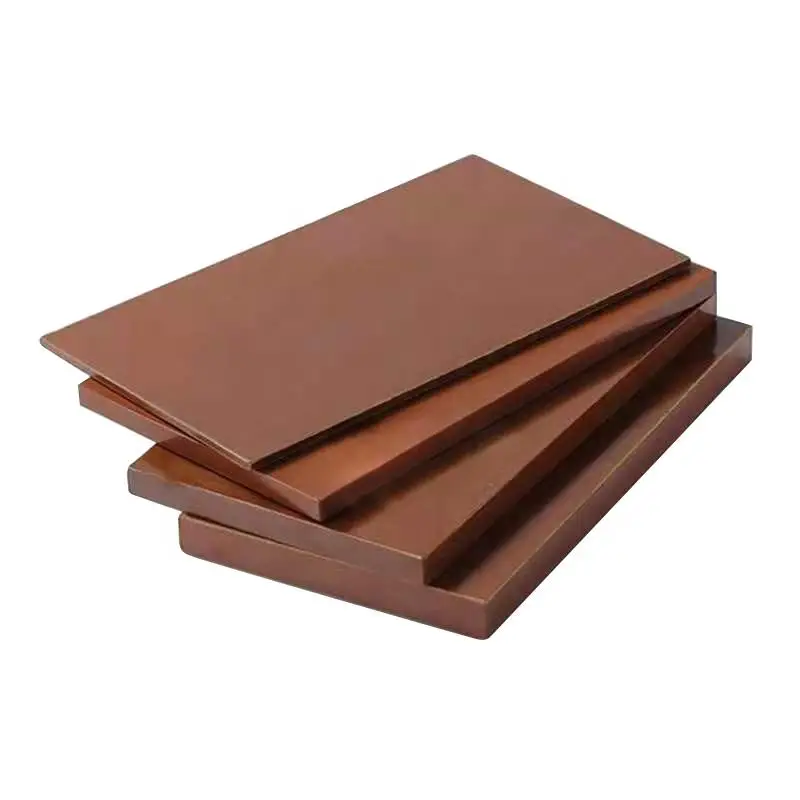
Plasma-Etch Polyimide Plates (High-Vacuum Stock)
Ultra-pure polyimide (PI) plate stock engineered to replace PEEK and quartz in fluorine/oxygen plasma etching and high-vacuum CVD chambers. Offers 300°C+ continuous thermal stability (480°C peak), zero plasma erosion particle shed, sub-ppm trace metal purity, and ASTM E595 low outgassing. Thermal-compression sintered for fly-milling 300mm wafer clamp rings without bowing. Send your part drawings or dimensions for a 12-24h technical quotation.
Product information
Published information supports preliminary product selection. Confirm the exact grade, dimensions, tolerances, documentation and application suitability with the quotation for your order.
Description
Preventing Particle Defects in High-Temperature Plasma Chambers
In 300mm semiconductor etching and deposition chambers (PECVD, HDPCVD, RIE), standard engineering plastics like PEEK experience thermal softening above 260°C, while quartz rings suffer micro-chipping that contaminates silicon wafers. Sintered Polyimide (PI) Plates solve these chamber vulnerabilities by delivering a non-melting polymer backbone resistant to reactive fluorine (CF4/SF6) and oxygen (O2) plasma, sub-ppm ionic purity, and continuous thermal stability exceeding 300°C.
Chamber Reliability & Physical Datasheet:
| Performance Metric | Operating Parameter | Global Test Standard |
| Base Resin Structure | Unfilled Isotropic Sintered PI | Natural Chestnut Brown |
| Thermal Threshold | 300°C – 350°C (Short peak 480°C) | UL 746B |
| Glass Transition (𝑇𝑔) | 360°C – 400°C | DSC Method |
| Vacuum Outgassing | TML < 0.8% / CVCM < 0.05% | ASTM E595 |
| Ionic Contamination | Sub-ppm (Trace Na, K, Fe) | ICP-MS Certified |
| Plasma Erosion Rate | Ultra-Low (Fluorine/O2 Plasma) | Chamber Verified |
| Tensile & Flex Modulus | 100 MPa / 3.5 GPa | ISO 527 / ISO 178 |
Zero-Bowing Fly-Milling for Flat Wafer Fixtures
Flatness is paramount for 300mm wafer clamp rings, shadow rings, and vacuum chucks. Extruded plastics retain internal stress lines that cause thin-walled rings to dish or warp after fly-milling. Our polyimide board stock is manufactured via hot-isostatic thermal-compression sintering, creating an isotropic molecular structure. This guarantees micro-inch surface flatness, crisp edge retention, and zero micro-cracking during precision CNC routing, fly-cutting, and waterjet blanking.
Fab Tool Integration & Sourcing Options:
Engineered for cleanroom machining of high-vacuum, high-purity fab components:
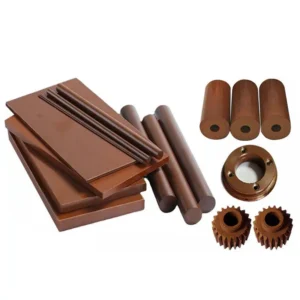
• Etching & CVD Tooling: Wafer clamp rings, shadow rings, focus rings, gas showerheads, and chamber wall liners.
• Wafer Transport & CMP: Vacuum suction plates, end-effector tips, wafer combs, and CMP retaining rings.
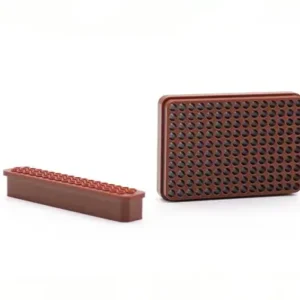
• IC Testing: Fine-pitch burn-in socket bases, test socket plates, and high-temp sensor isolation boards.
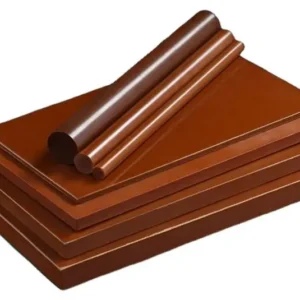
Available in plate thicknesses from 2mm to 80mm (standard 300x300mm and 610x610mm sheets or pre-machined blanks). Shipped with ICP-MS metal analysis reports, ASTM E595 outgassing certificates, and lot-traceable MTRs.
Submit your STEP/DWG drawings or plasma chamber specs for an immediate technical evaluation and quote within 12-24 hours.
Material overview
Understanding PI (Polyimide)
Why engineers use it
- Strong thermal stability for electrical and mechanical applications.
- Excellent insulation potential in films and precision parts.
- Low wear and low outgassing options in selected grades.
- Good dimensional control in carefully processed components.
- Available in forms suited to insulation, machining or formulation work.
Limits to consider
- “PI” is a family name, not a single universal grade.
- Moisture, processing route and fillers affect dimensions and performance.
- Some forms cannot be melt processed like ordinary thermoplastics.
- High cost requires a clearly defined performance need.
- Acceptance values must be tied to the exact product and test method.
Grades and product forms
Film grades target flexible insulation; powder and resin support formulation or molding routes; stock shapes serve machined components; graphite, PTFE or other fillers may tune wear and friction. Product form and grade must be identified explicitly in the RFQ.
Performance points to review
| Evaluation area | Why it matters | Information to provide |
|---|---|---|
| Temperature behavior | Useful performance under elevated or changing temperature | Continuous and peak temperature, cycle length and time at load |
| Mechanical response | Strength and stiffness must match the real part geometry | Load direction, stress level, impact and fatigue expectations |
| Environmental resistance | Fluids, cleaning agents and atmosphere can change service life | Chemical name, concentration, temperature and exposure time |
| Dimensional control | Tight-tolerance parts depend on both material and processing | Finished dimensions, tolerances and assembly conditions |
| Electrical or insulation needs | Electrical requirements may influence grade and thickness | Voltage, dielectric, conductivity or insulation target |
These are engineering discussion points, not guaranteed property values. Final acceptance criteria should be agreed for the selected grade, process and order.
Typical application directions
These examples show where the material may be evaluated. They do not replace a suitability review for the finished component.
Fabrication and processing preparation
Share the finished part drawing as well as the requested rod diameter and length. This makes it possible to discuss machining allowance, tolerance, cut length, quantity and whether a closer starting size could reduce waste.
Where the application is critical, define what a successful trial looks like before material is ordered: dimensions after processing, visual condition, mechanical response, assembly fit or another measurable result.
When another material may be better
PBI and PAI can address different extremes of heat, strength and wear, while PEEK may offer easier processing for some applications. PI is selected when its thermal, electrical or tribological balance solves the specific design problem.
We recommend sharing the current material and the reason it is being reconsidered. Cost, processability, supply form and inspection burden belong in the decision alongside technical performance.
Information needed for an accurate quotation
A useful RFQ reduces follow-up questions and helps us distinguish between a material request and a finished-part requirement.
| Product form | Raw material, stock shape, semi-finished blank or completed part |
|---|---|
| Dimensions | Nominal size, finished size and tolerances |
| Quantity | Trial quantity, first order and estimated annual demand |
| Application | Part function and current material, if any |
| Operating temperature | Continuous range, peak temperature and cycle duration |
| Environment | Chemicals, gases, moisture, pressure, vacuum or outdoor exposure |
| Mechanical duty | Load, speed, impact, wear and mating components |
| Documentation | Drawing revision, inspection, traceability or compliance needs |
Frequently asked questions
Can I request a sample or trial quantity?
Trial quantities can be discussed according to product form and availability. Tell us what you need to prove during the trial, the intended process and the expected production quantity if the test succeeds.
Do you provide a data sheet or material documentation?
Available documentation depends on the selected material and supply route. List the documents required by engineering, purchasing or quality when you inquire so they can be checked before quotation.
Can the grade be selected from a product name alone?
No. Similar product names can cover different grades, colors, fillers and processes. Selection should be based on the finished application, environment and required property balance.
Can you supply custom dimensions or finished parts?
Custom sizes, blanks or finished parts can be reviewed where appropriate. A drawing with tolerances, quantity and material requirement is the best basis for quotation.
How should we evaluate an alternative to our current material?
Share the current grade, the part’s service conditions and the reason for changing it. A useful comparison looks at failure mode, processing, life, inspection and total project cost—not only a single property value.
What determines lead time?
Lead time depends on product form, grade, size, quantity, documentation, machining and current availability. Confirm the required delivery date and destination with the RFQ rather than assuming a standard schedule.
Send the drawing, application and quantity. We will use the project details to prepare a practical material and supply discussion.
Reviews
There are no reviews yet.