
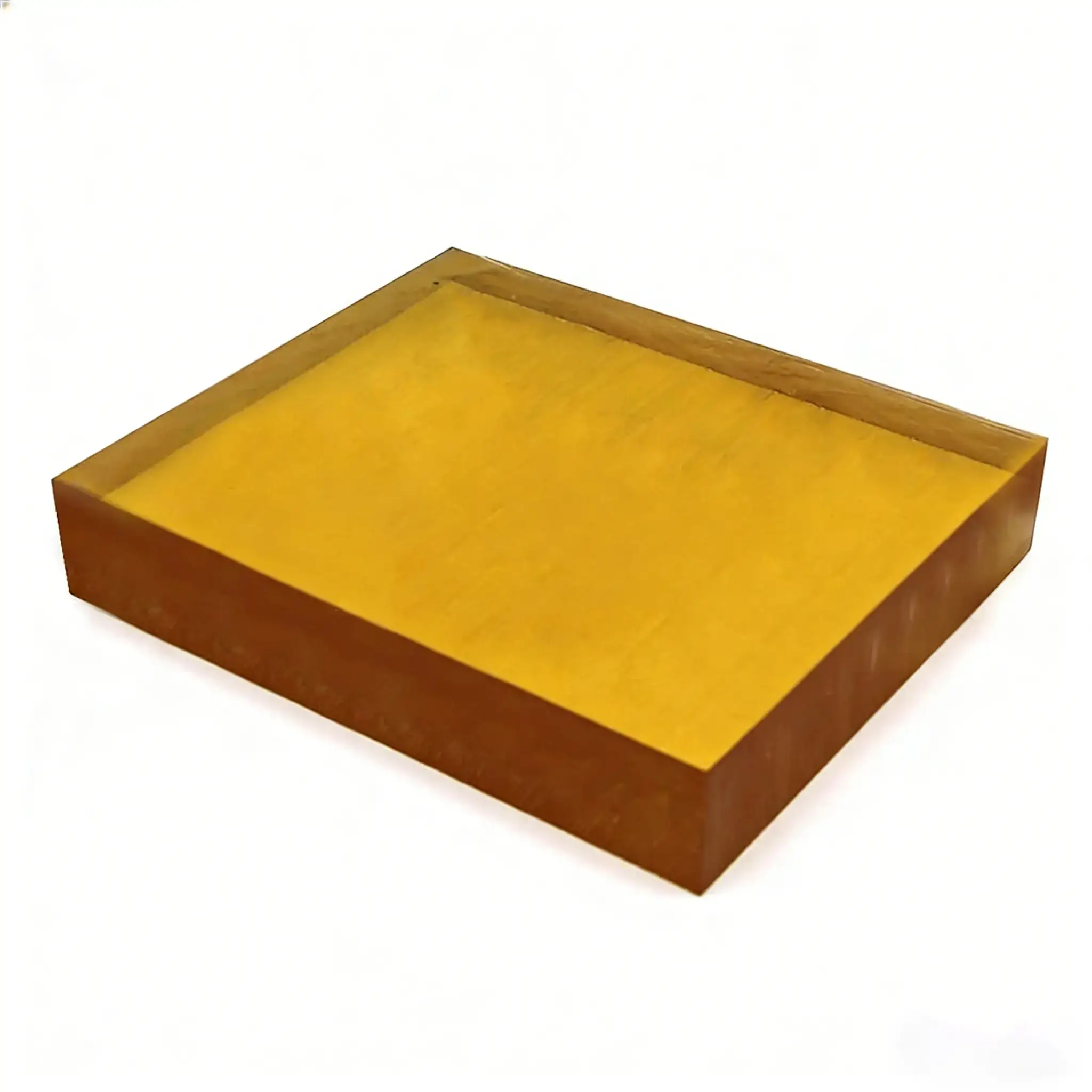
Aerospace & Medical Grade PEI 1000 Sheets (1–150mm)
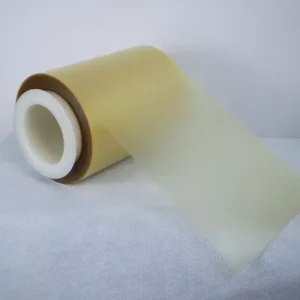
We supply high-performance Aerospace & Medical-Grade Amber PEI 1000 Sheets and Plates (1mm to 150mm thickness). Fully compliant with FDA food contact, USP Class VI medical standards for surgical tools, and FAA FAR 25.853 flame safety, these 100% virgin, stress-relieved stock shapes withstand 170°C continuous heat and 134°C steam autoclaving. Ideal for warpage-free CNC machining of semiconductor wafer combs, insulating PEI bolts/screws, heat-isolated vape drip tips, autoclavable surgical handles, and satellite components. Share your specs for a quick quote.
Product information
Published information supports preliminary product selection. Confirm the exact grade, dimensions, tolerances, documentation and application suitability with the quotation for your order.
Description
Virgin Amber PEI Sheets & Plates (1000 Series) represent the premium standard in high-temperature amorphous stock shapes for tight-tolerance CNC milling and turning. Unlike unannealed plates that warp or crack during heavy stock removal, our PEI sheets undergo a proprietary multi-stage thermal relaxation process to eliminate internal stress, guaranteeing high internal density and zero porosity.
Featuring a glass transition temperature (𝑇𝑔) of 217°C and continuous operating capability at 170°C, this material offers superior dielectric strength (33 kV/mm), low thermal expansion, and FDA food-contact compliance. Inherent UL94 V-0 flame safety, low smoke emission, and resistance to high-energy Gamma and X-ray radiation (up to 1100 Mrad) make it the material of choice for precision components across semiconductor, medical, electronics, and aerospace industries.
Material Science Comparison: PEI 1000 vs. Virgin PEEK vs. Acetal (POM)
| Performance Metric | Vantpoly® PEI 1000 Sheet | Virgin PEEK Sheet | Acetal / POM Sheet |
| Optical Clarity | Translucent Amber (Clear) | Opaque Beige / Black | Opaque White / Black |
| Continuous Operating Temp. | 170°C (HDT 200°C) | 260°C | 100°C |
| Dielectric Strength (Dₖ) | 33 kV/mm (Dₖ 3.15) | 20 kV/mm (Dₖ 3.20) | 20 kV/mm (Dₖ 3.70) |
| Gamma & X-Ray Resistance | 1100 Mrad (Radiation Proof) | Excellent | Poor |
| Machining Warpage Risk | Annealed (Zero Warpage) | Annealed | Moderate |
How this product is normally specified
This product is supplied as extruded PEI boards and pre-cut plates for CNC milling and routing:
-
Sheet Dimensions: Thickness (1–150 mm), width (up to 1250 mm), or custom cut CNC blanks
-
Stress Relief: Multi-stage annealed to eliminate stress warpage during deep milling and drilling
-
Compliance: FDA food-contact compliant, UL94 V-0, and Gamma/X-ray radiation resistant
-
Supply State: Full extruded master sheets or pre-cut custom CNC machining blanks
Where this material can fit
Typical applications for machined PEI 1000 components include:
-
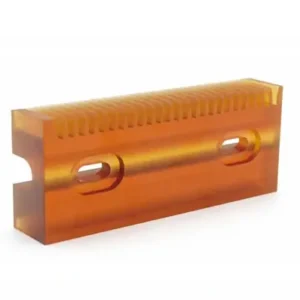
Semiconductor Cleanroom Processing: CNC machined PEI wafer combs, carrier cassette teeth, vacuum wands, and IC test sockets (zero particle shedding)
-
High-Temp Fasteners & Electrical: Non-conductive PEI threaded bolts, screws, terminal blocks, and PCB clamps for high-voltage insulation
-
Vape & Consumer Engineering: Heat-isolated PEI drip tips, atomizer mouthpieces, and FDA-compliant food contact equipment
-
Medical Devices & Surgical Tools: Autoclavable surgical tool handles, probe sleeves, endoscope components, and pharmaceutical fluid manifolds
What to confirm before ordering
To recommend the right PEI sheet specification, please confirm:
-
Target sheet thickness (mm), width/length, and required piece quantity
-
Target component type (semiconductor wafer combs, PEI bolts, vape drip tips, medical parts, etc.)
-
CNC machining operations (confirming deep pocket milling or heavy stock removal)
-
Required trial quantity and estimated annual demand
Send us the information you have. We will review technical details before confirming the quotation.
Material overview
Understanding PEI (Polyetherimide)
Why engineers use it
- Good heat resistance and stiffness for structural and electrical parts.
- Stable dimensions and predictable processing in suitable equipment.
- Inherent flame, smoke and electrical performance for many technical applications.
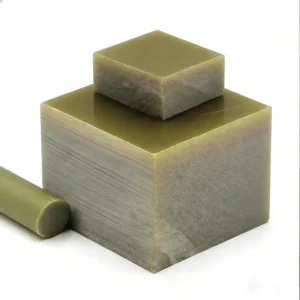
- Available in natural amber and opaque or reinforced grades.
- Can be molded, machined or printed where the appropriate material form is available.
Limits to consider
- Some chemicals and stress-cracking agents require careful compatibility review.
- Moisture control before high-temperature processing is important.
- Continuous chemical or wear duty may favor PEEK or PPS.
- Reinforced grades change impact, surface and directional properties.
- Regulated uses require the correct documented grade, not a generic PEI designation.
Grades and product forms
Unfilled PEI emphasizes the base material’s thermal, electrical and dimensional balance. Glass-fiber grades improve stiffness and movement control but change toughness and surface finish. Medical, aerospace or food-contact projects must identify the exact documentation requirement before grade selection.
Performance points to review
| Evaluation area | Why it matters | Information to provide |
|---|---|---|
| Temperature behavior | Useful performance under elevated or changing temperature | Continuous and peak temperature, cycle length and time at load |
| Mechanical response | Strength and stiffness must match the real part geometry | Load direction, stress level, impact and fatigue expectations |
| Environmental resistance | Fluids, cleaning agents and atmosphere can change service life | Chemical name, concentration, temperature and exposure time |
| Dimensional control | Tight-tolerance parts depend on both material and processing | Finished dimensions, tolerances and assembly conditions |
| Electrical or insulation needs | Electrical requirements may influence grade and thickness | Voltage, dielectric, conductivity or insulation target |
These are engineering discussion points, not guaranteed property values. Final acceptance criteria should be agreed for the selected grade, process and order.
Typical application directions
These examples show where the material may be evaluated. They do not replace a suitability review for the finished component.
Fabrication and processing preparation
Share the finished part drawing as well as the requested rod diameter and length. This makes it possible to discuss machining allowance, tolerance, cut length, quantity and whether a closer starting size could reduce waste.
Where the application is critical, define what a successful trial looks like before material is ordered: dimensions after processing, visual condition, mechanical response, assembly fit or another measurable result.
When another material may be better
PEEK may provide a larger performance margin in more severe heat or chemical service, while lower-cost engineering plastics may be sufficient for moderate conditions. PEI is often chosen when its specific balance of thermal, electrical and structural properties fits the part.
We recommend sharing the current material and the reason it is being reconsidered. Cost, processability, supply form and inspection burden belong in the decision alongside technical performance.
Information needed for an accurate quotation
A useful RFQ reduces follow-up questions and helps us distinguish between a material request and a finished-part requirement.
| Product form | Raw material, stock shape, semi-finished blank or completed part |
|---|---|
| Dimensions | Nominal size, finished size and tolerances |
| Quantity | Trial quantity, first order and estimated annual demand |
| Application | Part function and current material, if any |
| Operating temperature | Continuous range, peak temperature and cycle duration |
| Environment | Chemicals, gases, moisture, pressure, vacuum or outdoor exposure |
| Mechanical duty | Load, speed, impact, wear and mating components |
| Documentation | Drawing revision, inspection, traceability or compliance needs |
Frequently asked questions
Can I request a sample or trial quantity?
Trial quantities can be discussed according to product form and availability. Tell us what you need to prove during the trial, the intended process and the expected production quantity if the test succeeds.
Do you provide a data sheet or material documentation?
Available documentation depends on the selected material and supply route. List the documents required by engineering, purchasing or quality when you inquire so they can be checked before quotation.
Can the grade be selected from a product name alone?
No. Similar product names can cover different grades, colors, fillers and processes. Selection should be based on the finished application, environment and required property balance.
Can you supply custom dimensions or finished parts?
Custom sizes, blanks or finished parts can be reviewed where appropriate. A drawing with tolerances, quantity and material requirement is the best basis for quotation.
How should we evaluate an alternative to our current material?
Share the current grade, the part’s service conditions and the reason for changing it. A useful comparison looks at failure mode, processing, life, inspection and total project cost—not only a single property value.
What determines lead time?
Lead time depends on product form, grade, size, quantity, documentation, machining and current availability. Confirm the required delivery date and destination with the RFQ rather than assuming a standard schedule.
Send the drawing, application and quantity. We will use the project details to prepare a practical material and supply discussion.
Reviews
There are no reviews yet.