
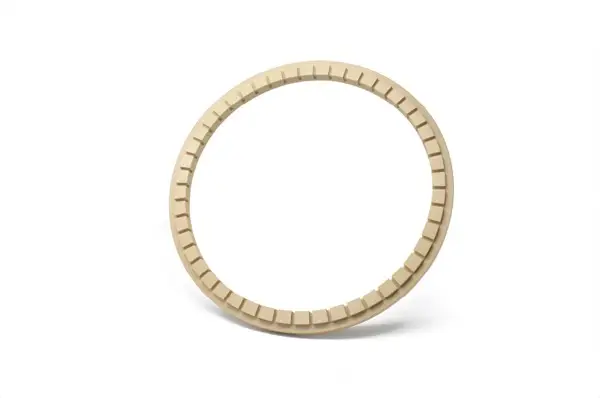
Precision PPS & PEEK CMP Retaining Rings
Minimize Edge Exclusion. Eliminate Slurry-Induced Micro-Scratches.
Superior Edge Uniformity: Precision-machined slurry grooves optimize fluid dynamics, preventing edge roll-off across advanced nodes.
Zero Delamination Risk: High-integrity chemical bonding withstands aggressive slurries and high shear stress without layer separation.
Low-Defect Purity: Ultra-pure, burr-free polymer contact surface eliminates abrasive shedding and killer surface scratches.
Product information
Published information supports preliminary product selection. Confirm the exact grade, dimensions, tolerances, documentation and application suitability with the quotation for your order.
Description
Precision Engineered to Protect Wafer Edges and Maximize CMP Throughput
In Chemical Mechanical Planarization (CMP), retaining rings bear the dual responsibility of securing the wafer under high downforce and conditioning the slurry hydrodynamics. Sub-standard retaining rings cause edge roll-off, irregular slurry delivery, and abrasive particle shedding—directly degrading wafer-to-wafer uniformity (WTWNU).
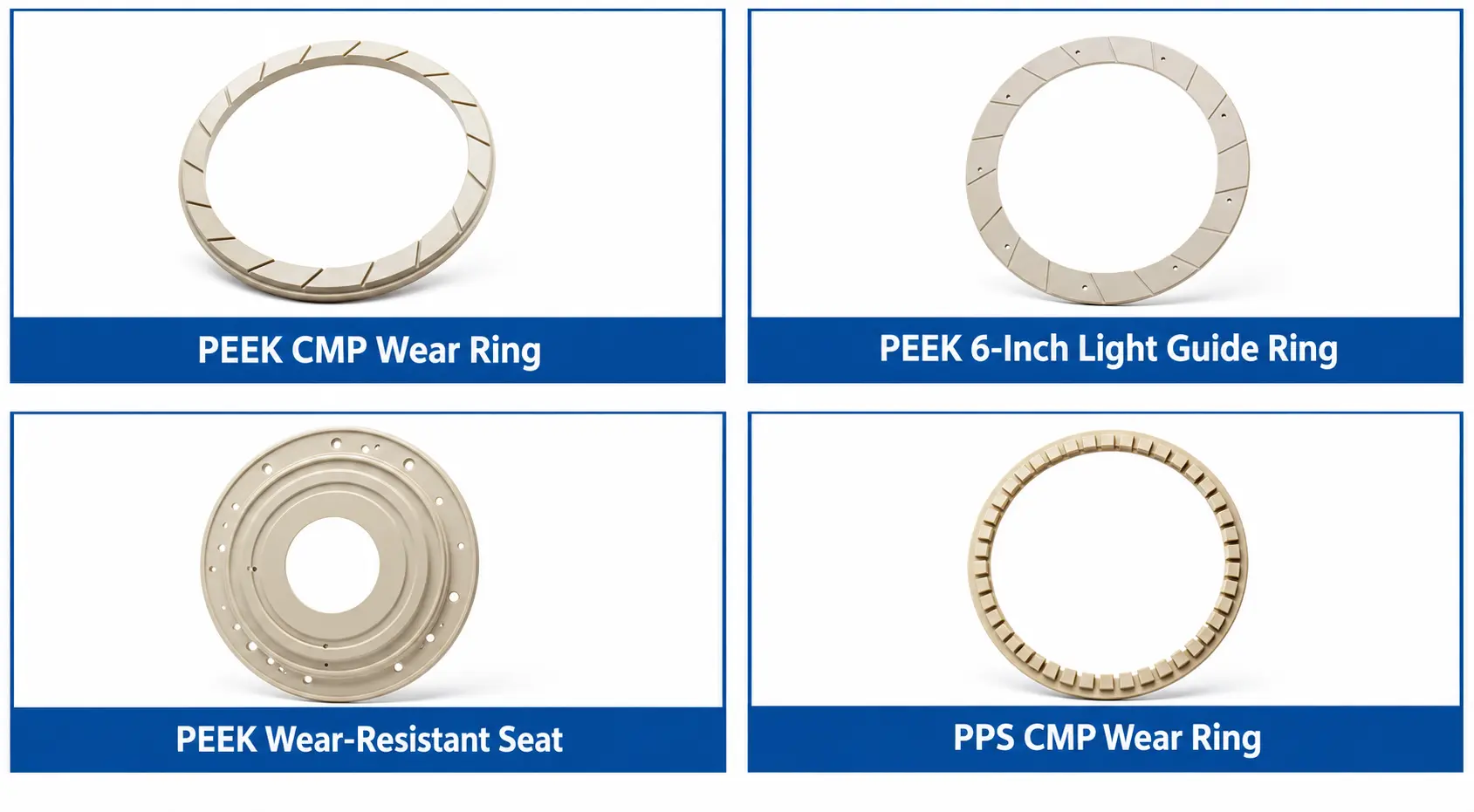
Our precision-machined PPS and PEEK CMP Retaining Rings are fabricated from semiconductor-grade polymers, engineered to deliver ultra-consistent wear rates, zero delamination, and unmatched edge-yield performance.
CMP Yield Challenges vs. Our Solution
| CMP Process Failure Mode | Standard / Low-Grade Rings | Our Engineered Retaining Rings |
| Edge Roll-Off (Yield Loss) | Irregular ring wear distorts polishing pad pressure at the wafer perimeter. | Optimized profile & flat wear rates maintain uniform downforce to <2 mm edge exclusion. |
| Killer Wafer Scratches | Material voids, hard impurities, or slot burrs shed micro-particles into the pad. | 100% optical burr-free inspection; ultra-pure, void-free resin prevents micro-scratching. |
| Bonding Delamination | Aggressive slurries attack epoxy, causing catastrophic ring/backing separation. | Advanced adhesive & mechanical interlocking ensure zero delamination under high shear force. |
| Premature Ring Wear | Rapid erosion requires frequent tool stops for conditioning and requalification. | High-crystallinity PPS/PEEK delivers extended wafer counts per ring, lowering CoO. |
Key Technical Advantages
-
1. Precision Groove Geometries (Optimized Slurry Delivery)
Custom slot counts, angles, and depths are machined with tight CNC tolerances. This controls slurry flow beneath the wafer, preventing hydroplaning and ensuring uniform material removal rates (MRR) from center to edge. -
2. Extreme Chemical & Hydrolytic Resistance
-
PPS Grades: Excellent resistance to acidic and basic slurries; the industry standard for mainstream oxide and metal CMP applications.
-
PEEK Grades: Outstanding wear resistance and mechanical stiffness for high-pressure, abrasive slurry applications (e.g., Tungsten, Copper, or SiC CMP).
-
-
3. Defect-Free Surface Integrity
Every ring is finished with burr-free pocket edges and polished inner diameters to eliminate wafer-edge stress concentration and micro-chipping during insertion.
Specifications & Tool Compatibility
-
Tool Platforms: Compatible with Applied Materials (AMAT Mirra, Reflexion, LK), Ebara (FREX), and other standard 200 mm / 300 mm polishers.
-
Wafer Sizes: 100 mm (4″), 150 mm (6″), 200 mm (8″), 300 mm (12″)
-
Configuration: One-piece solid polymer rings or Two-piece bonded rings (Stainless Steel, Titanium, or Carbon Fiber backing).
-
Material Options: Virgin PPS, Techtron® PPS, Virgin PEEK, PEEK-CF30, ESD-safe compounds.
-
Quality Assurance: 100% CMM flatness and profile inspection; cleanroom ultrasonic-cleaned and vacuum sealed.
Material overview
Understanding PEEK (Polyether Ether Ketone)
Why engineers use it
- Strong balance of heat, chemical and mechanical performance.
- Can be molded, extruded, machined or printed in suitable grades and equipment.
- Good fatigue and wear potential for demanding moving or loaded parts.
- Available in unfilled, glass-fiber, carbon-fiber and wear-modified grades.
- Suitable for precision components where long-term reliability justifies a specialty polymer.
Limits to consider
- High processing temperature requires capable equipment and controlled drying.
- Crystallinity, cooling and annealing can affect dimensions and performance.
- Reinforcement improves some properties but may reduce ductility or change machining behavior.
- Not every chemical, wear or medical application is covered by a standard industrial grade.
- PEEK can be unnecessary over-specification where PPS, PEI or another polymer meets the duty.
Grades and product forms
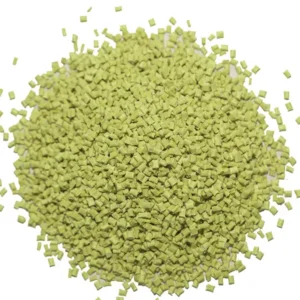
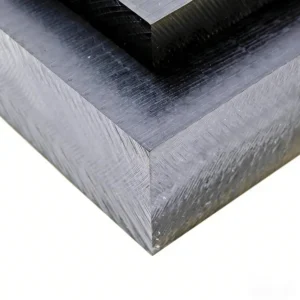
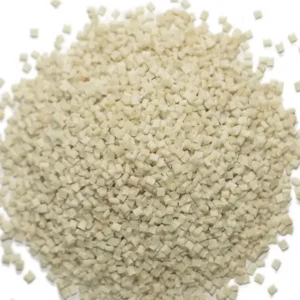
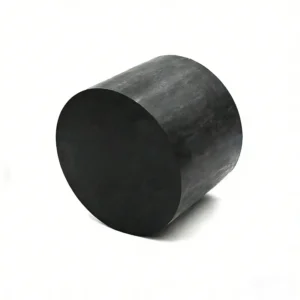
Unfilled PEEK provides the broad base-property balance. Glass-fiber grades generally target stiffness and dimensional control; carbon-fiber grades may add stiffness, strength and conductivity; bearing grades use fillers such as carbon, graphite or PTFE to tune friction and wear. Film, filament, powder, pellets and stock shapes each require different processing and purchasing information.
Performance points to review
| Evaluation area | Why it matters | Information to provide |
|---|---|---|
| Temperature behavior | Useful performance under elevated or changing temperature | Continuous and peak temperature, cycle length and time at load |
| Mechanical response | Strength and stiffness must match the real part geometry | Load direction, stress level, impact and fatigue expectations |
| Environmental resistance | Fluids, cleaning agents and atmosphere can change service life | Chemical name, concentration, temperature and exposure time |
| Dimensional control | Tight-tolerance parts depend on both material and processing | Finished dimensions, tolerances and assembly conditions |
| Electrical or insulation needs | Electrical requirements may influence grade and thickness | Voltage, dielectric, conductivity or insulation target |
These are engineering discussion points, not guaranteed property values. Final acceptance criteria should be agreed for the selected grade, process and order.
Typical application directions
These examples show where the material may be evaluated. They do not replace a suitability review for the finished component.
Fabrication and processing preparation
Confirm the intended manufacturing route, finished dimensions, critical tolerances and annual volume. A drawing allows the starting material and processing sequence to be discussed with fewer assumptions.
Where the application is critical, define what a successful trial looks like before material is ordered: dimensions after processing, visual condition, mechanical response, assembly fit or another measurable result.
When another material may be better
PPS, PEI, PSU/PPSU or a conventional engineering plastic may be more economical when temperature, chemical and mechanical requirements are moderate. PEEK is justified when several demanding requirements occur together or when service life and reliability outweigh raw-material cost.
We recommend sharing the current material and the reason it is being reconsidered. Cost, processability, supply form and inspection burden belong in the decision alongside technical performance.
Information needed for an accurate quotation
A useful RFQ reduces follow-up questions and helps us distinguish between a material request and a finished-part requirement.
| Product form | Raw material, stock shape, semi-finished blank or completed part |
|---|---|
| Dimensions | Nominal size, finished size and tolerances |
| Quantity | Trial quantity, first order and estimated annual demand |
| Application | Part function and current material, if any |
| Operating temperature | Continuous range, peak temperature and cycle duration |
| Environment | Chemicals, gases, moisture, pressure, vacuum or outdoor exposure |
| Mechanical duty | Load, speed, impact, wear and mating components |
| Documentation | Drawing revision, inspection, traceability or compliance needs |
Frequently asked questions
Can I request a sample or trial quantity?
Trial quantities can be discussed according to product form and availability. Tell us what you need to prove during the trial, the intended process and the expected production quantity if the test succeeds.
Do you provide a data sheet or material documentation?
Available documentation depends on the selected material and supply route. List the documents required by engineering, purchasing or quality when you inquire so they can be checked before quotation.
Can the grade be selected from a product name alone?
No. Similar product names can cover different grades, colors, fillers and processes. Selection should be based on the finished application, environment and required property balance.
Can you supply custom dimensions or finished parts?
Custom sizes, blanks or finished parts can be reviewed where appropriate. A drawing with tolerances, quantity and material requirement is the best basis for quotation.
How should we evaluate an alternative to our current material?
Share the current grade, the part’s service conditions and the reason for changing it. A useful comparison looks at failure mode, processing, life, inspection and total project cost—not only a single property value.
What determines lead time?
Lead time depends on product form, grade, size, quantity, documentation, machining and current availability. Confirm the required delivery date and destination with the RFQ rather than assuming a standard schedule.
Send the drawing, application and quantity. We will use the project details to prepare a practical material and supply discussion.
Reviews
There are no reviews yet.