
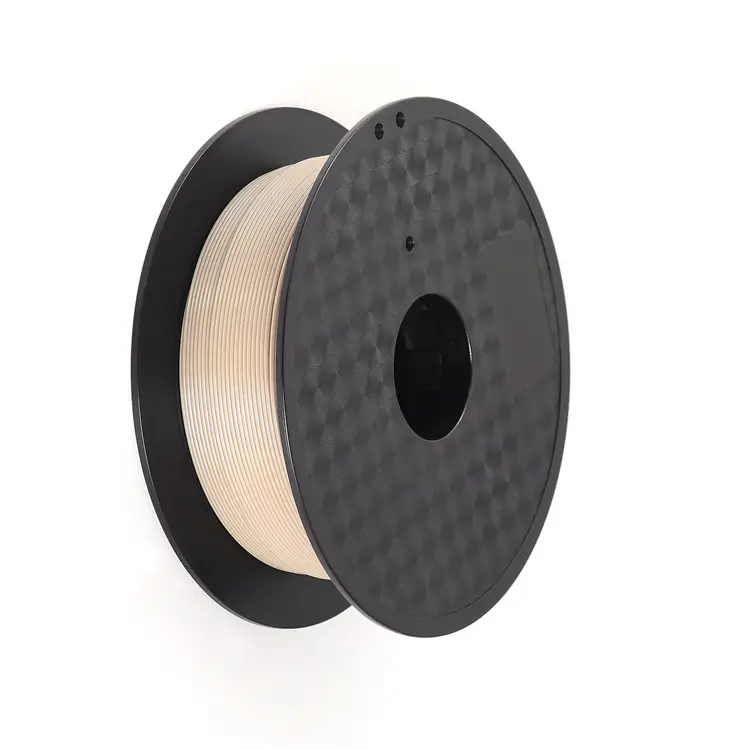
Industrial Grade Natural PEEK 3D Printing Filament
Industrial-grade natural PEEK 3D printing filament engineered for extreme environments. Features 260°C continuous heat resistance, metal-like mechanical strength, and tight diameter tolerances (±0.03mm). Share your filament specs and quantity for an accurate quote.
Product information
Published information supports preliminary product selection. Confirm the exact grade, dimensions, tolerances, documentation and application suitability with the quotation for your order.
Description
Offering a continuous operating temperature of 260°C (short-term peak 300°C+) and mechanical properties comparable to aluminum alloys, this natural-colored filament is an ideal metal replacement in aerospace, automotive, oil & gas, and chemical processing. It features inherent UL 94 V-0 flame retardancy, low friction, and outstanding resistance to harsh acids, alkalis, and solvents.
Where this material can fit
Aerospace & Automotive: Lightweight structural brackets, engine components, and wear-resistant bushings.
Industrial Machinery: High-temp gears, pump impellers, chemical valve seals, and metal-replacement fixtures.
Oil & Gas / Chemical: Corrosion-resistant connectors, fluid manifolds, and downhole tool parts.
Available form and supply discussion
Standard Filaments: 1.75 mm and 3.0 mm (±0.03 mm tolerance) on 0.25 kg, 0.5 kg, or 1.0 kg vacuum-sealed spools.
Capillary & Fine Tubing: 0.25 mm to 4.0 mm sizes available for specialized industrial or fluid-handling applications.
What to confirm before ordering
To provide an accurate quote, please confirm:
Filament Specs: Required diameter (1.75mm or 3.0mm), spool weight, and order quantity.
Application Conditions: Operating temperature, mechanical load, and chemical exposure.
Delivery Details: Target delivery date and destination.
Send your 3D models (STL/STEP) or project requirements. Our technical team will review your request and provide a practical supply recommendation.
Material overview
Understanding PEEK (Polyether Ether Ketone)
Why engineers use it
- Strong balance of heat, chemical and mechanical performance.
- Can be molded, extruded, machined or printed in suitable grades and equipment.
- Good fatigue and wear potential for demanding moving or loaded parts.
- Available in unfilled, glass-fiber, carbon-fiber and wear-modified grades.
- Suitable for precision components where long-term reliability justifies a specialty polymer.
Limits to consider
- High processing temperature requires capable equipment and controlled drying.
- Crystallinity, cooling and annealing can affect dimensions and performance.
- Reinforcement improves some properties but may reduce ductility or change machining behavior.
- Not every chemical, wear or medical application is covered by a standard industrial grade.
- PEEK can be unnecessary over-specification where PPS, PEI or another polymer meets the duty.
Grades and product forms
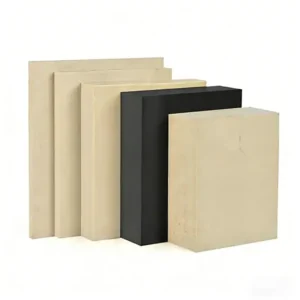
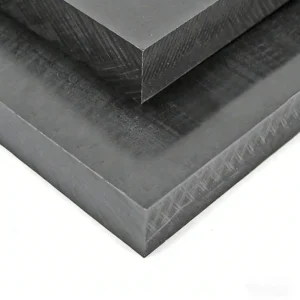
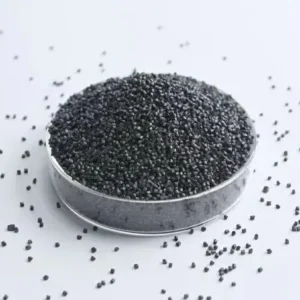
Unfilled PEEK provides the broad base-property balance. Glass-fiber grades generally target stiffness and dimensional control; carbon-fiber grades may add stiffness, strength and conductivity; bearing grades use fillers such as carbon, graphite or PTFE to tune friction and wear. Film, filament, powder, pellets and stock shapes each require different processing and purchasing information.
Performance points to review
| Evaluation area | Why it matters | Information to provide |
|---|---|---|
| Temperature behavior | Useful performance under elevated or changing temperature | Continuous and peak temperature, cycle length and time at load |
| Mechanical response | Strength and stiffness must match the real part geometry | Load direction, stress level, impact and fatigue expectations |
| Environmental resistance | Fluids, cleaning agents and atmosphere can change service life | Chemical name, concentration, temperature and exposure time |
| Dimensional control | Tight-tolerance parts depend on both material and processing | Finished dimensions, tolerances and assembly conditions |
| Electrical or insulation needs | Electrical requirements may influence grade and thickness | Voltage, dielectric, conductivity or insulation target |
These are engineering discussion points, not guaranteed property values. Final acceptance criteria should be agreed for the selected grade, process and order.
Typical application directions
These examples show where the material may be evaluated. They do not replace a suitability review for the finished component.
Preparing a high-temperature printing project
Provide filament diameter, printer model, nozzle and chamber capability, drying method, build geometry, support strategy and annealing plan. A high-performance filament cannot compensate for a printer that lacks the necessary thermal control.
Where the application is critical, define what a successful trial looks like before material is ordered: dimensions after processing, visual condition, mechanical response, assembly fit or another measurable result.
When another material may be better
PPS, PEI, PSU/PPSU or a conventional engineering plastic may be more economical when temperature, chemical and mechanical requirements are moderate. PEEK is justified when several demanding requirements occur together or when service life and reliability outweigh raw-material cost.
We recommend sharing the current material and the reason it is being reconsidered. Cost, processability, supply form and inspection burden belong in the decision alongside technical performance.
Information needed for an accurate quotation
A useful RFQ reduces follow-up questions and helps us distinguish between a material request and a finished-part requirement.
| Product form | Raw material, stock shape, semi-finished blank or completed part |
|---|---|
| Dimensions | Nominal size, finished size and tolerances |
| Quantity | Trial quantity, first order and estimated annual demand |
| Application | Part function and current material, if any |
| Operating temperature | Continuous range, peak temperature and cycle duration |
| Environment | Chemicals, gases, moisture, pressure, vacuum or outdoor exposure |
| Mechanical duty | Load, speed, impact, wear and mating components |
| Documentation | Drawing revision, inspection, traceability or compliance needs |
| Printing setup | Printer, nozzle, chamber, build plate, drying and annealing capability |
Frequently asked questions
Can I request a sample or trial quantity?
Trial quantities can be discussed according to product form and availability. Tell us what you need to prove during the trial, the intended process and the expected production quantity if the test succeeds.
Do you provide a data sheet or material documentation?
Available documentation depends on the selected material and supply route. List the documents required by engineering, purchasing or quality when you inquire so they can be checked before quotation.
Can the grade be selected from a product name alone?
No. Similar product names can cover different grades, colors, fillers and processes. Selection should be based on the finished application, environment and required property balance.
Can you supply custom dimensions or finished parts?
Custom sizes, blanks or finished parts can be reviewed where appropriate. A drawing with tolerances, quantity and material requirement is the best basis for quotation.
How should we evaluate an alternative to our current material?
Share the current grade, the part’s service conditions and the reason for changing it. A useful comparison looks at failure mode, processing, life, inspection and total project cost—not only a single property value.
What determines lead time?
Lead time depends on product form, grade, size, quantity, documentation, machining and current availability. Confirm the required delivery date and destination with the RFQ rather than assuming a standard schedule.
Send the drawing, application and quantity. We will use the project details to prepare a practical material and supply discussion.
Reviews
There are no reviews yet.